UNTIL SUNDAY 9/1/22
GENS PUMPS. Burjassot, 54
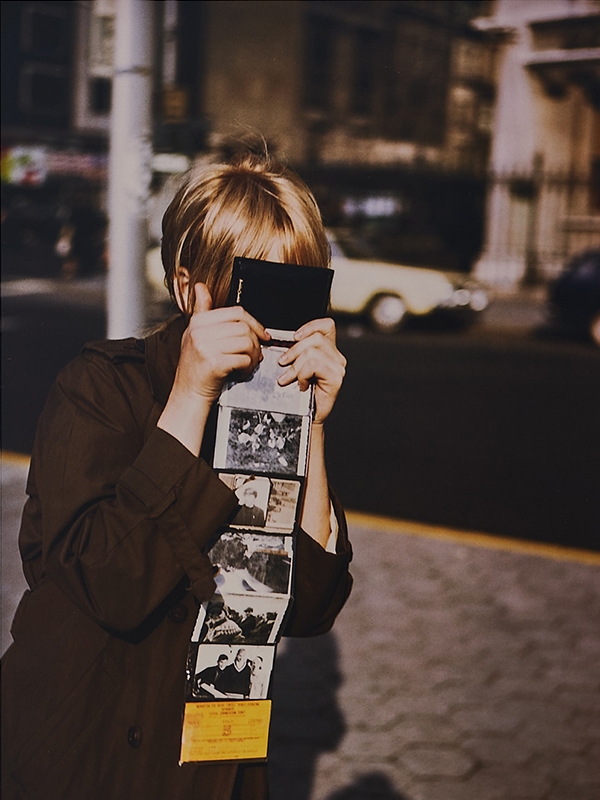
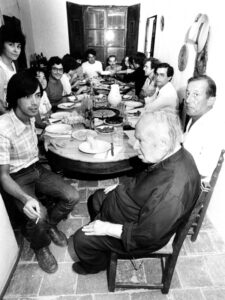
American documentary photography in black and white dominates the new Bombas Gens exhibition, Sculpting reality, with Walker Evans as a true beacon that would illuminate what was to come. Between 1973 y 1974, Photographer Lee Friedlander and his colleague Burt Wolf published the portfolios of four of the most influential photographers of the 20th century at the Double Elephant printing press in New York.. This collaborative project was a milestone in the history of photography and is the starting point of this exhibition that proposes a journey through the history of photography and the documentary style from the 1930s to the present., linked to reports and photojournalism and, therefore, newspaper and magazine dweller. These four chosen photographers were Friedlander himself, Walker Evans, Garry Winogrand and Manuel Álvarez Bravo. Evans He was the one who lit the fuse of the new American documentary photography to become one of the most important photographers of the last century., author of the mythical American Photographs which portrayed the hardships suffered by families in the southeast of the country after the Great Depression. Absorbed this book Garry Winogrand, street photographer par excellence, who set out to photograph the country traveling the famous Route 66. Already in the turbulent decade of the sixties he began to document protests with his Leica, political conventions, rodeos and the streets of New York, which at the time also ran Friedlander, more interested in the interaction between people and space (Play with shadows and reflections of glass and mirrors), that because of the human emotion that Winogrand managed to freeze. By Friedlander are the photographs of Marilyn Monroe holding her skirt on top of the subway grate on the set of the film Temptation lives above, and a good handful of personalities such as the feminist leader Betty Friedan, photographer Diane Arbus, President John F.. Kennedy with his back turned at a Democratic convention or the boxer Muhammad Ali with a defiant expression at a press conference, saying something funny judging by the faces of the journalists around him. The fourth in contention was the Mexican Manuel Alvarez Bravo, claimed by the surrealists and admired by Friedlander despite this, He renounced surrealism and thought that the photo does not need to be artistic because if it manages to transcend the subject it automatically becomes art.. In the exhibition you can also see the first works of Helen Levitt portraying lower class children playing happily in the poorest neighborhoods of New York. Or from the Swiss Robert Frank (of which the IVAM has a good collection), that before practicing documentary photography on his two-year trip through the United States (from which the book The Americans came), had already made its first steps in Valencia 1952. A new documentary photography emerged in which the concept prevailed, but in images loaded with documentary and aesthetic meaning. You can see it in the street strippers Susan Meiselas, in the Portuguese colonization of Mozambique passed through the sieve of Ricardo Rangel, in Californians from the seventies who pose from their cars to Mike Mandel or in the industrial moles captured by Bernd and Hilla Becher. Some contemporary photographers who close the exhibition would drink from all this, as Bleda and Rosa, Ian Wallace o Xavier Ribas. AU