UNTIL SUNDAY 24/4
THE SHIP. University, 2
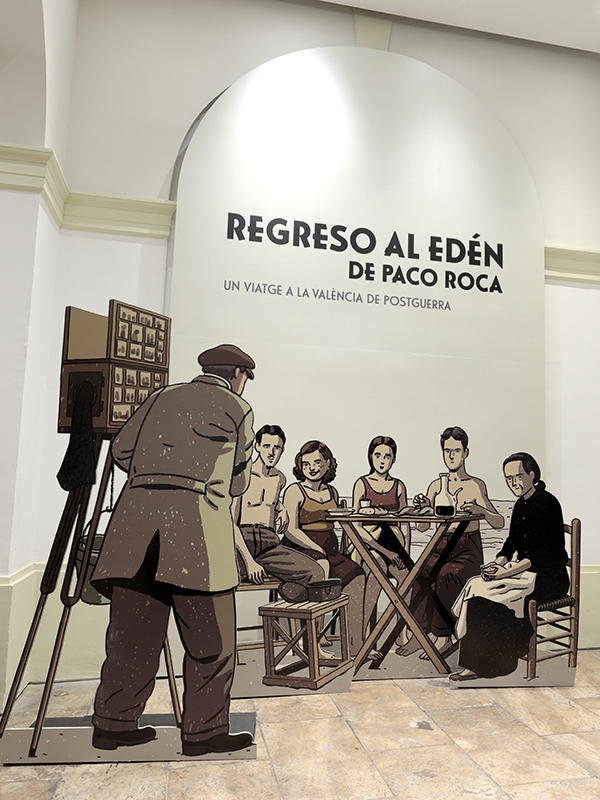
Paco Roca He was clear that he wanted to bind the memory of his mother at the moment his father died. Antonia, that's what it's called, He lost his mother when he was fourteen years old and keeps the only photograph he has of her like gold., of 1946, on the beach, a day of family leisure that in his memory forms the lost paradise of his childhood. From this photograph Roca drew the comic Return to Eden where he masterfully x-rays post-war Valencia and the story of this woman, that without being anything heroic, more of survival, explains what it was like to live in that dark Spain of the dictatorship. From the acclaimed war epic The grooves of chance, Roca goes on to tell the “little” story of an illiterate woman, poor and from a red family who turns out to be his mother. Just like he did Antonio Altarriba —another National Comic Award—after The art of flying turning his gaze towards his mother Petra in The broken wing. The gender perspective and historical memory go hand in hand in this exhibition that deconstructs the comic by recovering sketches from the Valencian and creating three-dimensional vignettes to tell us about the family., of hunger, of the Church and repression through the eyes of his mother and documentation of the time: newspaper covers glorifying the leader, Luis Vidal's photographs, toys and objects of the time (a boy doing the fascist salute, ration cards, a porrón, a coffee grinder…), comics, fragments of NO-DO and cinema, that great artifact of leisure and escape that was consumed in bulk in Spain. La Nau reconstructs a time of pure misery through the nostalgic memories of a woman whose childhood, frozen on a beach in Nazareth, represents the lost Eden, fictional, but very real in memory. S.M.