
UNTIL SUNDAY 4/10
Mubav. Saint Pius V, 9
The Museum of Fine Arts could hardly put together a temporary exhibition composed exclusively of works by Rubens, great master of Flemish baroque and universal myth of painting. It is one of the reasons why the start of this exhibition is contextual., who wants to show us the cultural and artistic environment of the Antwerp that the painter frequented during the last decades of the 16th century, when he was beginning to take his first steps in the world of art. It is the theme with which the museum wants to seduce locals and visitors to cross the channel of the Túria. Another reason is that, by comparison, can confirm that there was no one who overshadowed Peter Paul Rubens. Not even close. Not even his last teacher, Otto van Veen, bridge between flamenco mannerism and the first baroque, of which paintings are exhibited that allow us to know his work beyond the books of emblems for which he is mainly known. In Maerten de Vos, who knew how to adapt Italian mannerism to the Netherlands after traveling to Italy and whose designs were engraved by important publishers (which spread his style throughout Europe). In Frans Pourbus II, whose rigid portrait of Infanta Isabel Clara Eugenia of Austria He was the official at the court of the archdukes in Brussels until Rubens arrived and forged a new image of the rulers.
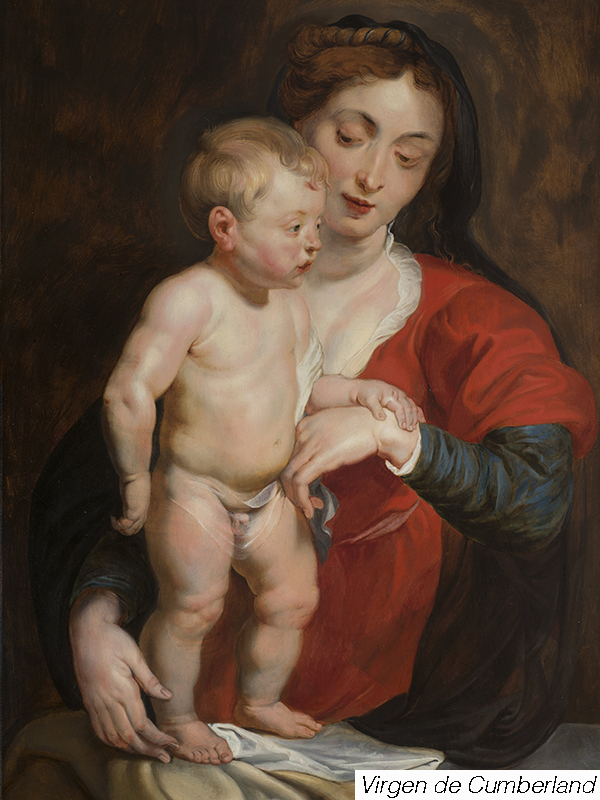
Rubens. The blossoming of a genius tells the ascension of the artist to the category of figure of universal art, surrounded by teachers and mentors in a courtly and artistic environment in which his collaborator appears Anthony Van Dyck and his friend Jan Brueghel the Elder, among many others. The tour begins with his Italian stay because, like so many artists of the time, He forged his genius by drawing on classical art and the great Italian masters who preceded him.. The study and understanding of the past helped him, For example, in the conception of the Virgen de Cumberland (1615-17), where he reworks Rafael, Bellini and Titian to represent the baby Jesus, standing, with the features of his son Alberto. The themes of the Virgin with the Child on her lap and the Holy Family in a relaxed atmosphere were constants in his production..
The Museum of Fine Arts shows the artistic development of the young flamenco artist, from his learning stage in various workshops, until his admission as a teacher in the Guild of Saint Luke of Antwerp in 1598 and his later work for the court of the southern Netherlands (which then belonged to the Hispanic Monarchy of the Habsburgs). Isabel Clara Eugenia and Alberto found in art a practical tool to strengthen their power and Rubens knew how to represent that authority and strength of character that both rulers wanted to project.. So, ended up embodying an artistic vision at the service of religious ideals, cultural and political, even carrying out diplomatic work. It was during this time, in the Twelve Years' Truce (1609-1621), when Rubens' artistic genius reached full maturity and established a model halfway between Flemish and Italian that would profoundly influence the course of European painting for decades..
The exhibition, in addition to describing the context and the first steps of the painter, has three small discoveries in store: the first is the canvas The creation of Eve, restored by Rubens after damage suffered during its transfer from Mantua to the court of Philip III in Valladolid. The second is an oil sketch for the main altar of the Chiesa Nuova in Rome, which allows us to see how he conceived these assignments before executing them; and the third, a head hidden in Portrait of a lady (The young queen Tomiris), which suggests that it is a fragment of the original composition of Scipio's continence. AU