UNTIL TUESDAY 27/2
THE SHIPS. John Verdeguer, 16
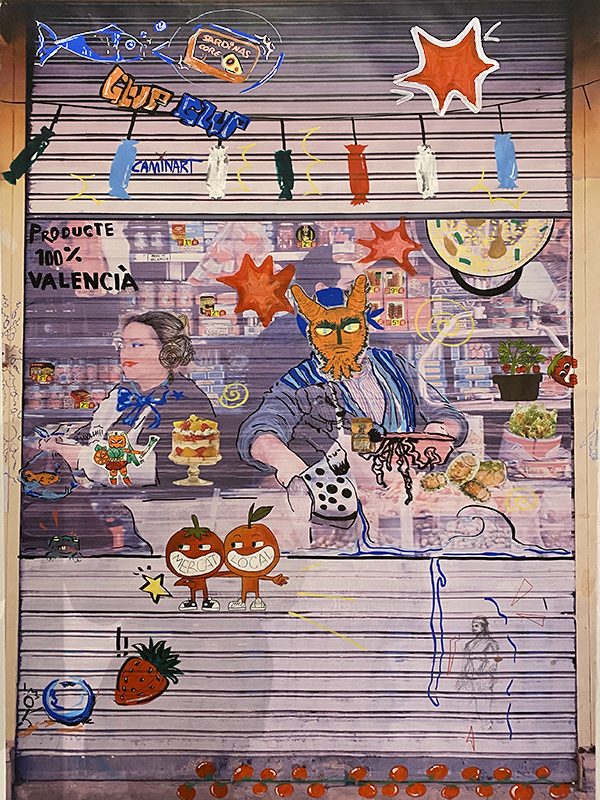
When Fina Puchades lowered the shutters of her olive and pickled stall at the Mercat Sant Pere Nolasc de la Saïdia in 2019, Valencia stayed with 16 markets in operation. It was a tragedy because vigorous markets like Russafa or El Cabanyal strengthen the social muscle of the neighborhoods and contribute to responsible consumption with their local and seasonal products, letting a market die means taking life from the neighborhood that hosts it. With this clear idea and with the help of a large neighborhood network, the project Sant Pere Nolasc lovingly recovered the history of the only market that remains closed in the city today. After interviewing the sellers(e)s i les client(e)s of the market and to rescue from family albums old photographs of the stalls in full operation, he 16 of June of 2023 a festive day was held in the market where the images were exhibited on large canvases and a barter market was organized where people could exchange any object for seasonal products. The exhibition OK 24 made in collaboration with Master of Photography of the Polytechnic University of Valencia recovers that event to highlight the importance of this market inaugurated in 1899 and the entire network of markets that supply the city with quality products. The other project exhibited in Las Naves to raise awareness of the consequences of climate change is Acqua alta, it is an invented real estate, liar and hooligan, who imagines which properties would be put up for sale in the event that sea level rise caused by climate change negates Valencia: a football field of the Túria valley reconditioned for water polo practice, the old commercial basement of the Malafama restaurant with access for gondolas or the Ships themselves, with salt water fountains in the inner courtyards. The effects of sea level rise and the tragedy of letting a neighborhood market die, two projects that call out with the image (and the word) against climate change. S.M.