BANCAJA FOUNDATION. Pl. Tetouan, 23
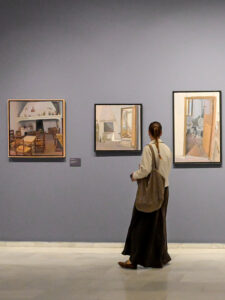
Photography appeared and realistic painting stopped making sense, rather, the meaning it had until then. That is the tragedy of art history, the mania The academic approach of classifying and compartmentalizing art has led to the predominant pictorial currents in each historical period overshadowing each other, making less of what was previously the most. He has suffered it Antonio Lopez, according to Tomás Llorens, curator of the retrospective on the Madrid artist, one of the great masters of European realism, which last month inaugurated the Bancaja Foundation. López, the painter of details who took twenty years to finish the portrait of the royal family, deploys in Valencia sixty years of career that began in the years 50 when he began looking for his own figurative language that approached magical realism, and ends in the recent urban panoramas (one of those exhibited in Bancaja, in the process of creation) that discard the accessory to approach hyperrealism. And meanwhile, its recurring themes: the city (You can see the canvas of a deserted Madrid Gran Vía that has caused so much to talk about during the quarantine), the human body in authentic anatomy studies and in small sculptures of babies (so difficult for artists due to their disproportionate proportions), the domestic interior (a filthy bathroom becomes an artistic object), the window as a tower from which to observe the world and the vegetation. Membrillero, For example, It is the still life that inspired the feature film The quince sun where Víctor Erice filmed the artist's creative process while he painted a quince tree in the patio of his house. The Bancaja Foundation scores a goal with one of the great exhibitions of the year in Valencia. AU