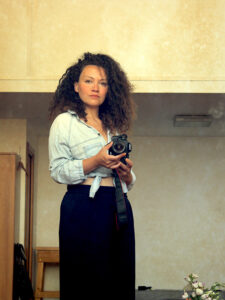

This week, My interviewee is the journalist and writer Elga Reátegui (Lima, Peru). He studied Communication Sciences at the Inca Garcilaso de la Vega University and graduated in Journalism at the Jaime Bausate y Meza University in the Peruvian capital.. He practiced his profession in Peru in various media. With the poetry collection Opposite window, in 1993, entered the world of literature. This was followed Between two poles (1994), steel wings (2001), Ethereal (2004). In addition, together with the writer and decimist, Pedro Rivarola (already deceased) published the letters Locumba Mail (2002) y Correspondence violation (2003). He published his first novel The holy priest in 2007 in Spain and in 2009 in Peru, in a second edition. Later they would arrive Of tenderness and sex (2011), On this side and on the other (2015), the poetry collection in my skin (2005) and the English version of this, for the North American market, under the title Body maps, in 2014. His last published novel is and you turned around (2016). Member of the PEN Club Internacional and the Concilyarte Association, has just published a book of short stories The transience of color (The pain) what I ask you about.
For the preparation of this The transience of color I understand that you were writing down ideas that arose on different trips or between interludes in the writing of your novels.. It reminded me of the stories that Virginia Woolf composed in a way between novel and novel.
It wasn't on purpose, although very dear friends, They cultivate that genre with full solvency. Maybe because of the proximity I should have felt influenced or somewhat inspired., but it didn't happen that way. After the completion of a novel, The need arose to 'entertain myself with something else', while I was resting or the idea of another long story came to me. I remember that I asked a friend who was very knowledgeable in the subject to come to my house and give me a class on it.. The rules of the game, to put it simply. From that moment on I wrote daily., just like I usually do when I write a novel. I remember that the first short story I wrote was a finalist in a contest. I remembered Eugenio Buona.
They were intervals of a novel, very productive. And if, ideas came to me on short or very long land trips. Papers with just one or two words, which then ended up in my bag. I accumulated several pieces of these that became stories.. There are many of those that appear in the book.
Speaking of short stories, many try to find borders and similarities, it being almost inevitable that people talk about the poems. Cesar Gavela, author of the prologue of your book, refers to certain common aspects. Since you have written several poems, Tell us about those similarities., of that full adjustment “between form and substance”, as Gavela points out in the prologue.
Believe me, my poems have not given me as much work as the short stories. I have paid my right to write them. with poetry, I mean the one I write, free and letting myself be carried away by my inner music, I can give myself many licenses, transgress and go my way, but not with short stories, they must be clean, simple and comply with the agreed measure. They come out fast, I flow and apparently they remain, but then comes the rereading and that's when you see what you hadn't seen before. Then adjust or modify the dress until it fits you very well.. Or whatever you consider acceptable, if you couldn't achieve that desired perfection.
Perhaps the short story is such a young genre that it has not yet established itself among readers as the short story can be., the novel, poetry or essay.
I don't think it's a young genre either., rather, It is a well-preserved adult that with its constant renewal and freshness has been gaining ground for a long time.. It has its audience gained and in full expansion, and I consider that it enjoys excellent reception among pre-adolescent or adolescent readers. The same thing happens among those who pass the barrier of thirty or forty.. I know first-hand two interesting cases in this regard., one is that of the Argentine writer Ana María Intili and her microfictions, that sweeps the book fairs, and also the Peruvian writer Pedro López Ganvini who began writing short stories in his blackberryso as not to get bored while on the way to work. The funny thing is that he also sent it to his friends.. For years he shared his writings through this medium. Then they had to pay when they became books, and, and, and. From that daily exercise the book was born The devil's cell phone. Stories from my blackberry. Needless to say, he is a respected cultivator of this genre in that South American country..
I think that with this book you intend in some way to pay a heartfelt tribute to Valencia and the people who have accompanied you in this city over the years.. Is it so?
That's how it is, that was the decision from the beginning of the project. I wanted to thank this bright city, my beloved Valencia, that opened its Mediterranean arms to me, and its people, who from the first day gave me his smile and knew how to welcome me with generosity. And of course through this book, I also want to pay my tribute to friendship, to those friends that this land and this country has given me, in general. I am proud of the friends I have here, whether or not they are people linked to literature or art, which is the environment where I operate. I really feel very grateful to live in this place., not only because of its geography and history, but for the quality of the people who inhabit it. My story as a novelist began in Valencia, and since I published my first book, the doors opened for me. So much so that the presentation of my debut film 'The Holy Priest' took place at the Valencian Library (San Miguel de los Reyes), one October afternoon 2007.