Original title: Little girl · Sébastien Lifshitz · France · 2020 · Script: Sébastien Lifshitz · Documentary.
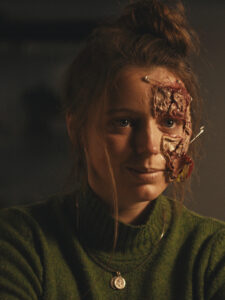
Original title: Only the beasts · Dominik Moll · France · 2019 · Script: Gilles Marchand, Dominik Moll · Performers Denis Menochet, Valeria Bruni Tedeschi, Laure Calamy…
Documentary cinema has undergone a profound evolution in recent decades. In the search for new narrative forms, the non-fiction genre, especially the one that bears the seal of authorship, has tried to approach the issues it deals with from a less intrusive perspective, displacing the omniscient narrator who directed the speech to make it emerge from reality itself. This has meant that the documentary has been breaking away from traditional resources., such as the voice-over or the classic bust shot of the interviewees who presented their opinions to the camera, illustrated later with images that served to reinforce what was told. The word remained, So, displaced in favor of the image, of the action. It's the facts that count, those who speak, not the director of the movie. However, This trend presents, frequently, some limitations when articulating certain reflections, in addition to the fact that these strategies do not always manage to prevent the guiding hand that organizes the images from ending up finding new ways to protect the gaze of the observing viewer..

A girl, latest work by Frenchman Sébastien Lifshitz, tells Sasha's story, a seven-year-old girl who feels that she was born in a male body that does not belong to her. Sasha's life passes with apparent normality in a loving family environment., freedom and protection. But when you leave this circle of safety, things get complicated. Sasha wants to live according to how she is perceived, fact that clashes with the apparent incomprehension of his school teachers who, as they tell us, They refuse to treat her like any other girl.. This situation will encourage her parents to start a fight so that Sasha can recognize her right to be who she really is..
If Sébastien Lifshitz has one thing to recognize, it is the ability he has to introduce his camera into highly intimate spaces.. So, We will see Sasha sharing a series of everyday situations with her family. From morning until night, Lifshitz follows the daily life of a family whose coexistence seems to be crossed and, in many aspects, conditioned by the suffering caused by Sasha not being able to lead the life she wants. Lifshitz knows that he is dealing with a delicate topic and that is how he approaches it, with delicacy and respect. For it, place the camera at a certain distance from your study subject, trying not to get in the way, hiding its presence from the eyes of the viewer. With this idea, We accompany Sasha in his daily games with his brothers, in your dance classes or in the privacy of the bathroom, optimal space for the confidences he shares with his mother.
This relationship between mother and daughter provides Sébastien Lifshitz with the two elements that support his story.. It's hard not to fall in love with Sasha and empathize with her.. His soft features, his fragile physical constitution, the complex problems faced by a girl who must face the world of adults and a series of situations that do not agree with the logical confusion to which her natural childhood innocence leads her., the search for explanations for something that she experiences normally, all this can only move us. There is nothing more painful than facing the cry of a child who does not understand, to his impotence in the face of a world that attacks him without knowing what he has done to deserve it. Lifshitz approaches these questions with extreme scruple, without avoiding anything, but escaping from that morbid look typical of the most sensational television programs. Next to Sasha, a mother who serves as a guide and allows him to articulate the arguments that explain the problem.

Having said that, I think it is worth pointing out some relevant issues that cast certain reservations on this work.. The first of them would be the absence of the other party involved in the conflict.. At no point does a representative from Sasha's school appear on screen to confront her version of events.. It is true that, as spectators, We do not know the ins and outs of this battle that Sasha's family is fighting to achieve something as simple as allowing her to dress like a girl., that they address her as such or assume the treatment corresponding to the sex with which she feels identified. But it is no less true that, after describing his family life to us, the film fails to construct the dramatic arc that exposes those key points, beyond what was stated by the mother herself. In fact, It happens that, once the corresponding report is obtained that certifies that Sasha has gender dysphoria, parents achieve what they want without major problems, which leaves certain doubts about what has brought us here or, at least, loses some dramatic weight.
The other distorting element is, precisely, the excessive presence of Sasha's mother in the story. We could say that, Sasha being so small, the presence of an adult was necessary to serve, as we have said, conscious narrator of the story. But in the case of the girl's mother, this presence is so absorbing and capitalizes on the narrative in such a way that, at times, We wonder if she is the true protagonist of the film. So much so that, in some passages, ends up overshadowing Sasha herself, going so far as to correct it when the girl's interventions do not agree with the mother's presentation of some events. In one of the sequences, Sasha's mother will come to recognize that her daughter's fight has become her own mission in life, revealing fact and that we will leave to the consideration of the viewers. Supporting all of this, a music that sometimes overemphasizes feelings. Both Sasha's mother and the use of that musical background, coupled with that lack of disparate points of view, they end up replacing the traditional omniscient voice of the classic narrator, leading the speech. In A girl there is only one point of view.

Having raised these questions, A girl It is presented as a well-structured story, sensitive in its formal approach to an issue, that of acceptance of the trans condition in childhood, difficult to address without falling into gratuitous drama. But the portrait that Sébastien Lifshitz has articulated is too clear and direct, seamless. Moved to the background, We wonder how Shasa really feels. What problems will you suffer in the future?? Will she receive the derogatory treatment that her parents sense or is everything a projection of their own fears on their daughter?? At one point in the narrative, Sasha visits a doctor with her mother who, at last, seems to understand your problem. From what is said, Sasha has individual sessions with her in which her mother is not present.. These sessions do not appear on the screen. In A niña, everything is too clear, too clean, everything agrees according to a pre-established idea. A girl It is a story that must be seen to understand or, at least, approach a conflict that may be foreign to many of us. But I don't think it answers all the questions it leaves us and that, in the midst of the battle of ideas that takes place today in society and the media, It would have been worth addressing in more depth. A girl It is a film that corresponds to a militant cinema. A cinema that exposes, but that does not clear shadows. One hundred that certifies, but it doesn't solve.

A young African carries on his shoulders a goat that he takes as an offering to a kind of healer or shaman so that he can change his luck and, So, earn a lot of money and get out of the poverty to which it seems condemned. At the same time, In France, a woman visits a farmer who is her lover. This same farmer discovers, abandoned in the snow, within your property, the body of a murdered woman. The husband of the farmer's lover has a romantic relationship with another woman online, while, in a luxurious restaurant in Paris, two other women launch into a fleeting love relationship. One of these women will be found murdered on the farmer's property, abandoned in the snow. What do all these characters have in common??

This is the argument of Only the beasts, latest work by Frenchman Dominik Moll, a high-level formal exercise in which social drama is mixed with police and psychological thriller, all of this sponsored by a script that works like a piece of fine goldsmithing. The text by Gilles Marchand and Moll himself, based on the original novel by Colin Niel, It is developed with the classic chapter structure. Each of these sections will star one of the characters already mentioned., and in them the same facts will be addressed, raised according to the point of view or the experiences that affect each person. Each part adds, So, a new element, new information to what was previously told until all the pieces are united and resolved., at last, the enigma. Who is the murdered woman? How did you get there?
Only the beasts can bring us closer, in a certain sense, a Babel, the celebrated film by Alejandro González Iñárritu. Share structural similarities with this tape, as well as some basic ideas. Moll's film tries to connect different people in the world to convey the idea that our destiny in this new order hyper-connected by digital networks, The transportation and communication channels in which we live depend on a line that already covers the entire planet. It doesn't matter that you live in a small town in rural France, in a cosmopolitan city like Paris or in a town in the most impoverished Africa. Our actions have consequences that are difficult to foresee.

But, unlike Iñárritu, whose characters frequently responded to a pre-established idea of what the, by then, new globalization, Dominik Moll part of the small, of everyday life, to point little by little upwards. This allows you to put your aesthetic and formal apparatus at a much closer and more understandable level for the viewer.. His characters are flesh and blood individuals., not abstractions. While in the Mexican film his creatures were victims of a situation that was above them and surpassed them., In the case of the French director, it is the characters' own shortcomings that will cause the dramatic consequences that we are going to witness.. Everyone has a secret that they hide from those around them and, between secret and secret, they deceive themselves. This makes them vulnerable, victims of forces of which they are not aware and which they will not be able to avoid. The woman who is the farmer's lover cheats on her husband, He cheats on her with a virtual woman, the young african deceives, also, to the husband, The murdered woman hides her true intentions from her lover, and she lets herself be fooled by projecting a love that she knows, but does not accept, was never reciprocated.

Apart from the dimension of the drama, another of the differences that separate Only the beasts of Babel, lies in his deep sense of humor. What was in Iñárritu's film, at times, mechanical transcendence, here is healthy and liberating everyday irony. From Africa to France, Dominik Moll's characters are lost in themselves. Some because they have everything and they don't know what to do with it or it's not enough for them., others because they have nothing and believe that having everything will be the escape route from their problems.. what remains, however, after so many comings and goings, They are subjects who do not know where they are or where they are going.. Even, those who achieve what they want will discover that what is left on the other side is a huge void. The humor that Dominik Moll's film exudes at times covers up the seriousness of the conclusions to which it directs us., but the feeling stays stuck to our skin. small cinema, due to its size in terms of production, but it points too far. GERARDO LEON