The worst ones:
Mars 25. Babel Room 4. 22.30h. With the presence of the coguionista, Eléonore Gurrey
Friday 28. Babel Room 4. 20h.
among the fig trees:
Mars 25. Babel Room 4. 18h. With the presence of the director, Erige Sehiri
Wednesday 26. Babel Room 4. 18h.
In the mid-nineties, American filmmaker Larry Clark presented his film to the international public Kids. The film would mark two cinematographic milestones. The first would be related to the form. Clark used filming methods very similar to documentary work., with very close shots of their characters, seasoned with a nervous camera movement and a very choppy montage along with a dirty photograph, without contrasts and very little precious, as well as the use of non-professional actors who played themselves, all of this justified by the search for apparent truthfulness. The other element was related to the content of the film: a sordid portrait of the youth of a New York slum at that time. The pre-adolescents of the 90 They spent the day high with nothing better to do than wander the streets, going from party to party or given over to empty promiscuity. This portrait has endured for decades and, one way or another, has permeated the collective imagination with regard to all Western youth, repeating documentary after documentary, movie after movie.
But here it is, time later, We discovered that all of this was a lie or, at least, a distorted truth for the greater glory of a certain type of cinema that we would classify as social denunciation. So, we come to 2021 before the premiere of another movie: We were once kids. In this documentary, the Australian Eddie Martin met, 26 years later, with the leading actors in Clark's film to tell us what had happened to their lives after the hurricane that occurred during that filming. The result was a tale of psychological defeats and, at worst, suicides, starring some boys who were overcome by that experience. But perhaps the most dramatic thing about the matter is that Clark's portrait of those young people was false.. The director had manipulated the boys to make them star in scenes and situations that were very far from their reality or, at least, exaggerated enough that they didn't even recognize themselves. Where was the truth?
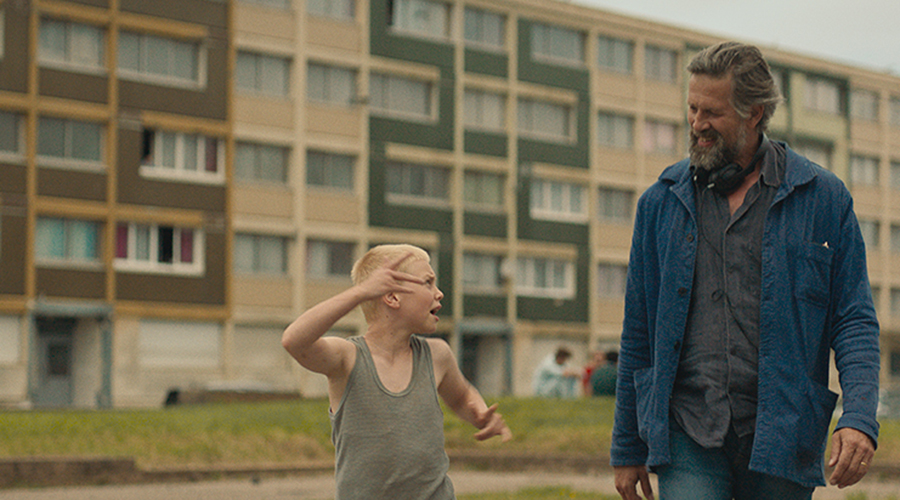
Directors Lise Akoka and Romae Gueret try to denounce something similar in their film The worst ones, (translated something like The worst). In his debut work, premiered in Spain at the Mostra, the directors would leave the streets of New York to approach the town of Boulogne-sur-Mer, In France. Over there, A mature film director holds a casting call among young people in the area to star in a film that, in turn, portray your own lives. Starts, So, a dialogue filmed between the film that this fictional film crew is shooting, and the supposed “real” lives of the actors who play the characters who will appear later in it.
Akoka and Gueret's film adopts this form to make a double or triple portrait. On the one hand, There is the supposed reality of the people who live in that town, a depressed region in the south of the country. On the other, the practices of an art are questioned, the cinema, which frequently requires certain distortions for the benefit of dramaturgy. So, We find a deranged director who seems willing to push his actors as far as necessary to achieve his goals.. While, They suffer their own emotional traumas, derived from lives in decay.
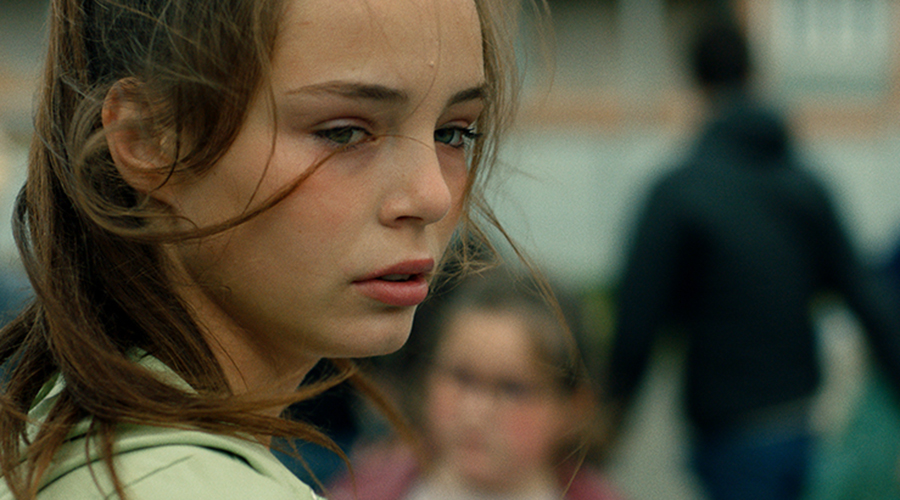
These elements serve the two directors to compose a metalanguage exercise not exempt from social criticism and towards their own profession.. On the social level, we find the portrait of these young people who, after appearances, They struggle to resolve their own internal conflicts. Ryan is a boy with clear communication and isolation problems. (suffers frequent epileptic seizures). Lily is a teenager who tries to escape the "easy" image that she has created among her high school classmates.. And Jessy is the typical popular boy, whose alpha male façade hides other, perhaps more valuable virtues. The experience of the film will have some effect on all of them.. Background, the scene of a school where violent clashes are frequent, of broken families (Ryan lives with his sister after his own mother lost custody of him), of an “I” in need of more solid anchors to survive itself.
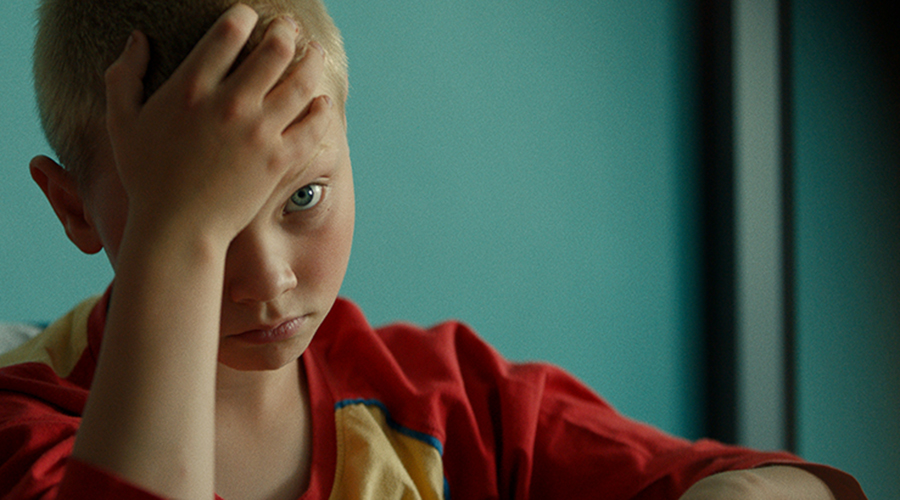
On the other hand, the one from the cinema, The film describes an art where the result matters more than the ways to achieve it. In one of the sequences of the film, Gabriel, the director of the other movie, the fictional one, He confesses to his new actors some of his youth experiences and jokes with them about the fact that he is making his first film after he is fifty years old.. Larry Clark would shoot Kids, his first full length, at the age of 52. The question remains, well, in the air, just as Elenore Gurrey stated, co-writer of this work, at a press conference after the screening of the film: where are the limits of art? Each viewer will have to develop their own analysis.
Akoka and Gueret achieve great verism or credibility in some of the film's passages, especially when it comes to the acting of the guys playing themselves. Equally interesting are the sequences in which they manage to blur the line between reality and fiction., in such a way that this confrontation becomes evident. Let's review, in this sense, one of the final scenes in which Ryan and Lily share a dramatic scene from the movie they are making. Two doubts, however, They appear for this chronicler. The first is that, although the game is very suggestive, is a little unbalanced or tangled between the two parts of the proposal. In the end, we know more about the world of cinema than that of boys, whose ultimate meaning is somewhat disengaged, which dilutes that part of sociological denunciation to which the film aspires. Besides, We are also curious to know what limits the filmmakers themselves have been able to cross to create their piece.. After looking in the back room of a fiction filming, We are left with the desire to look into the real backstage of the actual filming that represents this film that we are watching.. This brings us back to the same question as before.: what is reality? What if Akoka and Gueret are also deceiving us? In one of the sequences of the film, one of the characters laments that the most problematic kids were chosen for the casting from the entire school on which the plot focuses. (Hence the title of the movie: the worst). It's an inside joke, according to Elenore Gurrey, refers to the medium-length film that inspired this film, made by the same authors. After the screening of that short film, The inhabitants of the area did not feel represented in a too dark portrait of their reality. These lines of dialogue, however, resonate in the viewer's head without, somehow, can solve the riddle that has been posed to you.
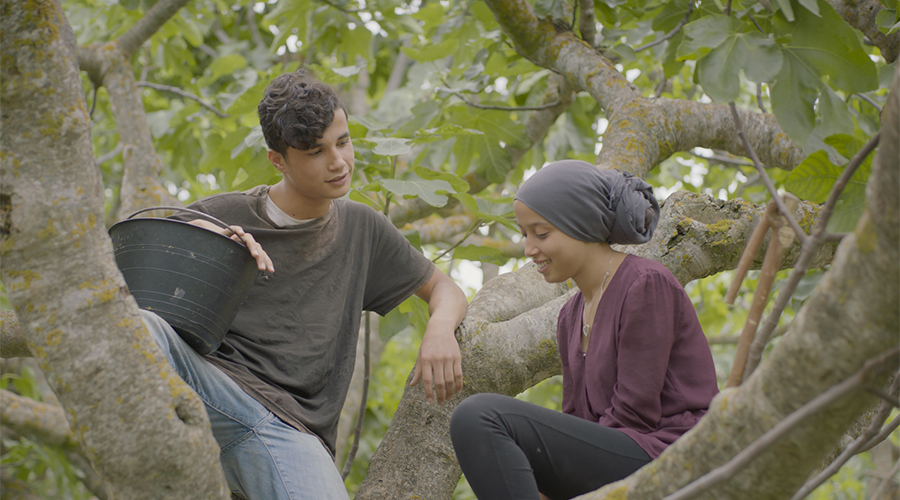
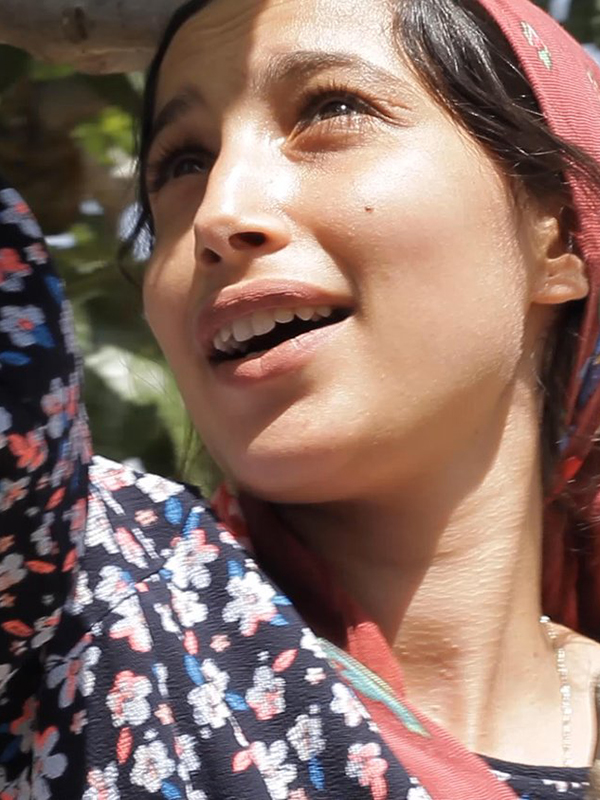
The second proposal of this day featured among the fig trees, by director Erige Sehiri. The film takes us somewhere in rural Tunisia.. The day begins and the boss picks up a group of women (and some man) to go to work. Climbing into a precarious van, The party heads to a field of fig trees to collect the fruits.. The work is delicate. However, there is time for everything and, in the middle of the tree branches, all kinds of daily conflicts develop.
With these little notes as a guide, Erige Sehiri presents a piece that avoids the elaboration of a conventional plot to put together a kind of collage by pulling the thread of those little dramas. So, We found an employer who tries to take advantage of one of his workers, another who tries to organize a life with her boyfriend, another that avoids love, etc. The film is developing, So, about these little arguments that happen under the branches of the fig trees, while the characters do their work.
Among the virtues that Sehiri's work shows is that attachment to reality that he tries to transfer to the screen.. Encouraged by the news of a real accident in which several of these workers died, The director moved to her hometown to gather stories of her own experience in this world.. This, Together again with the use of non-professional actors, it gives the film authentic verism and naturalness., especially in those conversations that take place under the protection of the fig leaves. In this sense, the director's training in the field of documentary is perceived. Sehiri portrays his characters in short close-ups, which allows for fractional editing and the use of transition shots to unite the scenes.. And although at some moments the film can fall into a certain monotony in terms of formal solutions, the director succeeds in a job that, finally, flows with its own naturalness.
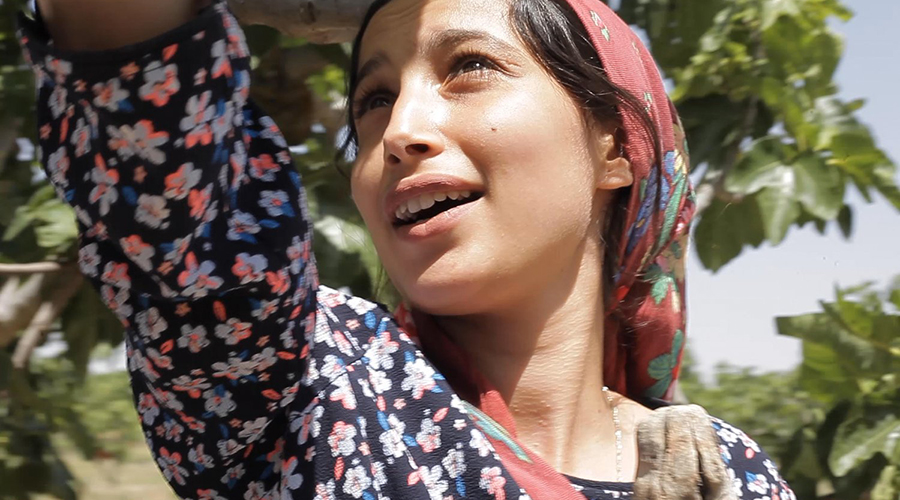
among the fig trees unfolds, with these bases, on two fundamental topics. The first of them is, of course, that of labor exploitation. through fiction, Sehiri gives us details of a world in which contracts and salary payments are unnecessary, for the hours dedicated to the task, is subject to the whims of a boss who knows he has all the power in his hand. This structure denounces a network of conflicting interests that are in constant conflict.. aside, a boss who tries to get as much profit as he can from each of his workers. On the other, an impoverished town with few employment opportunities. However, Here are some differences between generations. So, we will see that, while older women lend themselves to all this with greater submission, In the case of the youngest, a certain rebellion begins to awaken.
On the other hand, we find the dalliances of love of a generation that seeks its outlets. Here the versions walk from the door of marriage, to the disappointment of relationships marked by tradition that puts women in a clear position of inferiority. Between small conversations, the future of a youth who sees their future tied to a land that closes their opportunities is settled.. In the distance, the temptation of emigration to the city. However, This dream is also clouded by the memory of one of the characters who has returned to the town after several years of absence.. After the promise of a better future, the mirage. All that glitters is not gold. G. LEÓN