Original title: invisible · Gracia Querejeta · Spain · 2020 · Script: Antonio Mercero, Gracia Querejeta · Interpreters: Emma Suárez, Adriana Ozores, Nathalie Poza, Blanca Portillo…
Original title: The Perfect Candidate · Haifaa Al-Mansour · Saudi Arabia · 2019 · Script: Haifaa Al-Mansour, Brad Niemann · Performers: Mila Al Zahrani, Nora Al Awadh, Dae Al Hilali…
It was Woody Allen who, back in the mid eighties, would construct the portrait of the contemporary cosmopolitan woman. In the bright Hanna and her sisters, Allen showed us a group of women who were looking for their place in the world and wondering about their professional future., existential and sentimental. one world, as almost always in Allen's films, of comings and goings without a precise direction, of doubts and contradictions, of uncertainties, definitely. The shadow of Allen's work has been projected over the decades on all types of authors and productions., from feature films to television series, what they saw in their work, logical generational aesthetic differences overcome, a reference. And there it continues.

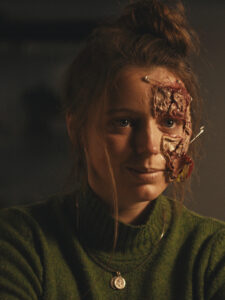
In invisible, Madrid director Gracia Querejeta immerses us in the lives of three other women, Julia, Elsa and Amelia, three lifelong friends who meet in a park every Thursday morning to walk and get some exercise. while they walk, before going to work, They talk to each other about almost everything.: of the apparent crisis in Amelia's relationship with her boyfriend and her unruly stepdaughter, of Julia's conflicts with her students, or Elsa's problems with her boss who, as he says, try to flirt with her. But, above the particularities of each case, The three women face an event that affects them all.. After the fifties, the three of them feel invisible, as the text on the tape says, not only for men, according to themselves, They have already ruled them out as possible subjects of their desires., also for the rest of the world who seem to have lost their rhythm.

It is worth highlighting in Querejeta's new production the effort made to take the viewer into the realm of everyday life.. They are missing in Spanish cinema and, especially, in a certain authorial cinema, stories that honestly tell us about the conflicts of ordinary citizens, a cinema that places the spotlight on the small daily wars, that puts our feet on the ground and serves as a guide and reference to understand, even a little better, this complex world that has touched us (good or bad) fortuna. And that is precisely where Querejeta puts its focus, in the weight of directing oneself in a world without answers, without a clear instruction manual and where everyone makes do as best they can. In invisible, perhaps his most honest and least syrupy project, Querejeta tells us that, sooner rather than later, We all screw up in one way or another and that screwing up is inevitable. And it's okay that it's like that. What makes Amelia stay with a man who doesn't love her just because he's afraid of being alone?? Where does this resentment that Julia feels for almost everything come from?? What is Elsa's obsession with because her boss recognizes that he wants her?? Every question has an immediate answer, But that does not mean that we obtain a definitive solution from it.. Like in Allen's cinema, It is simply about recognizing and recognizing that the paths of life are full of potholes that we do not know how to overcome.. Querejeta tells us that we are not perfect (aunque lo pretendamos y nos veamos como tales ante los problemas que sufre el de al lado), that we are not made of iron and, quite the opposite, For one reason or another we always end up tripping over the stones that life throws at us. (each one bears his own), that it is very easy to see the straw in another's eye, but the thing about the beam in one's own is another story, We are always willing to give advice to others on what they should do, but what, no matter how smart we think we are, we are not able to provide ourselves with the appropriate recipe.

It weighs on this job, however, some issues not completely resolved that, we believe, if it had been treated with a little more ambition, they would have offered us a more consistent and lasting piece in our memory. Blame for this we point out, first of all, to an excessively literary or theatrical way of dialogue that weighs like a slab and dislocates the naturalistic premises to which the work seemed to be directed.. It is true that this imposture is partially compensated as the three leading actresses take on the tone of the text., although we never manage to get rid of that feeling of unreality that permeates the film and that keeps us from turning these characters into women of flesh and blood.. And this may have been intentional on the part of the authors., but the formula does not fit the core of the proposal. There is something in the script by Gracia Querejeta and Antonio Mercero, his co-screenwriter, that is forced and that affects the psychological construction of its characters. It is lawful that, when it comes to bringing their tribulations to the screen, The authors have tried to portray a wide spectrum of characters and problems, both psychological and existential. Part of the fun of the matter lay in the confrontation between differences.. But the construction, the intimate drawing of these characters becomes too evident to the viewer's eyes, too intentional, leaving spontaneity by the way. If everything flowed organically in Allen's work, viva, from within the structure of the story itself, here (and this is an all too common defect in our cinema) everything seems out of joint, as if adhered by outdated glue. The pieces stay together, but the seams are visible, the device. The author does herself a disservice when it comes to incorporating, So, other reinforcing elements, like the character played by Pedro Casablanc who, in addition to reminding us of many other similar characters already hackneyed in the cinema, it contributes little to the story. Or the stellar appearance of Blanca Portillo, whose participation lays bare the intent (unnecessary) of the authors for joining the prevailing political currents and that only add more imposture to the artifact. Summing up: one of lime and the other of sand.

Haifaa al-Mansour's name kept popping up (discreetly) to the international scene after the making of his debut feature, The green bicycle. Hailed as the first film shot by a woman in Saudi Arabia, Al-Mansour's debut shined in the eyes of this chronicler more for its political values than for its strictly cinematic ones.. In his first long work, The Saudi director demonstrated better intentions than expertise, a story without major fissures, but unambitious both in intentions and in its dramatic and formal construction.

After a brief stint in the USA and the United Kingdom where he would film, among other, Mary Shelley, film about the author of Frankenstein, Haifaa al-Mansour returned to her country to film The perfect candidate, a piece that puts the director after her first long work with which, by proposal and purposes, is directly twinned. Here, the protagonist is Maryam, a young doctor working in a modest hospital in a small town. Despite his preparation, Maryam must face the rudeness of her classmates every day, who don't always seem confident in their abilities, and the prejudices of some male patients who, out of pure prejudice, They object to being cared for by her.. But Maryam's troubles don't end here.. Aware of the precariousness of the hospital where he works due to the lack of some basic structures, Maryam demands that the city council take action on the matter. The only response you receive will be contemptuous silence.. But a series of coincidences (of which her dependent condition as a woman is no stranger), Maryam is facing the possibility of running for mayor of the city.. Even if you do not have any prior support, The young doctor sees in this an opportunity to raise her voice against the political helplessness to which she is subjected..

With these elements, Haifaa al-Mansour constructs a story that wants to be a mirror of the situation of women in Saudi culture. To the misgivings it causes at work, Maryam must now face a social environment that does not seem to accept the very fact that a woman holds decision-making positions.. But Al-Mansour's darts are not only directed against those who openly oppose his idea., but against those who also do it with their silence. It is true that in a society like the one you describe to us, there are few options to express any dissenting opinion, imposing consensus through collective fear and bureaucratic pressure, but that does not exempt everyone from assuming their own individual responsibility. But the tape doesn't stop there, dirigiéndose hacia una estructura que afecta a todos los aspectos de la vida cotidiana. So, As Maryam confronts all these battles, his father begins a concert tour with a traditional music group he leads. The fact, far from being an inconsequential anecdote, realizes to what extent the lack of freedoms affects the spirit and spirit of an entire nation. Musical artistic expressions prohibited for a long time, concerts cause a real emotional explosion among attendees, fact on which the director places special emphasis, not only as a complaint, but as a declaration of intent. Beneath the burkas and traditions, There is a society that, when given the opportunity, express your true character, happy and humorous.

As already happened in The green bicycle, Perhaps the biggest problem with this production is, again, in a story full of good intentions, pero demasiado superficial en sus planteamientos, fact that makes him fall into excessive didacticism. It's not that the message is wrong., but the dramatic and plot coordinates, de tono, through which Haifaa al-Mansour travels offers little news to a Western viewer (to whom perhaps it is especially addressed) quite trained in certain types of plots. No surprises here, nor formal, nor arguments. Everything finally falls into place and even defeat turns into a happy victory. There are no nuances or contradictions and, in the end, even the toughest opponent ends up converting to the good cause. All this makes the experience a ride without ups and downs., formally and intellectually flat, by not posing any type of challenge for the viewer. Nothing new to discover, in essence, beyond the mere confirmation of the image that that same spectator already has in his head before entering the room. GERARDO LEON