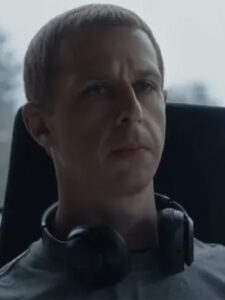
Original title: I accuse · Roman Polanski · France · 2019 · Script: Robert Harris & Roman Polanski · Interpreters: Jean Dujardin, Louis Garrel, Emmanuelle Seigner…
Original title: Richard Jewell · Clint Eastwood · EEUU · 2019 · Script: Billy Ray · Performers: Paul Walter Hauser, Sam Rockwell, Kathy Bates, Jon Hamm, Olivia Wilde…
Two films that have a lot in common coincided on the billboard this week. Two works of great mastery, both in its execution, as in the reflection to which they instigate us. Shape, aesthetic architecture, and speech they have, as i say, many shared items. Two works that put under the magnifying glass something that we have defended many times here and that concerns an industry and a criticism that, saying on many occasions to resist the impostures of postmodernity, It is his habit to put all his attention on what is new., the “young”, looking down on experience. Two films that demonstrate that age is by no means an impediment to achieving creative excellence over and over again and that a filmmaker, a great filmmaker, It is not built overnight and by a mere stroke of luck., inspiration or a chance success, but it is a long-term work that requires a very solid foundation.

They share so much The officer and the spy, Roman Polanski's last work, as Richard Jewell, de Clint Eastwood, to its main character. They are not called the same, Of course. They don't even share a historical moment. In Polnaski's film its protagonist is, indirectly, Alfred Dreyfus, young French army officer who is accused of treason for passing state secrets to German enemies and neighbors. We are at the end of the 19th century and only twenty years after the events narrated in the film, the First World War would break out., consequence of the escalation of tensions generated between the two European powers. The easy condemnation of Dreyfus, despite the flimsy evidence against him, arouses the interest of Colonel Georges Picquart, mentor of Dreyfus and recently promoted soldier to head of the Army Intelligence Service. When the information gathered about the case proves Dreyfus' innocence and he tries to denounce him, Complications will begin with the senior officials of the institution, who will try to cover up the case. Something similar happens to Richard Jewell in Eastwood's film. Here, Richard is a modest security guard who finds himself involved in a bizarre terrorism accusation.. Richard is working in a concert area at the Atlanta Olympic facilities this year. 1996, when an abandoned package catches your suspicious attention. Richard immediately alerts his colleagues, They discover that it is an explosive device. Richard salva, So, the lives of many people and is considered, at first, a national hero. But this public recognition and fame take an unexpected turn when he discovers that he is the main suspect in an investigation by the FBI that points him out as responsible for the events..

Taking for granted, well, the differences in terms of the plot and the distance that separates them in the historical time to which they refer, Both stories raise a common complaint, that of the defenselessness of the common man against the interests of the system that is supposed to protect them. In the case of the Polanski film, Picquart and Dreyfus face the establishment of an army tied to its immovable power and political and social influence. As soon as young Colonel Picquart informs his superiors of what he has discovered, They conspire against him to discredit him.. It matters little that a terrible injustice has been committed. Something similar happens in the case of Jewell. The discovery of the bomb reveals the incompetence of the FBI, which finds poor Richard the scapegoat for its mistakes.. Next to the government machinery and its police arm, There is also a press that has confused information with sensationalism and that seems to care very little about the lives it takes and, as in the previous case, if it is the very idea of justice that declines. In the face of the powerful machinery of the large estates or organizations that exercise power, that ordinary man feels radically helpless. How can one man alone confront the great machinery of the State, to their institutions, and their own survival interests? A titanic task that overwhelms anyone's capacity for psychological resistance and that can only result in the suffering caused by the most radical of helplessness and despair.. And here both films paint a crude portrait, but terribly human.

Among the many issues that both films address, One of them focuses on demonstrating how power groups work when someone catches them in the wrong.. Instead of acknowledging their mistake and trying to amend its tremendous consequences, instinct leads them to try to protect their public image, not being aware, in both cases, that the lie will end up being discovered and, with that, the reputation of the institution or body will be further damaged. This reflection is evident in Picquart's reaction to his superiors' attempt to hide the evidence he offers them.. Who defends the army the most?, the one who shows himself as your most noble servant, the one who tries, under any circumstances, preserve the nobility of its inspiring principles, or the one who tries to hide his shame? And I think this is a question that we could very well bring to our present day in which we so often encounter similar cases., whether in the field of social institutions (let's remember, For example, church pedophilia cases), as in politics (look for any headline in today's press).

But if both films stand out for something, it is their exaltation of moral principles as a guide., not only for life, but to build a fairer and better world. It is their principles that encourage Dreyfus and Jewell to defend themselves against the attacks they receive. Principles that are, besides, the same principles that they believed inspired those institutions they wish to serve, the army in the Dreyfus case, the law (the police) in Jewell's case. It is curiously, the fact of feeling betrayed (feel like they have been deceived, disappointed) those principles in which they believed and that encouraged them to be part of these establishments, those who leave them the enormous void that opens under their feet. How do you face the world when what you thought was its foundation is revealed to be a farce?? Will it be possible to regain confidence in these guiding principles?? The only way to do this will be, precisely, for trying to restore them. Restore your honor (word out of use today, but that gains overwhelming force in both films), your name, will be to restore the values of classes that have degraded themselves. And here it would be a good idea to look at something that unites both heroes. (or anti-heroes): We are referring to that empty look of the one who sees how his world, your vital and ethical sphere, falls apart, that what he had faith in and put order in his universe has ceased to exist.

But we should also refer to the principles of those few who are capable of facing the majority., figure that is represented by Colonel Picquart, in the case of the Polanski film, or from attorney Watson Bryant, in the case of Eastwood's work. Two men who, in the face of the complicit conformism of those around them, against the advice or the trap of prudence, they will not give up (for principles) until we see lost justice restored. And in the middle of all this, of course, The greatest ally of this deception is a popular mass that, although it is blurred in both films, depersonalized, his breath feels present in each of his frames. A mass that can be manipulated by a patriotic and sentimental appeal. Does it sound familiar to us?? A press that plays a great role in exciting the feelings of that mass, with more emphasis on Eastwood's film, he doesn't seem to have any scruples. If in Polanski's quote the press serves as a transmission belt (also out of my own conviction) of the interests of power, There is no trace of it in Eastwood's film.. It's about selling more newspapers, to be the first to give the scoop and if the foundations of that justice that they claim to defend remain along the way and some lives are destroyed, it doesn't matter.

But if they stand out so much for something The officer and the spy, as Richard Jewell It is an example of the strength of a classic conception of cinema, as long as, as is the case, the dramatic material available is well woven. What we see is what there is, the camera as a witness to the narrated events. and at the base, two exemplary texts that should only be criticized for the support at some moments of certain explanatory flashbacks that serve to underline some of the ideas that are used and that were undoubtedly superfluous.. But these pitfalls do not spoil the overall impression. In these times when the figure of the screenwriter stands out so much, especially in television series, These two pieces should be exhibited as examples of how a good story is put together.. Two booklets where the events presented invite us to make profound reflections on our world and our reality.. Two tapes that make us closed proposals, who do not confuse opening the story with draining the moral lesson and the firm commitment to certain ideas. Shape, surface, but also background, we said above. In times of unnecessarily long stories, These two works show that hours and hours of narration are of little use., no matter how good the production is that supports them, If in the end they remain like boats adrift in the middle of a storm, if they do not know which specific port they are going to. And these two stories touch. They touch because they show in an emotionally raw way the nudity in which their main characters find themselves., which is the nudity in which we also find ourselves as spectators.

A final mention deserves, Of course, an impeccable casting of actors in both productions. Of the qualities of Sam Rockwell, Olivia Wilde, Kathy Bates (awesome), Jon Hamm, Louis Garrel or Jean Dujardin, little can be added. But the big surprise falls on the side of a lesser known Paul Walter Hauser who plays a role of a rare significance in the cinema in his interpretation of Richard Jewell from Clint Eastwood's film. One of the most emotional performances that have been seen on screen in many years. Hard to suppress the emotion. GERARDO LEON