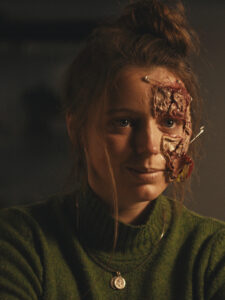
Original title: 1917 · Sam Mendes · USA · 2019 · Script: Sam Mendes, Krysty Wilson-Cairns · Interpreter: George MacKay, Dean-Charles Chapman, Benedict Cumberbatch, Colin Firth…
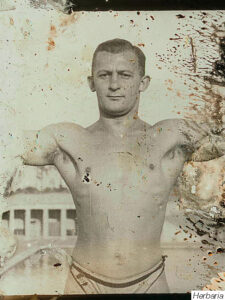
Original title: The Lighthouse · Robert Eggers · USA · 2019 · Script: Robert Eggers, Max Eggers · Interpreters: Willem Dafoe, Robert Pattinson…
It seems like it was just yesterday, but in reality it has been some time since Steven Spielberg filmed his film Saving Private Ryan. Great schemer of contemporary entertainment cinema, Spielberg not only revitalized a genre, the warlike, that already seemed from another time, but, besides, established the formal and argumentative keys on which his work was going to be based., so, future. This renewal was going to be based, at least, in two elements. From the formal point of view, It would be about placing the camera next to the soldiers participating in the conflict to suffer with them the dangers that awaited them., the whistle of bullets, the threat and impact of bombs, the feeling of helplessness; definitely, that we would experience the same physical sensations with them, an experience not only descriptive, but immersion. Also in the plot aspect, new premises or paradigms were going to be established.. Now it was no longer about telling or being inspired by great historical events to create more or less fictitious plots.. The key was to describe to us the suffering to which the war subjected that anonymous soldier over whom the threat of almost certain death or death loomed., at least, probable. Both axes underpin Sam Mendes' latest work, 1917.

Mendes' new film transports us to the First World War, on French lands. Two British Army corporals with the surnames Schofield and Blake, They are recruited for a high-risk mission: to send to the responsible officer of the 8th battalion the order to stop the attack planned the next morning against the Germans. Believing the enemy weakened and retreated from the front line, The troops have launched against him to consummate his definitive defeat. But, as the informants to the high command have shown, The German maneuver is actually a trap that will lead to 1600 soldiers to a slaughterhouse. Isolated and incommunicado, the 8th battalion is unaware of these facts, which is why Schofield and Blake must reach him to report and stop, So, the planned offensive. Will they arrive on time?

As Spielberg did in Saving Private Ryan, Mendes' film places the viewer alongside its two protagonists to follow them on their dangerous journey. Thus, The greatest interest of the film is not so much in the specific events or in the plot excuse that is going to animate them., as in trying to convince that spectator that he himself is in the middle of the battlefield. Rolled in two (fake, seems to be) long sequence shots, the tape unfolds, So, under the premise of narrating in real time the difficulties that the characters are going to face. And although Mendes' film is weighed down by the memory of Spielberg's predecessor, subtracting a certain freshness or originality from his proposal, Nor should we completely disdain the director's ability to surprise his audience.. Mendes has created a piece that tries to make us reflect on the horror of war, and what better way to achieve it than to show us, in the starkest and most shocking way possible, its consequences, its direct result. It is not about accounting for the figures or the most relevant events., but to confront the conditions of battle: the sight of mutilated bodies, the poor health situation, inclement weather, the presence and size of the weapons, the narrowness and defenselessness of the trenches, etc. Little by little, Mendes is taking inventory of us. After every bend, after every hill, a new surprise is presented before our eyes.

But where perhaps the film becomes most interesting is not in the skill that Mendes and his team demonstrate in this work of reconstructing this landscape of horror., but at the moment in which the soldiers finally face an opponent who remains blurred here, faceless. Without detaching too much from what Spielberg proposed (There are several sequences and situations that pay homage to him.), The director plays his cards and looks for new puddles where his ships can dock. Mendes' war, like any war, places the soldier on a fragile line between life and death. After an unexpected blow, Corporal Schofield loses consciousness and, when he wakes up, you are faced with a nightmare scenario. Night has fallen and a lot of time has been lost. To reach your ultimate goal, must now cross a burning town. The march resumed, a figure appears in front of him. Thus begins a desperate chase. Like in the Spielberg film, The impression of being hit by a bullet is very vivid and realistic. The ghostly shadows that the flames raise in the night, spatial disorientation, The doubt that we are heading in the right direction harasses the soldier and the audience in the seats..

Conceived as a journey, The greatest complication that this type of work faces is the interest that the different events or difficulties that the characters overcome along the way may arouse in the viewer.. And this is perhaps where Mendes' film finds its greatest weaknesses.. Supported by a very schematic plot line (carry a message from one place to another in time), It is not so much about solving a mystery as about weaving an increasingly greater difficulty and, with that, maintain tension at different stages of the journey. And here some very random solutions will test the credibility and solvency of what is narrated.. Mendes has built a piece that offers the viewer a good kinetic experience, but maybe certain plot solutions, too much given to chance, do not quite satisfy the expectations created. Cinema of classic conception within the traditional parameters of the Anglo-Saxon industry (the good and the bad are still the same as always, I wonder what this will look like in Germany?), that offers the public good moments in a film that can hardly be appreciated outside the movie theater, another challenge that he takes on and manages to channel, but which lacks some dramatic depth. Mendes puts the camera next to the soldiers, but, somehow, he forgets about them as axes of the plot, drawing psychological profiles of too simple construction. Like in the Spielberg film, What is relevant here is the visual experience over the intellectual or the historical or political or even moral-philosophical analysis of what it shows. (That's why he resorts to a completely invented event). Cinema that aims at the guts, to the show. And he does it well, guaranteeing a good time of entertainment, but to whom, past time and certain experiences, lacks background load.

The one that perhaps has more than enough of that burden is the second feature film by American director Robert Eggers. The author of The lighthouse in the last moments of the 19th century to take us to a small island, just a rock in the middle of the sea, where two men of the same name arrive, Thomas, to take care of the lighthouse that gives the film its title. Little more to say. From that moment, The two men divide the tasks according to the hierarchical position held by each one.. Old Blake keeps the lighthouse lamp to himself., the least cumbersome and most grateful task. While, The young and less experienced Howard will have to deal with the dirtiest work of cleaning the rooms and machinery that make the facilities work.. At first, The relationship between the two seems to pass with a certain harmony, but forced isolation and misgivings will begin to push them against each other until they fall into madness..

It is not easy to decipher what the ultimate meaning of a job like The lighthouse. Eggers places these two characters on the screen and seems to let them move at their own pace., like, just as it happens in the fiction itself, They both felt isolated and, therefore, protected, away from the gaze of others, as if they ignore that they are being seen, watched by the spectator in the room. To this the director and co-writer adds a series of images that we do not know if they arise from the imagination or the state of alienation to which, little by little, those same characters are arriving, or work autonomously, as a suggestion, reflection of the forces that are unleashed. The set works, So, like a device that points to the most intimate of the viewer, to a place that is not always located on the plane of the rational, but to the emotions and the most primary understanding of oneself.

It is no coincidence that among the references the film appeals to is the American writer Henri Melville., author whose work is located close to the time in which his action takes place, although I think we would not be wrong if we also appealed to Joseph Conrad. The work of both writers is situated at that moment of transition between the ancient and modern world that was already developing around the Industrial Revolution that was going to change the world., not only because of the technological development that was going to involve, but also in cosmogony, the new mental or psychological order, culture that was going to govern the minds of men, at least, in the civilized West. However, after appearances, The lighthouse comes to suggest to us again that things are not so clear. Eggers, como Melville, like Conrad, like Lovecraft or Poe, comes to tell us that beneath that civilized mantle is Man himself, fearful and defenseless against the forces of nature., that man (that humanity) under whose cerebral cortex the remains of the primitive and its mythological vision of the world still remain..

But the comparison with both authors does not end there., in the background. Also the structure of this film is conditioned by the influence of both authors, a way of narrating that is not among contemporary fiction models, thing that, safe, may baffle many viewers. Like in Moby Dick, like in The heart of darkness, The lighthouse It starts with a very simple situation to understand: a man becomes a whaler to earn a living, cross a river to find another man or, as is the case, is going to work as a lighthouse keeper. Slowly, however, this initial situation so everyday, fades away to enter a nightmare world that, curiously, It is the characters' own mental state. Far, isolated from civilization, the monsters of the past emerge, the logic of order fades and the inner beast appears. Eggers tears away the veil of that civilization to, like Conrad or Melville did, reveal to us the substance of superstition and madness that beats beneath appearances.

In the formal section, Robert Eggers makes some very specific decisions. First of all, decides to shoot on film and in square format. The excuse seems to pay homage to German expressionism or directors like Dreyer, Firtz Lang or Murnau have been mentioned in some comments.. Despite these relationships, Eggers fails, however, break away from the codes of modern language. There are certain aesthetic forms that can no longer be imitated. That square format that the cinema image gives it does work for you, instead, to create that oppressive atmosphere that breathes into the entire film. The lighthouse es, above all, a film that takes place in a specific space. Space that hovers over the characters and that oppresses the viewer's gaze until it is confined to it.. But, even, when we go outside, the sight still does not free itself from that oppression in the face of the attack of the rain or the fear of that angry sea, mysterious, source of ancient terrors, that pushes us, what happens to the two lighthouse keepers, to want to take refuge inside and flee from it. The almost musical use of sound comes to accentuate that impression of loneliness and helplessness in the face of the inexplicable.. They are everyday sounds, the pounding of the storm on the windows, the ticking of the wall clock pendulum, what, as it happened in The Turin Horse by Bela Tarr (without a doubt another reference of this film), they hover over us as an announcement of the drama that threatens us, a ghostly hand, that of nature, that hits the entrances of our mind.

Necessary collaborators for this inner journey are two actors in a state of grace., Willem Dafoe y Robert Pattison, priceless in their roles as Howard and Blake. Jaime Rosales said in his book The pencil and the camera that the subtext and ultimate meaning of a film is not given by the script, but the interpretation, an assertion that fits perfectly in this case. From the faces and gestures of both actors we understand what the images emanate: the madness of alcohol that disinhibits our passions, the weight of guilt, the fight of the young against the old, the new versus the outdated, Ahab y Sturbuck, the experience of life in the face of the arrogance to which the lack of it encourages us, the rational versus the irrational, everything is there. It is in those sequences drowned by the effluvia of the drink, between emotional explosions caused by drunkenness that, then, They will fall into absolute despair in the face of the uncertain future of life., when we recognize each other. GERARDO LEON