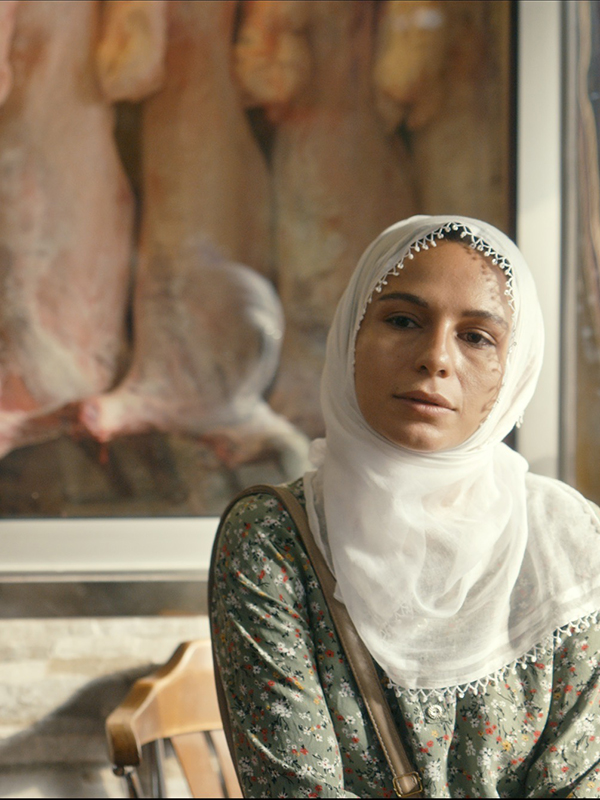

Seventh film session of the Official Section of the 40th edition of La Mostra de Valencia that, regarding this space, comes to an end. Account The flying meatball maker by Turkish director Rezan Yeşilbaş the story of Kadir, a middle-aged man who runs a street food business. Kadir has, besides, a dream: volar. And not in any way, on a plane, For example, but for himself. For it, Every day he leaves the city to practice with a huge paraglider that he has acquired and that he carries in the trunk of his car at all hours.. But it is obvious that he alone will not be able to master the technique., so he seeks the help of two young people who are going to instruct him. The problem is that his family does not seem to accept this apparent obsession well and, worried about what they will say in a community implacable to the judgment of appearances, they will make your life impossible.
This second feature-length work by Rezan Yeşilbaş stands out for its crystal-clear script.. A text in which background and story coexist organically, seamless. From the particular to the general, three are, at least, the issues this film addresses. In the closest, Yeşilbaş's film offers us a reflection on the expectations of life. Kadir is a simple man. Every day he sets up his food stall and works hard and unsatisfactory with Huseyn., your assistant, another passionate man (for football). But despite his age (We sense that it has passed 50), Kadir has not resigned himself to fulfilling a dream that, we will discover, housed since childhood. And why should I?, Yeşilbaş prompts us to think. Who says when life ends? When does the illusion end? From this point of view, His story is the story of a small revolution, modest if you like, intimate, but, In these times where youth seems to consume everything, revolution, in any case.

But Kadir is not alone in this trance. At his side is Azize, his wife. And here Rezan Yeşilbaş's film gives us one of the most beautiful love stories that a movie screen has ever offered us.. In that sense, The flying meatball maker gives a forceful reply to a good part of contemporary cinema. Kadir and Azize form a traditional couple, But the fulfillment of their roles within their relationship is not even remotely an ordeal for any of them.. They have their problems, of course. He will face general incomprehension. She to an outside world that pressures her to put her house “in order”. But, unlike other cases, Their relationship is not based on mere confrontation., but in mutual understanding. Yeah, the road will be trodden with setbacks, of misunderstandings, sometimes lack of understanding of the other's feelings, a process in which both will temporarily collide, treating (and that's what's valuable) to understand each point of view, although it will not always be easy and the risk of rupture will loom on the horizon, threatening harmony.. as i say, a whole revolution.
and beyond, background, a society whose values try to impose themselves on the couple. To Kadir's dream, opposes, on the one hand, a father-in-law who is obsessed with the image that his daughter is giving to the community. Besides, we have his brother-in-law, a man entangled in real estate business, what today we would call an “entrepreneur”. His brother-in-law wants to involve Kadir in his dealings, but this one resists. He is not interested. With this confrontation, Rezan Yeşilbaş offers us a reflection on two ways of understanding life. A materialist who praises people for what they have, and another that puts other less high values into play, more mundane, What is the fulfillment of those small dreams that keep us alive?, another type of wealth. Rezan Yeşilbaş is clear on which side he is on.
Although at first it may not seem like it, The flying meatball maker It is an ensemble film, and there Yeşilbaş demonstrates remarkable mastery in constructing a broad psychological portrait, much more elaborate than a superficial look at his film implies. From the main characters to the secondary ones (some of whom barely appear in one or two scenes or are only mentioned in conversation), Yeşilbaş draws a very precise snapshot that does not avoid addressing contradictions without losing coherence.

And all this arises, above all, of a very particular position of the director when constructing a proposal where these psychological aspects emerge from the development of the situations that these characters are going to face., no predetermined value judgments. Again, like in Aisha can’t fly, the Turkish director stands behind his creatures, not in front. Mallard se occulta, does not direct or manipulate, It is only offered as a vehicle for what history itself demands.. It is the reality of the facts (as stated by Yeşilbaş in a press conference, This story is based on a real case), of what we call life experience which serves as a guide, not a moral prejudice. Which does not mean that there is not, as we say, a reflection, but this arises in the viewer before what has been seen and lived, not from a superior voice that “says” and organizes our gaze. All of this is helped by a production that maintains the same discreet tone and that is specified in the prodigality of medium and general shots in which the characters move naturally., no visual underlines. Yeşilbaş does not even resort to music to exalt emotions. You don't need it, that is its virtue. A delicious movie.
This search for proximity is also among the purposes of Turkish production. (It is the country most represented in this edition of La Mostra) Mom’s pale flowers from director Ali Cabbar. This film places us at a very specific moment in Bahadir's life., a film director who returns to his small hometown to help his mother in the work of harvesting some olive fields that his family owns. Bahadir finds himself in a difficult personal situation. His production company is on the verge of bankruptcy and he is questioning its future. In that context, meets Ahmet again, an old childhood friend, in his absence, helps his mother take care of her land, and Feride, an old girlfriend who has returned to town after living away for a while. Confused, Bahadir considers whether to also return to the town and resume his relationship with Feride. Meanwhile, A local landowner is trying to take over all the small farms like the one Bahadir's family owns.. The olive business no longer provides the returns of the past and families are drowning in debt, what this guy takes advantage of to buy the land at low cost. Also cornered by expenses, Bahadir and his mother will have to make a decision.
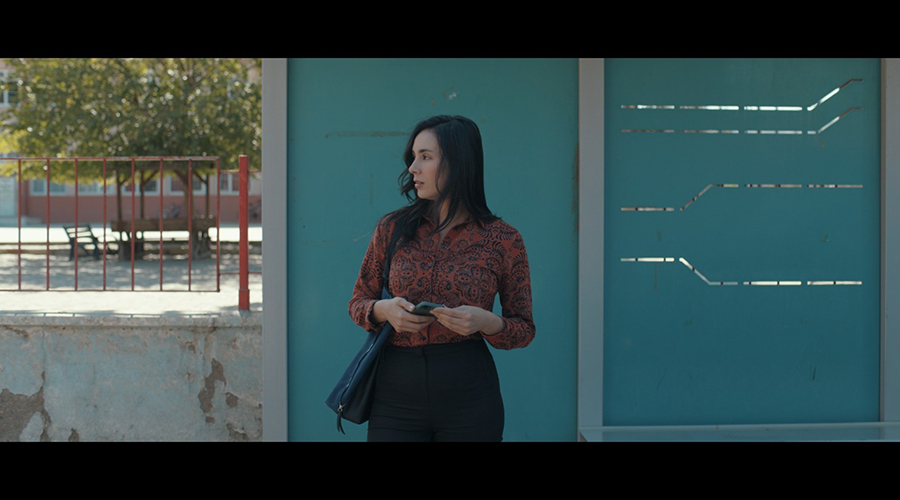
With this premise, Ali Cabbar plots a film that addresses many issues, not all of them important, What is the crisis in the rural world like?. Here Ali Cabbar constructs a somewhat affected story that falls into some common places in a piece that replicates the model of David's fight against Goliath., and although the solution to this conflict is not resolved in the expected way, That does not mean that the development is surprising to the viewer.. History repeats itself over and over again. On one side, small farmers, the survival of tradition. Of other, the unstoppable advance of a modernity that ends everything, with spaces and, above all, with that natural coexistence that we all demand, but that we rarely defend. The theme, as we say, it's interesting, but Cabbar's dramatic approach is perhaps too schematic and, thus, foreseeable.
The film is even more interesting when it approaches the most intimate plane of the characters.. Two themes articulate, in this sense, The narration. On one side, we have the relationship between Bahadir and his mother, a tenacious woman who opposes selling land that has belonged to her family for generations. It will not be so much the loss of the land itself, like roots, of a human relationship that is now severed with his son. Who will come to visit our graves?, asks Munevver., Bahadir's mother, before the portrait of her deceased husband. But the question does not only concern Manuvver, but to Bahadir himself, from now on, a split man. Who will visit his grave in the future?
Besides, her relationship with Ahmet and, above all, with Feride, will put Bahadir in front of a mirror. After being absent from town for years, Feride returns for his mother's funeral. It will be then when he discovers that there he has the affection that he did not find in the city and that he feels like an important absence in his life.. That affection will make him understand his place in the world., like in that Adolfo Aristarain movie. But, what is Bahadir's place? As the protagonist of The flying meatball maker, Bahadir leaves his parents' house in search of a dream, become a film director. But, is this enough? Caught in your own existential angst, will have to choose.
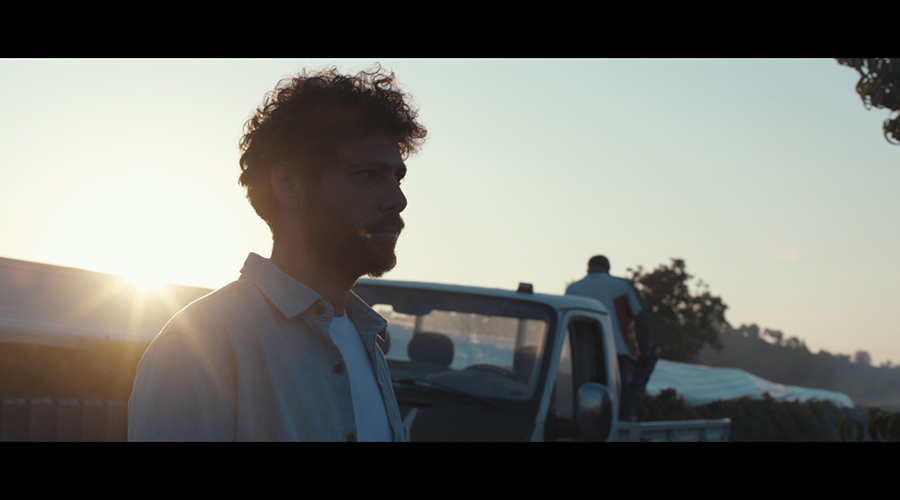
Ali Cabbar offers an irregular proposal, that combines very intimate moments with others where the form imposes itself on the story. Unlike his compatriot Rezan Yeşilbaş, Cabbar does use all kinds of underlining, such as the use of drones to create some aerial images that can be attractive, but they don't contribute much to a story that takes place at ground level, and music that highlights some scenes too much. Resources that I did not need and that mislead our gaze by making the director's hand more evident., especially in a final closing that he deliberately wanted to leave open, but what, on this occasion, required a stronger result, what can be perceived as a lack of commitment to us, the spectators. Providing solutions to plots can be understood as a symptom of manipulation by an author in certain human conflicts., but there are times, how are you, in which a more precise posture is required. An abrupt cut to black that, as a coup de effect, does not generate the expected expectation, but a certain frustration, not so much because, as spectators, we want them to give us everything trite, but because, this time, It seems more like a comfortable way out for the director than an artistic resolution.. GERARDO LEON