Second session of this edition of the Valencia Mostra that started with the veteran Italian director Marco Tullio Giordana, who already visited the festival in the year 2018 with the drama woman's name, in which it told the story of a young mother who was harassed by the director of a prestigious hospital for the elderly where she had been hired..
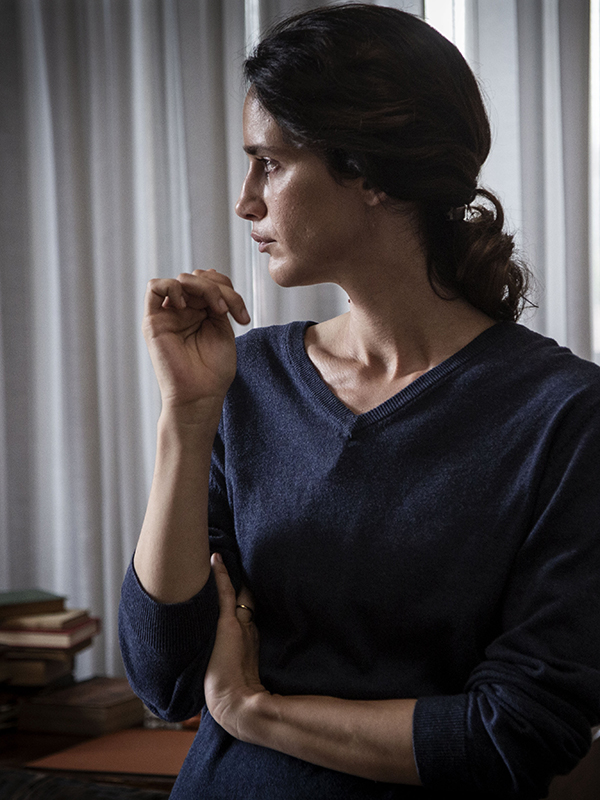
Giordana returned to the Mostra with Life next door, adaptation of a novel by the writer Mariapia Veladiano whose script was written by the director Marco Bellocchio as well. (Exterior night) and screenwriter Gloria Malatesta. A drama that takes us to the city of Vicenza, at the beginning of the eighties, and another woman, María, Osvaldo's young wife, a prestigious gynecologist with whom she is going to have a common daughter. The problem is that the girl was born with a spot that covers a good part of her neck and one cheek of her face.. The mark seems to affect María deeply., who rejects the girl to the point of not daring to touch her, trying to prevent, besides, don't go out on the street, afraid that she will face a world that she thinks will stigmatize her. “One look can kill you”, Maria says to Rebecca., Your daughter, who looks at her bewildered, not knowing how to react to his mother's authority. Fortunately, Rebecca has the help of her aunt Erminia, Osvaldo's sister, a famous concert pianist who lives in the stately home where the family resides and who will ensure that the girl finally goes outside.. Erminia will take care of schooling her and, above all, to enhance a natural talent, almost spontaneous, that Rebecca shows from very early to play the piano. Going outside will allow the girl to discover a world that, on the one hand, will welcome her with affection, although on the other hand he will come across certain subjects who seem to fulfill his mother's fears and expectations..
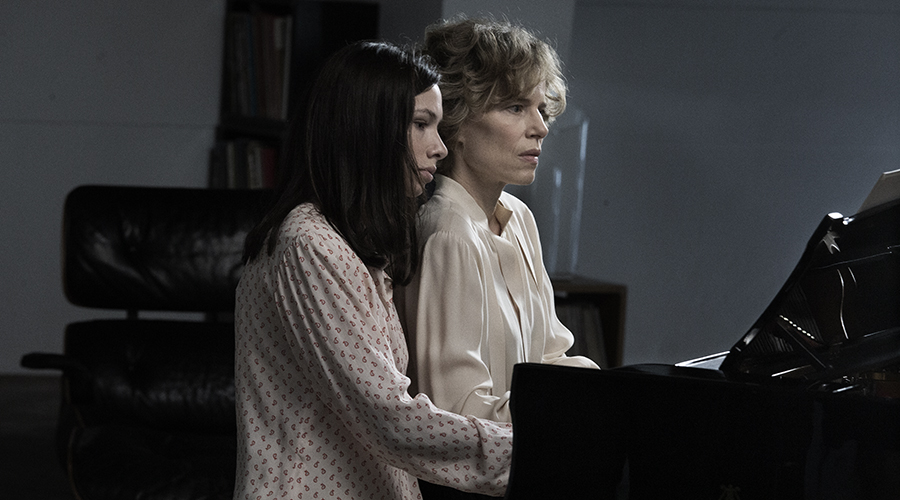
To approach a film like Life next door I think the first thing to understand is that this is a film that moves between two genres, melodrama and a story with gothic and fantastic overtones. It is not surprising that Giordana himself declared in his presentation at La Mostra his manifest desire to move away from any naturalist tradition or related to Italian realism.. This hybrid element will give the tone and meaning of the narrative.. Rebecca meets, on the one hand, in a crossfire of affections between the love for his mother and that of his father and his aunt, and on the other, in the logical construction of a self that is forced by the different stages of life through which it will go through, childhood, Childhood, adolescence and early adulthood. To find out who she is, first you will have to face, understand what makes her mother reject her. Rebecca will face herself, So, to different situations. On the one hand, to a woman who, incomprehensibly, will be secluded, mentally, in itself, and physically in the house, trying to drag her into that pit of depression and darkness in which she seems to be immersed. External struggle to gain material freedom, but also internal struggle to understand and win, definitely, another form of freedom, that of that self that must find its way. It is at that moment when the gothic element appears, when, later, Rebecca will have to face her memories. Rebecca will dialogue with her mother's apparitions, with whom you talk in dreams?, in the real world?, trying to discern what is true and what is a lie.

Con Life next door we are facing a cinema formally with capital letters. From the first image we perceive that we are facing a tradition that, as the Italian director commented at the presentation of the film, has as its background the generation that gave birth to directors like Bellocchio, whose script he offered him to direct and of whom he is a personal friend, or the incontestable Bernardo Bertolucci. Marco Tullio Giordana's grammar is of enviable precision with a staging that dances in favor of the story. Your camera is not only used to record facts, but it reinforces the emotional aspect of the dramatic artifact. An aspect that is highlighted by the excellent lighting work of Roberto Forza that gives elegance and great emotional and poetic power to each image., way that will be key to elaborating that mystery that will be the key to the development of the narrative.
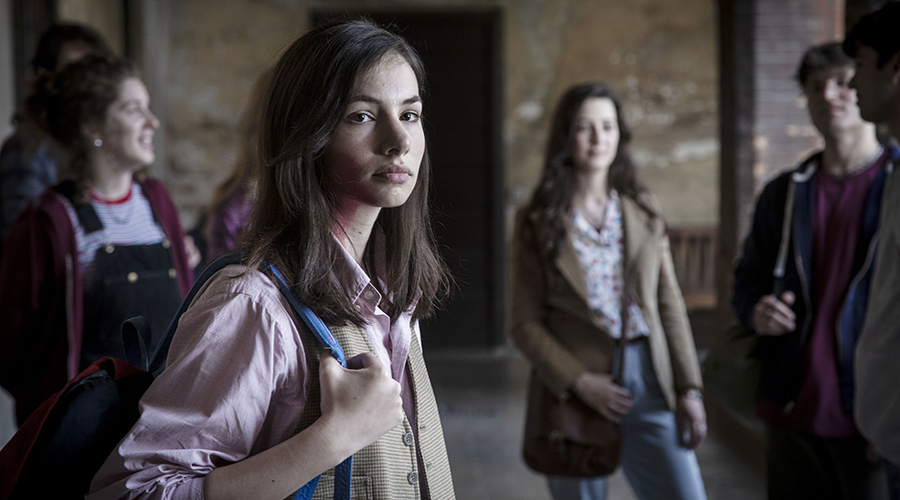
But all this would not gain strength without top-notch acting work.. Giordana was full of praise for a cast that lent itself to a game that, like the story, It also moved between fidelity to the original libretto, to its scenes and dialogues, and a certain improvisation. In fact, Giordana even modified the text during filming in order to place her actors in a certain state of unpredictability that would break their understanding of the characters and give naturalness and freshness to the performances.. Whatever the cause, we cannot help but admire the work of a cast that, despite certain difficulties, manages to build with enormous solidity characters that move at various levels and give them a complex psychological body. Rebecca confronts her mother, but that doesn't mean that, despite what has been experienced, of his radical rejection, I don't want her. And so, swimming between love and hate, between the feeling of guilt and the doubts that will settle in your head about what could have happened, Rebecca's body and soul are built. Hence the title of the film, Life next door, something like “life next door” or “life apart”, in its English title that, as Giordana himself commented in the presentation, refers to those lives that flow next to each one of us and of which, even having lived with them, many times we don't know anything, but whose consequences will end up constituting our personality.
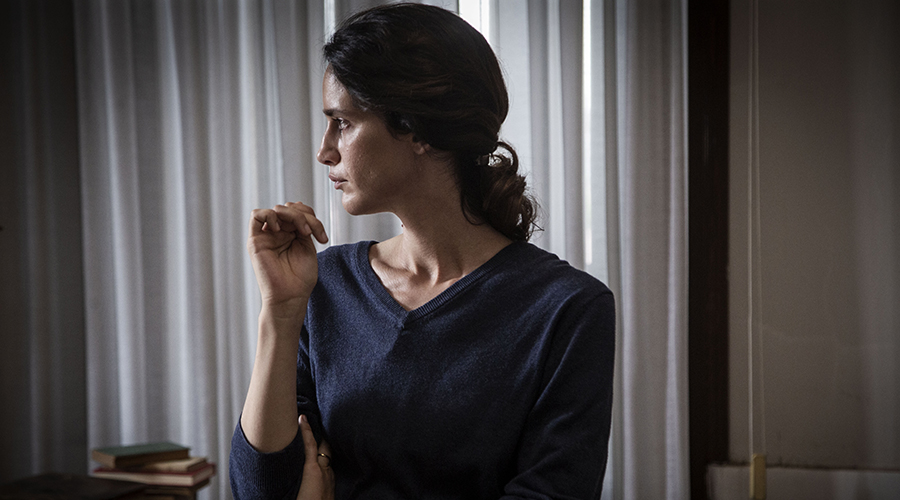
That terrain of crossing genres, of reports, However, it hampers the development of a story that perhaps addresses more issues than can fit into one film.. Thus we enter Lucilla's parallel story, Rebecca's best friend, whose tragic relationship with his father will end dramatically and who travels along with the main plot line, without it being very clear to us what it brings. But I think where Marco Tullio Giordana's work really slips is when he approaches his own conclusions., Well, in that game between the fantastic and the melodrama, between the real and the imaginary, in that flight from realism, The Italian slides through such ambiguous terrain that he leaves few handholds for a spectator who, when the movie ends, you will have more doubts than certainties. And we are not talking here about leaving the doors open to the interpretation or ethical assessment of some facts., but because in certain aspects we are not able to certify what has happened. And so, Of course, pesa.
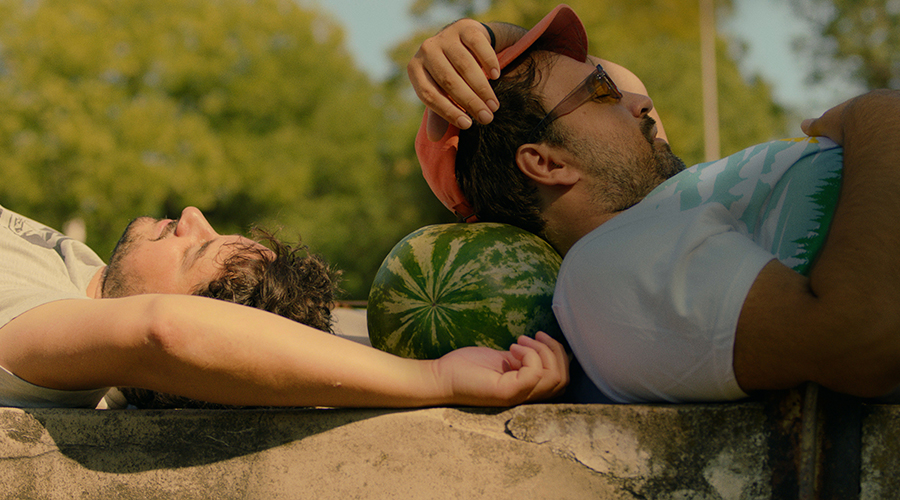
Another guest who returned to visit the contest was the Serbian director Marko Djordjevic with his second feature film, That’s it for today, in his international title. In this fun film, Djordjevic tells us about the lives of three brothers: Visnja, Mocha and Vasa. The first two live in the same house with the crazy Marta, Moca's daughter, while Vasa, professional actor, visits them from time to time. Apparently, All of them make up a very good family that will meet to spend a few summer days, when Moca takes vacation from the hospital where she works. The days go by without doing anything in particular: bake coconut cubes, go shopping, visit natural sites around the small city in which they reside, those kinds of things that require the time that they now seem to have. And that's how life goes, simply, between anecdotes and moments shared in complete freedom.
It is not easy to tell the argument of That’s it for today among other things because it doesn't have it. Or at least, The film aspires to propose a structure that escapes the tradition imposed by North American and commercial cinema., as Djordjevic himself expressed in the presentation session of his film. But that does not mean that the tape does not need certain mechanisms to guarantee the impression of continuity., a series of milestones that mark and sustain the viewer's curiosity about what they see on the screen and indicate the path or direction towards which they are heading.
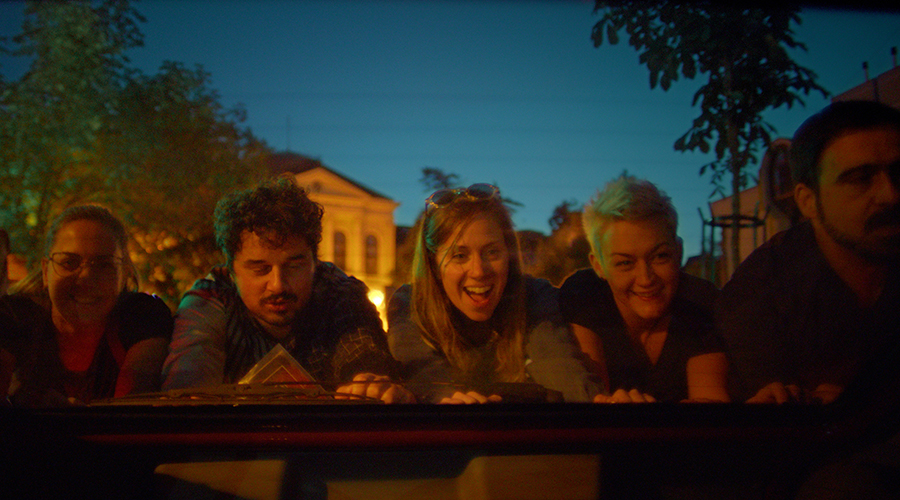
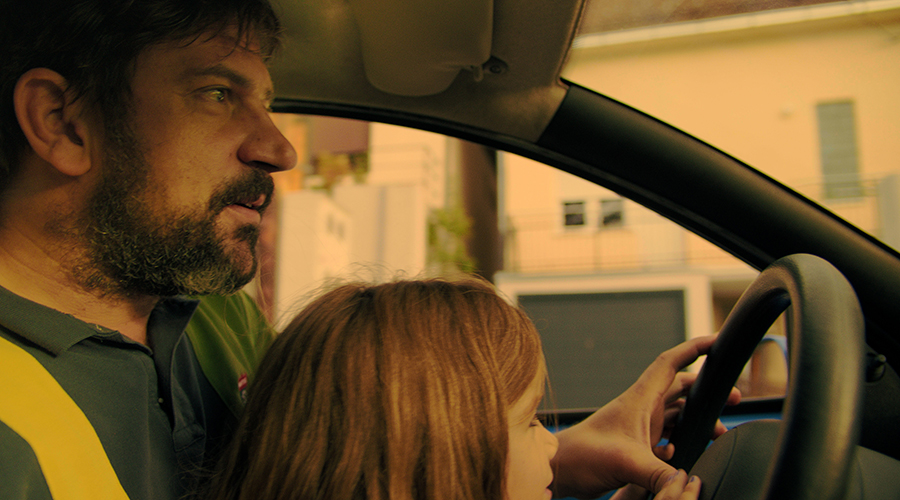
Two elements serve this purpose. The first is found in the charisma of some characters created with great affection by Djordjevic and his cast.. As in the case of Marco Tullio Giordana, The Serbian director used a script to structure the filming, but, at the same time, and perhaps more palpably, has left room for improvisation. A looser camera, less canonical than that of the Italian, helps to print that impression of lightness that the images convey. The other support is found in a series of anchors or clues that Djordjevic leaves throughout the footage and that are taken up from time to time to establish a slight impression of the plot.. So, For example, at one point in the tape, The family dusts off an old car that Moca keeps in the garage of his house. Aside from certain sentimental issues that we will discover, The relationship with the car will determine various situations., forming a kind of dramatic development that will capture the complicity of the viewer, fundamental hook to retain their attention.
That’s it for today It is a film that tells us about happiness in its purest form.. Or more than talking to us, what it does is show it, simply. It is obvious that between Moca and his brothers (and brothers-in-law and nephews, characters that, for different reasons, will appear on the screen) They have a very special relationship. But that doesn't mean there aren't conflicts here., It's just that these seem to be stolen from us., at least until the end of the movie. This absence or lack will also serve as a link with a spectator who, throughout the development of the film, you can't help but ask yourself certain questions. Who are these people? Why do they act the way they act?? What unites them?, between them, and to that house? In the absence of these explanations, everything seems extravagant to us, a mystery. That unknown and the occurrence of certain situations, they tie us to the narrative. Somehow, We would all like to have a family like the one we see on screen. Someone to support us, that serves as a stable support, fixed, in the face of life's adversities. That would be the message.
As mentioned in the presentation, That’s it for today It is a film that is presented to the world today, facing that darkness that seems to surround us, to tell us that as soon as we put our minds to it, there is always a space for joy. Marko Djordjevic wants to say yes, let us not be discouraged, that we have a chance, that there is another way to do things, more fun, kinder, closest, more human. The world may be hurtling towards a sinkhole, but we have enough tools to get up and give ourselves a better one. We just have to want it and make a little effort. GERARDO LEON