Inaugural film: A private bathroom by Lucía Casañ Rodríguez.
The 39th edition of the Mostra de Valencia Cinema del Mediterrani starts tonight and, like every year since this second stage began after its previous cancellation, He does it with a Valencian film directed, on this occasion, by debutante Lucía Casañ.
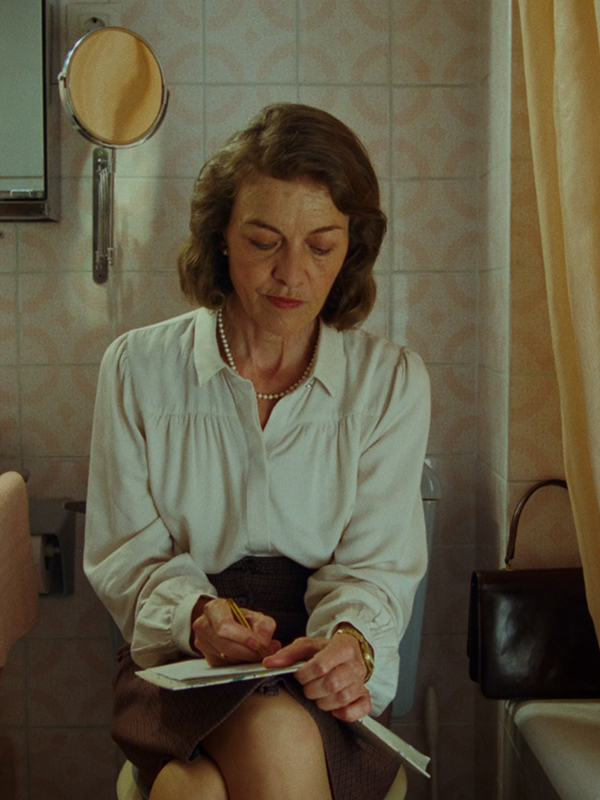
A private bathroom tells the story of Antonia, a housewife who spends 60 who has a particular obsession with locking himself in bathrooms. at home, in the cinema, in the bars, at her friends' house, even in any stranger's house, Antonia locks herself in the bathroom where she gives free rein to her true vocation: the. writing. But that vocation or form of escape contains another desire, that of fleeing from the reality that surrounds her. The bathroom as a hiding place, like a safe space, how to say now, but also an opportunity to build a world of your own. Antonia shares her days and nights with her husband Alfredo, who does not seem to understand what is happening to his wife., What are these strange manias that he has?. Antonia, who wants it, takes your doubts with stoic patience, while, little by little, will try to find his way. A road full of potholes, how he expresses it, somehow, her friend Conchi. And it is that, in the background, “no one knows what they are doing”.
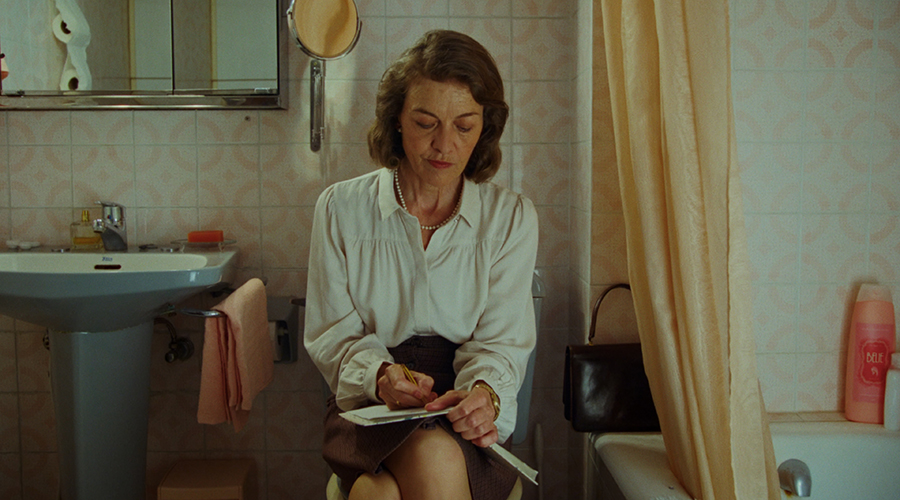
Casañ part of the book A room of your own by the British writer Virginia Woolf to create an artifact that is declared, first of all, as a tribute or plea in favor of all those women who could not find that safe space in which to develop their capabilities beyond the rules dictated to them by “what was established”. It is not surprising, so, and as the director herself explained during the presentation to the press, That his first film was dedicated to his four grandparents, whose lives inspired him to build these fictional characters..
It should be noted that A private bathroom es, first of all, a story that takes elements of so-called magical realism or surrealism. As Casañ said in a press conference, His work always wanted to detach itself from any customary temptation. (although there are many traditional elements here). In that sense, Casañ makes two clear style decisions.
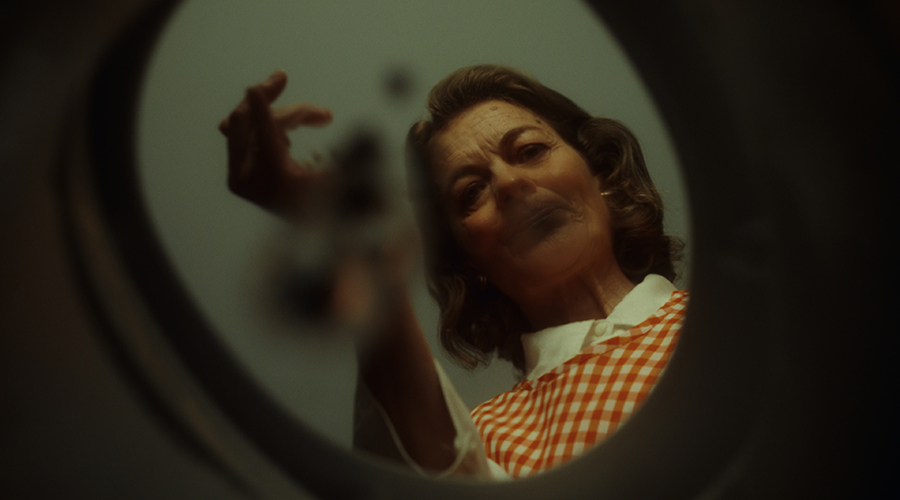
The first appeals to the construction of the story itself. A private bathroom It starts in a way that, at first, may disconcert the viewer. We open black and see Antonia lying in the bathroom of her house. Alberto enters the room and wakes her up to take her to bed.. We immediately understand that this scene is common in their coexistence.. After standing up, Alberto urinates in the toilet bowl and flushes the toilet. When Antonia approaches to do the same, something catches your attention. A red fish swims in the water at the bottom of the cup. Where did it come from? Who put it there?
It is small glimpses like these that will set the tone of this peculiar story. Later, after tricking Alberto into believing that he is going to see a friend, Antonia will know who. But Antonia is not going to see a movie. After buying a bucket of popcorn, He goes to the local bathrooms. There he secretly observes the rest of the clients and takes notes of everything that happens, writing his impressions in a notebook.. Antonia's own behavior, something extravagant, his reflections on life, the point of view with which she looks at the world that surrounds her and about which she feels curious and alien at the same time, brings us closer to the formulas of the fable.
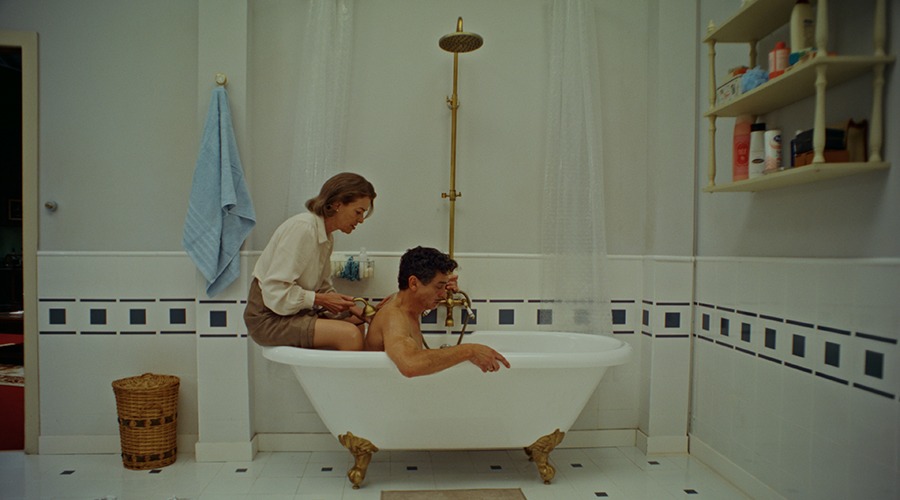
The second strategy has to do with its formal approach. Casañ shoots his debut using wide angles and very frontal compositions united by a rhythmic montage that reinforces the feeling of strangeness in the viewer, moving away again from that naturalism we were talking about. These staging decisions are reinforced by lighting in which Casañ emphasizes the use of strong lights with very marked contrasts and saturated colors that underpin the effect of theatricality that he wanted to give to his proposal..
As the director herself confessed in the presentation, A private bathroom baby of the cinema of Aki Kaurismäki or of the French Jean-Pierre Jeunet. With many nuances, from the author of Fallen leaves, Casañ takes the registration of the actors, that apparent coldness or distance that characterizes the performances that populate the Finn's work. Hieratism that, besides, reveals a hidden irony that is a trademark of the house. Although in a much less fatalistic and profound tone, The characters played by Nuria González and Carles Sanjaime may remind us of the couples that star in Kaurismäki's films.. Antonia and Alberto love each other, but there is something between them that they have to resolve, that does not work and that refers to that something that transcends them and that does not work in that world that surrounds Antonia, that corners her and that is, in turn, our world. De Jeunet takes Casañ to stage a calculated scene, the comic use of voice-over, the rhythmic montage game and the use of cutting between scenes that will allow you to play with a certain surprise effect.
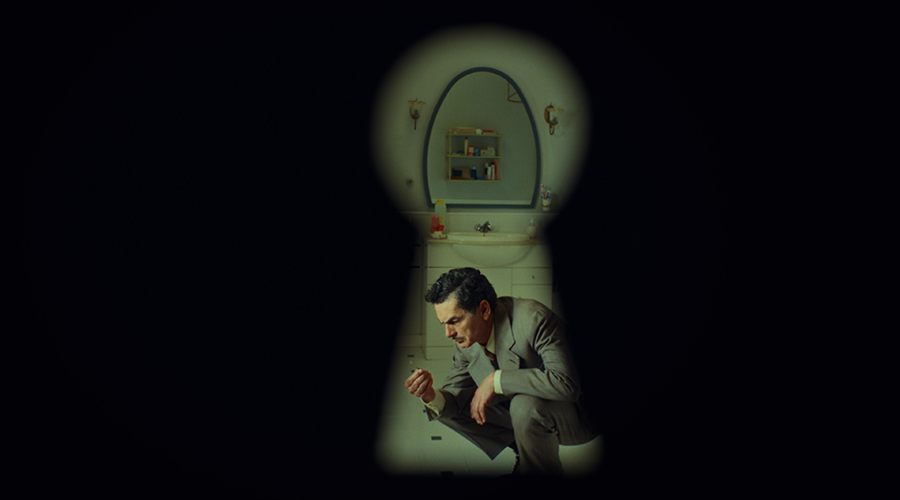
In this context, the bathroom becomes Casañ's film in that place-world, representation space that, as Antonia herself says in the film, will become that everything you aspire to, outer form and soul. Antonia/Woolf, will say: “I became the space I inhabited. It was nothing and it was everything at the same time.. The new order was what was inside and what was outside.”. Antonia has transformed the bathroom in her house until it becomes that place that is no longer just a functional room., like the bedroom, the kitchen or dining room, but a place to meet, a space of freedom, the place where, as Antonia says, people do what they want. For Antonia, for your children, for his sons and daughters-in-law, for your grandchildren; for everyone, except for Alberto who continues using it as what it is: a simple bathroom in which to do your business. “Space calls for action and what I wanted was for us to act differently”, Antonia will say.
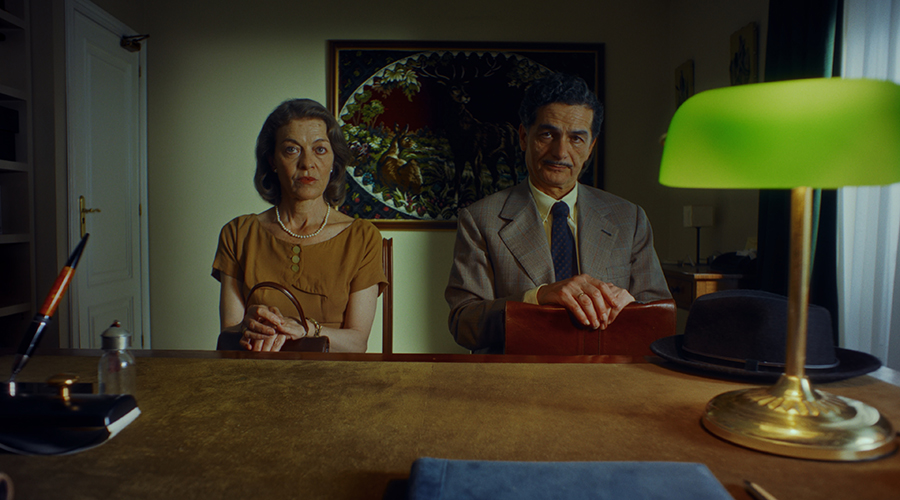
A private bathroom he proposes to us, more than a reflection, a tribute to those women who could not develop their concerns, overshadowed by a system that relegated them to the home space. It is not surprising that, regarding the setting, Casañ reproduces the decoration and costumes most typical of the years 60 o 70 from the last century. As the tape progresses, Antonia will change her clothing towards more contemporary aesthetics as a symbolic exercise of her inner transformation.. In that sense, certain anachronisms try to awaken certain very culturally marked prejudices in the public (the image of the Alcántara from the television series Tell me, comes to mind). We are left with the doubt of whether these elements, so subtle, so little underlined does not distance its conclusions from the contemporary viewer (Antonia changes the decoration of her bathroom with some furniture vintage that may soften the strategy a little).
Casañ's film also loads with a dramatic development that is difficult to gain weight in the first part of the film, although once it gradually finds its way and approaches its conclusions, discourse and form are conspiring more solidly. In any case, We are facing a daring and suggestive debut, a clearly anomalous piece in Valencian production. Perhaps one of the best entries of the festival at this stage. GERARDO LEON