
 Phony
Phony
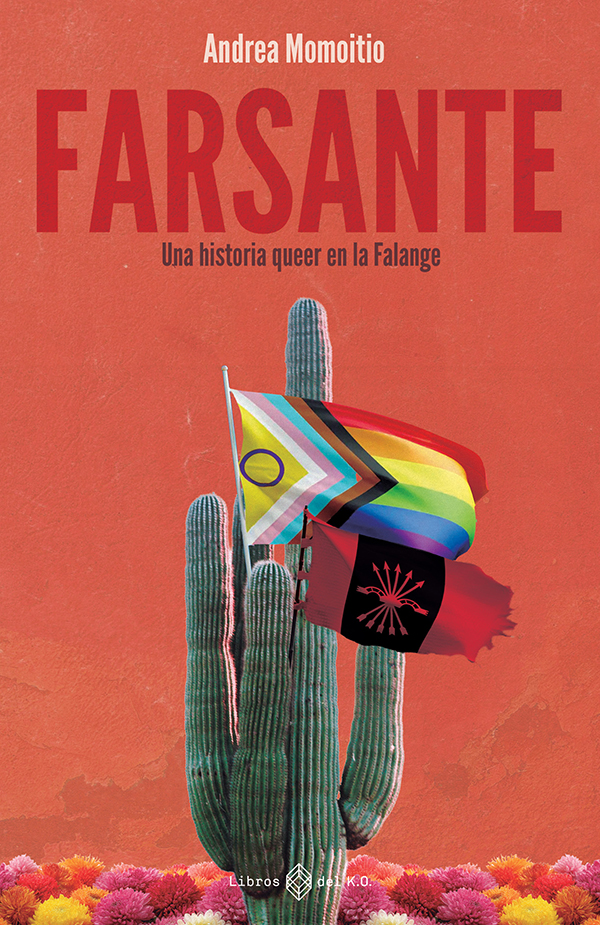
Andrea Momoitio KO books
One more time, the very personal voice of Andrea Momoitio (Author of Lunatic) She takes us by the hand so we can accompany her on the fascinating journey of discovery of an impossible character.: Margarita Beese Rodríguez. A feminist person and queer who lived in the effervescent Madrid of the twenties, He collaborated with Pilar Primo de Rivera and ended up in prison for “homosexual”. ALODIA CLEMENTE (The Red)
 Ads
Ads
Camila Cañeque · The Broken Nail
Among Camila Cañeque's personal files, died in 2024, this unpublished novel appeared. In its pages, a character is observed by a narrator: he talks to her, for her; but she remains silent throughout the entire story.. Ads expands and tenses the universe of an author who turned absence and inaction into an art form. SAINTS LEMOINE (The Bathysphere)
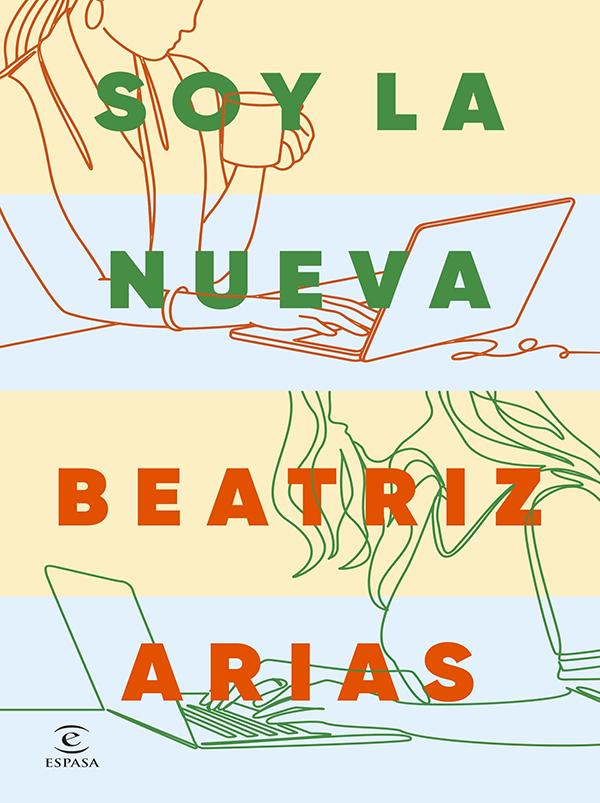 I'm the new one
Beatriz Arias Sword
I'm the new one portrays, with irony and without filters, the ins and outs of today's work and love life. Through the clumsy and charming Antía Montes, The novel humorously shows what it's like to start your dream job., with its lights and shadows, and how emotional ties are woven in today's society. Facing the unwritten rules of a platform streaming forces him, also, to rewrite your own. MAMEN MONSORIU (Bookshop The Empire)
 Columbine
Dave Cullen · Contra
Fleeing sensationalism and gratuitous blood, Dave Cullen analyzes the causes and consequences of the high school massacre committed by Eric Harris and Dylan Klebold Columbine in April 1999, the one that Michael Moore used to film a somewhat sensational documentary (although effective) that questioned the buying and selling of weapons in the United States. What was the psychological profile of these two kids from 18 years who masterminded a school shooting, how they planned it and what went wrong, How survivors have healed wounds, How parents of murderers survive stigma, How do you explain why Eric and Dylan have amassed a plethora of admirers?… These are some of the questions that form part of this exhaustive and deliberately aseptic analysis of a typically American phenomenon that in Columbine took the form of terrorism., looking for murder as a spectacle, with the invaluable help of the media in the hunt for audiences. S.M.
 Akiva. Running from the wolves
Vicent Garcia Devís · Austro-Hungarian
Who hasn't heard of the Bacharachs in Valencia? Sol Bacharach, even, it was Fallera Major. A unique family, of entrepreneurs, but with a background that takes us back to the great tragedy of the 20th century in Europe. Akiva Bacharach and his wife Franziska fled Nazi Germany on 1935. Hugo Bacharach hosted them in Valencia. A striking book that portrays a family drama and its background: European anti-Semitism, from the Middle Ages to the 20th century, that still lasts. GUSTAU MUÑOZ
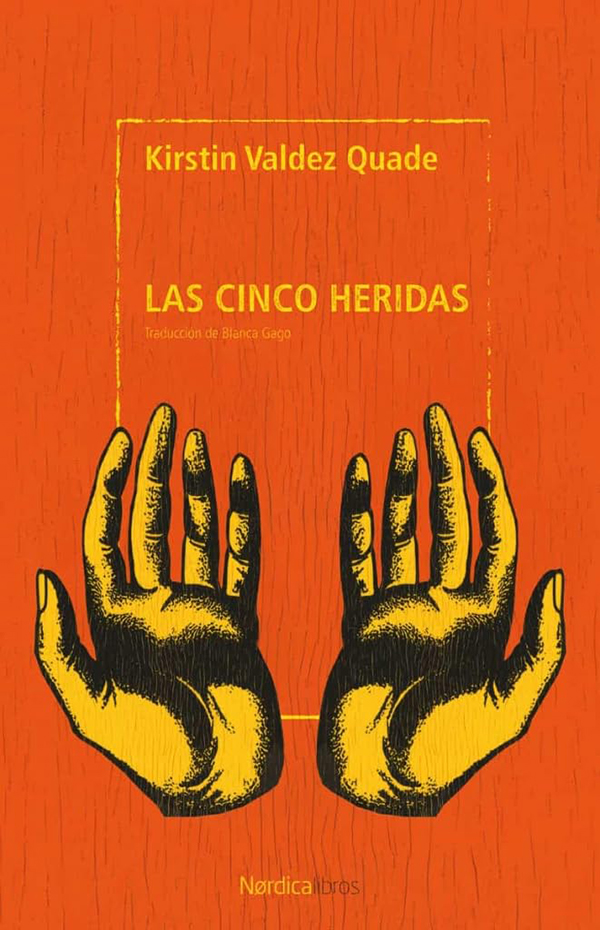 The five wounds
Kirstin Valdez Quade (Translation of Blanca Gago) · Nordic Books
It's Holy Week and in the small town of Las Penas, northern New Mexico, Amadeo Padilla, thirty-three years old, has been chosen to represent the role of Jesus Christ in the ascent to Calvary during Good Friday. In the framework of preparations for a delirious local religious tradition, Angel's unexpected arrival, her eight-month pregnant teenage daughter who has fled her mother's home, will disturb your devout plans for glory and notoriety.
The five wounds is the first novel by Kirstin Valdez Quade; a tragicomic story in which, with deep but simple prose and sharp humor, We are presented with up to five simultaneous generations of the Padilla, a family from Las Penas that fights to free itself from the determinism that condemns them to move forward in the midst of inherited violence and inequality.
Through scenes that sometimes seem taken from a sitcom and a black humor that turns a teenage pregnancy almost into a story of body horror in the eyes of a childish Amadeo, egocentric and ridiculous in the face of his inability to define his own masculinity, The author examines issues as complex as the helplessness of children in dysfunctional families., the selfishness of parents who blame their children for their own misfortunes and adolescents who are forced to mature rapidly due to the inability of their parents. The fears transmitted, inherited behaviors, the inevitable generational conflicts and the strangeness of a man in front of his own daughter, practically a stranger to him, they go through Valdez's story.
The five wounds It is also a novel about mothers, daughters, grandmothers and friends. The desire for perfect motherhood, the judgment of those who are not mothers, but also that of others equally imperfect, the atrophied “maternal instincts” and the injustice they face, because more is always demanded of them than of parents (like in the novel, an absent father will never teach lessons even to a bad mother), These are challenges that the very young Angel tries to face while she herself continues to need her own mother.. Because that's what Valdez insists on.: in the worst moments, it takes a mother, and nothing hurts more than his disdain.
The Padillas are the reflection of a society well portrayed in the novel, whose real structure is matriarchal but which apparently stays afloat thanks to men; fully fledged men who continue to depend on the women of the family, of their wives, who find that they not only have to raise their children, but also their husbands.
The idea of redemption flies over Valdez's story: Can parents who did everything wrong make up for past mistakes?? Can wounds inflicted during childhood heal in adulthood?? Can you learn to be a father or mother when your children are no longer children?? Do daughters have moral responsibilities towards those fathers and mothers who were not?
Another cardinal idea hovers over the novel: the helplessness caused by the fact that, often, blood family is not only not enough, but it becomes urgent to flee from it and seek external support. Angel wants a godmother for her baby, but no woman in the family seems like a good candidate. At the same time, Looking for it outside becomes an almost impossible task because, in the end, and paradoxically, blood forces, and it is much easier to escape commitments if there is no parental union.
However, in the middle of this disaster, a flash of hope runs through and shelters the narrative: Angel's desire to build something good for her and her baby and, above all, Amadeo's efforts, the childish and chaotic Amadeo, for acting as father and grandfather and redeeming himself from his calamitous fatherhood, not through a crazy climb to a false Golgotha carrying a cross, but through care and love, thanks to the opportunity that Angel's return represents.
The five wounds of the Redeemer that give the novel its title may also be those five Padilla generations., pierced by the same nail: that of family traumas, inherited social and colonial. A destiny that Angel, in search of that chimera called the American dream, will try by all means to ensure that your baby is able to avoid. ELENA P. MURIANA