
UNTIL SUNDAY 28/2/2027
VAT. Guillem de Castro, 118
Fa 150 years that the sculptor Julio González was born and in his house, to the VAT, pays tribute to him with an exhibition focused on the women who marked his life and his work: his daughter, the abstract painter Roberta González; and his heirs. All three, benefactors who expanded the museum's funds with generous donations that prompted them to rename it the Julio González Center.
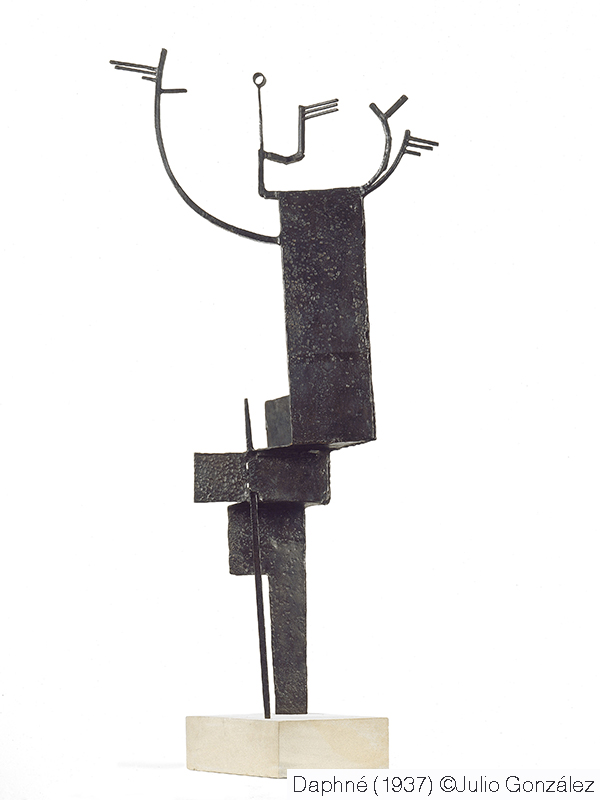
The donut in the work of Julio González brings together four drawings from the Provincial Council of Valencia and 148 IVAM sculptures in a biographical and thematic tour. The first reveals that the artist lived within a matriarchal clan and the second, as we said, emphasizes the female representation within his career. The sculptor from Barcelona was a man of contrasts who went from figuration to abstraction without losing his hair, and starting from a more academic classical heritage, he veered towards a semi-abstract sculpture welded with an industrial technique that used oxyacetylene, with which he revolutionized the art of metal sculpture. The ferro, then, was a material associated with weaponry and death, but González transformed it into ingenious and moving human forms that greatly influenced the following generations of sculptors.
In the IVAM sample, these human forms are female and emphasize the dichotomy between urban and modern flapper and the peasant woman, linked to work and motherhood. The proposal focuses on working women, women supplicants or warriors and three iconic works of 1937 —Daphne, The woman in front of the mirror i The Montserrat— that personify the combination of radical innovation (in technique and language) with the humanist character linked to the Western classical tradition. At the end of the chapter, Daphne is nothing more than a character described by Ovid in Les metamorfosis, a nymph who transforms into a laurel to save herself from the persecution of the god Apollo. S.M.