

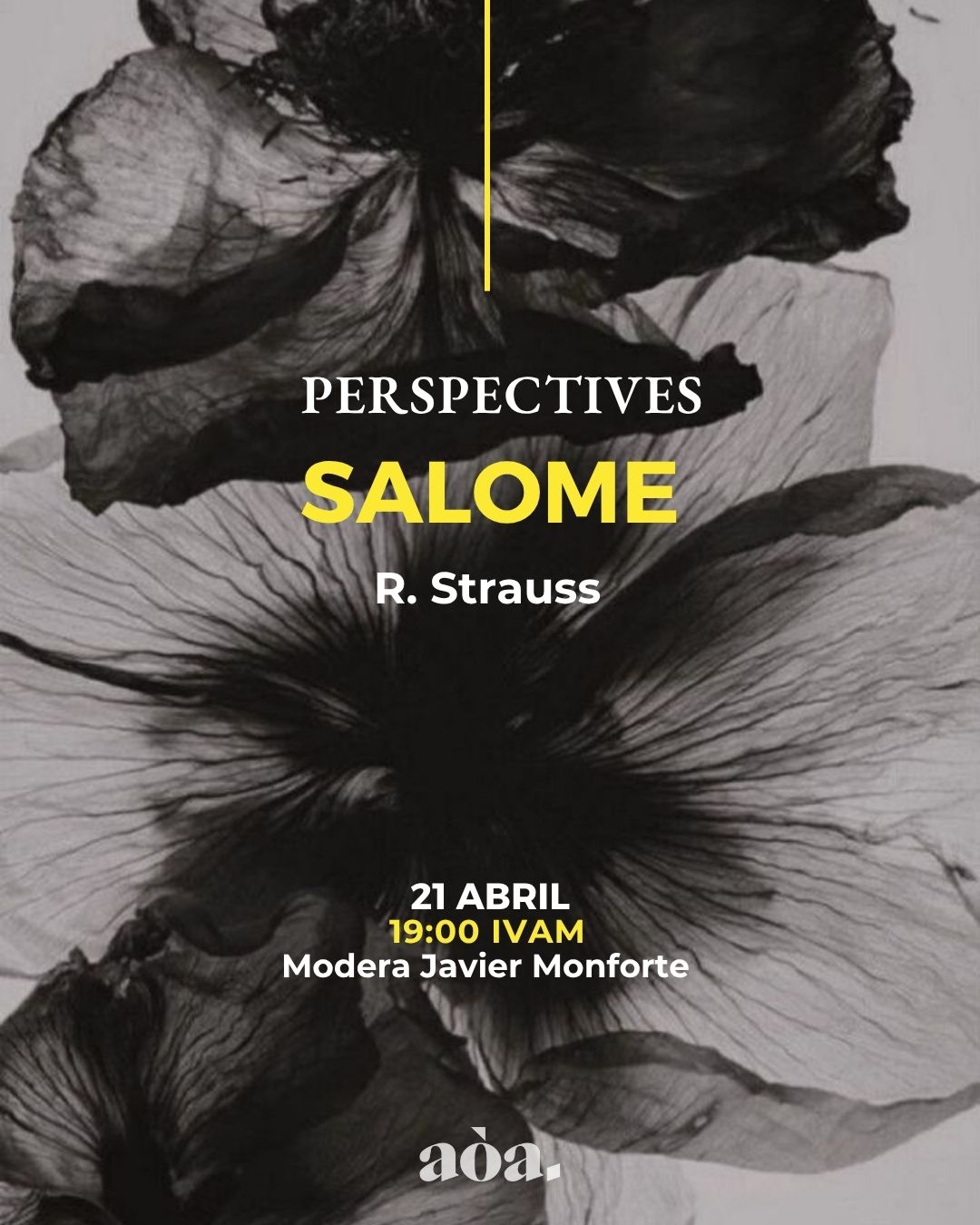
Meetings with the protagonists of the different productions in which the essential elements of the music and dramaturgy of the different productions that make up the Les Arts season are addressed. In collaboration with Amics de l’Òpera i de les Arts de la Comunitat Valenciana.
Oscar Wilde writes Salomé while living in Torquay, inspired by contemplation of Gustave Moreau's pictorial work of the Hebrew princess. The work, written in very poetic prose, was not written for renowned French actress Sarah Bernhardt, although she certainly asked him to interpret it. The biblical drama was originally written in French, for personal and strategic reasons (Theatrical representation of biblical themes was not possible in Victorian Britain). Richard Strauss knows the drama in his first performances in Germany, in translation by Hedwig Lachmann, playwright and first editor of the libretto that Strauss would reduce to a third. The composer wanted to maintain philosophical nihilism, they look to Nietzsche, that Wilde adorned with his decadent preciousness. Salome is a Wagnerian New Testament, the purification of Parsiphalian Wagner. But, despite the Straussian desire to overcome the Wagnerian path, The hindrance of its structures remained in the architecture of this symphonic-neurotic poem that closes with a bloody Liebestod from the protagonist to the beloved and holy head of the Baptist..