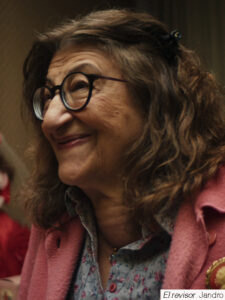
Original title: Vitalina Varela · Pedro Costa · Portugal · 2019 · Script: Pedro Costa, Vitalina Varela · Interpreters: Vitalina Varela, Ventura…
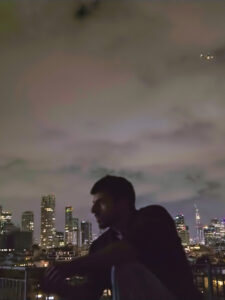
Original title: Corpus Christi · Jan Komasa· Portugal · 2019 · Script: Mateusz Pacewicz · Intérpretes: Bartosz Whitening, Eliza Rycembel, Aleksandra Konieczna…
an alley, just a side light with hard and sharp profiles decorates the scene and focuses our gaze. The rest is darkness. A group of men walk next to the cemetery carrying a heavy coffin on their shoulders.. This is how it begins Vitalina Varela, latest work by Portuguese director Pedro Costa. From here, more alleys and more men returning home, humble homes, shanties that form an indiscernible network of dark corners, doors that open and close, figures waiting for who knows what. a woman, Vitalina, arrives, later, to that place. The man who died is her husband, whom he has not seen for twenty-five years, as we will understand as encounters occur between her and old acquaintances, drunken comrades, work colleagues… and a priest. He has been dead for three days and Vitalina will no longer have the opportunity to meet him again.. has arrived late. time has passed.

With these brief notes, Pedro Costa approaches, the production notes of this film indicate, to the drama of immigration from the former Portuguese colony of Cape Verde to Lisbon. But, In fact, This is not very relevant information., Well, here it doesn't matter so much about who or why specifically., like the shapes. From that initial image, the film is a succession of practically static frames. A statism that not only refers to the position of the camera, but to the lack of movement within each of those images. inside, bodies and faces that look. Where to?? To a beyond of frustrated hopes, of outstanding debts, of a past that has been lost and to which it refers, sometimes, con nostalgia, others with the eyes of resentment of those who hold life accountable, bills that no one will pay. Thus, what is at stake is not delimited by a story of which, besides, we are informed in a disjointed way, but the presence of those bodies and looks. Pedro Costa tells us about the pain and exclusion suffered by those who are left out, at the edge of the system. But it doesn't do it directly., It is something that you deduce through the presence of those bodies. We don't need any further explanation, We just have to observe its position on the screen, the weight that those shoulders support and that devastates those looks to understand and feel what we are talking about.

Some bodies and faces that, at the same time, Costa rolls with admiration and to those who, in the midst of the misery that surrounds them, try to extract their beauty. Using non-professional actors (Vitalina Varela herself represents herself; in fact, It is his personal story that is told here), Costa resorts to the human geography of the social space that he portrays as raw material. There is no, so, any trap. Yes there is, despite the humble context, a subtle exaltation. It suits, again, see this film on the big screen to appreciate that object of Costa's aesthetic desire, which is none other than the powerful human figure. We talk about the contour of the muscles of the arms, the wrinkles and drawings that outline the valleys and peaks that mark the lines of the veins of a hand, the glow of the skin, the whites of those eyes that shine in contrast with so much darkness. Costa is fascinated by his non-actors, real people, and he dedicates his best plans to them.

In this portrait, which is perhaps what this production is really about, light and decoration play a determining role. lights that, as we said at the beginning, They break the screen and the darkness of the movie theater, highlighting in each scene the weight that the figures support. A light that reveals, but, at the same time, isolate, because everything around is a dense black, thick, a threat, witness to the drama, another presence. That threatening darkness gives shape and meaning to this work. More than words or actions, It is the light that tells us, and that time, equally thick, occlusive, that doesn't seem to move forward.

However, this simple and, at the same time, effective formal apparatus ends up imposing itself in such a way on the whole that it makes the film gradually fall into a certain mannerism. Using non-professional actors provides that truth that only those genuine bodies that Costa has chosen for his film can offer.. But, when the time comes for his characters to get out of that stasis and move, talk inside the box, everything falls into an affectation that serves as a centrifugal force and distances us, moving away from what is narrated, that is to say, of that truth that the author intends to teach us. Pedro Costa himself has claimed the work of John Ford as one of his references and one remembers those close-ups of cowboys in The diligence, his masterpiece. But where Ford got movement and vitality, in Costa it is rigidity, although sometimes the characters move almost spasmodically, weighing down his film at times with a burden that is difficult for the viewer to carry.

If we talk about formal proposals, We could say that the third feature film by Polish director Jan Komasa is exactly at the opposite extreme from Costa's. And the comparison in this case is appropriate since both films address, from different positions, as we say, very similar issues. Corpus Christi tells the story of Daniel, a young man leaving the reformatory where he has been serving time for several years. According to the reintegration program, after getting out of jail, Daniel heads to a small town to work in a sawmill.. But, as soon as you arrive, Daniel realizes that this is not for him, that there he has no other future than to end up returning to the cell from which he came. Despite his criminal and troubled past, Daniel, taking as an example the priest of the reformatory, whom you admire, feel a true ecclesiastical vocation. But it will be precisely that past that prevents him from attending the seminary to get ordained.. Skipping the initial plan, A series of coincidences will lead him to supplant the priest of that small community in which he settles.. At first, Daniel takes this task as a game, a costume that gives truth to the character that has been created. Pronto, The problems your neighbors suffer will prompt you to take the task more seriously., until it becomes your moral and spiritual reference.

Like in Costa's film, Komasa's work is also based on real events. In a more classic formal context, reality serves as a springboard on which to propel oneself, from fiction, to make several reflections to which we are invited. As in Costa, Komasa also sets its sights on the disinherited of the system. "Slag", will call its protagonist, at the beginning of the story, a policeman. After leaving jail, Daniel is offered a future, but, as happens in Vitalina Valera, that future (immigration in a case, work in the sawmill, in another) es, In fact, exploitation by the forces that direct that society (although it does not appear, the alleys of that marginal Lisbon in the case of Costa, a small town, here). Like Vitalina, Daniel is alone, because nobody trusts him. To find your way, will have to pretend, hide, even, of himself. And here comes the first difference. If in Costa's film his protagonist seeks redemption through the truth, about his past, about his life, In Komasa's work it will be the lie that reveals to us the truth that is hidden behind appearances and that nests in people's hearts.. Daniel pretends to be part of the system to, So, once acceptance is achieved, subvert it and pierce its flaws in order to heal the wounds that undermine the foundations of that society that has welcomed it.

The role of the church and faith is another of the elements that confront both works. Both in the immigrant community of Cape Verde and in the town where Daniel settles (two anonymous spaces, in both cases), religion has a strong influence. But if, for Costa, that church, that is to say, God, It is presented almost as an absence that its characters must overcome, In the case of the Komasa piece the opposite occurs.. For the Polish, for Daniel, God is there, somewhere, It's just that we've forgotten how to approach him.. in his movie, The church has forgotten its role as a healer of souls and has become part of a network of interests that perhaps guarantee its precarious survival., but he has not only distanced himself from people, but it has been corrupted inside. A will have to come outsider, an external element to guide her and teach her what her authentic vocation should be, that is not herself, but the others.

In this same order of things, Corpus Christi es, in turn, a portrait of contemporary Poland and, by extension, of today's society. Once he assumed the role of parish priest, Daniel is well received by the members of the congregation. It is enough to listen to them and satisfy their desires and dreams so that they treat you with respect.. From the beginning, Daniel marks the difference with the previous priest, well, unlike this one, the young man knows how to listen. And that is the first need of this community, to be heard. However, as Daniel learns more details of the conflicts that fester beneath appearances, You will realize that the situation is much more complex. Daniel, a boy with no purpose in life, find in these problems the meaning that is missing. But, To help your new friends it will no longer be enough to offer them wise advice, will have to contradict them and, there, It will be when that community that has received it shows its true face. A community that feels comfortable in its role as victim and that has looked to others to blame for the problems that afflict it., but what, in the background, is not willing to assume the responsibility that falls to him. But, although this denial offers a very comfortable shelter from guilt and grief, can't heal the pain. To achieve, Daniel will have to learn to negotiate with the truth, that is to say, will have to build a new fiction, another lie, that satisfies both opposing parties. That will be your learning.

To carry out this simple, but at the same time, complex drama, Red Komasa, in a direction opposite to that taken by Pedro Costa, It has had a cast of professional actors who do a truly commendable job. And it is curious that here are also the faces, that innocent honesty of the looks, a relevant part of the ultimate meaning of this production. Again, John Ford. And now comes the question. Who is closer to the truth?? He who constructs a fiction, a deliberate lie, an artifact, or the one who tries to approach the reality of the facts without filters? An interesting debate that these two films present to us. GERARDO LEON