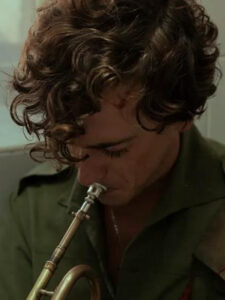


Original title: Museo· Alonso Ruizpalacios · Mexico · 2018 · Script: Manuel Alcala, Alonso Ruizpalacios · Interpreters: Gael Garcia Bernal, Leonardo Ortizgris, Alfredo Castro…
Original title: Se roch · Jafar Panahi · Iran · 2018 · Script: Jafar Panahi, Nader Saeivar · Interpreters: Jafar Panahi, Behnaz Jaffari, Maedeh Erteghaei, Narges Delaram…
Although the overwhelming current, full of premieres, forces us to swallow as best we can a long list of names that, sometimes excessively generous, we present as the latest revelation, It's harder than it seems to find a look that's truly original and refreshing. (not to be confused with more or less effective mannerisms). Alonso Ruizpalacios' films burst onto the billboards of our country (very discreetly) con Güeros, a very surprising debut that showed a sensitive hand in the creation of characters and, above all, pleasantly cheeky politically. Over there, two friends, Saints and Shadow, both college students, they let the days go by, marinated their ambitions in a nihilism that, more than existential laziness, revealed itself as the only possible way out in a world and, specifically, a country, Mexico, empty and without clear expectations for the future.

In its second production we have, again, to two friends, Juan and Benjamin. At thirty years old, it seems that they have given up on the goal of finishing their veterinary studies., much less undertake a job in conditions that allow them to leave their parents' house. But, contrary to what it might seem due to his obvious apathy, they haven't given up yet. A project will demonstrate to the world their true value as beneficial beings for society.: rob the National Museum of Anthropology of Mexico. The extravagant assault on the cradle of Aztec culture was perpetrated, a real tsunami occurs throughout the country, wounded in his deepest pride.

Alonso Ruizpalacios persists on the path taken in his first film. In Museo, abandon that black and white with which you rolled Güeros to go to color,but that does not take away even a bit of freshness from his work. Repeat parameters: crazy characters involved in situations in which their personality shines above the events they narrate. It is what affects their lives that is interesting.. Ruizpalacios takes up the same characters from his previous film and pushes them towards the next stage of life. nothing has changed, the same nihilism, the same disinterest in what is supposed to be important, this time focused on what affects two men who have already entered adulthood: have a good job, start a family, own a house, you already know. Yes in Güeros attacked the bases of the revolutionary movements of the seventies, here, entry into the eighties, it feeds on the expectations of a middle class satisfied with itself and its economic achievements. Neither Juan nor Benjamín seem very seduced by the idea of following in the footsteps of their elders..

In his new production, Alonso Ruizpalacios attacks, besides, the foundations and value of culture in our virtual societies. A society that prides itself on its past and its tradition, but to those who, in the background, does not pay the slightest attention to them. Only when an extraordinary event occurs, like the robbery that its protagonists perpetrate against the heart of what we could call national honor, affections awaken, that upstart and opportunistic feeling that hides hidden in the depths of our psyches. The robbery carried out by Juan and Benjamín becomes a matter of concern throughout the country, and its authors are considered little more than disinherited from the insulted homeland, even for those who fall outside the law. A feeling that irrationally takes precedence over the logic of personal and family affections. Museo becomes, So, in a kind of emotional map of a country, Mexico, and the interlinings of a national spirit made of scraps, of loose parts that, as in the case of Juan's father, It only shows when someone shakes them., pure hypocrisy. This is when the metaphor of the museum takes shape in the film.. Why, What is a history museum in consumer societies? A shell full of worthless pieces. Because what is nothing more than mere decoration cannot have meaning., the envelope of an empty identity. simple show, cheap sentimentality for the masses.

But the most interesting thing about Museo we found it, like in Güeros, in the formal apparatus. Ruizpalacios seems willing to break all conventions using any trick he can think of.. How it happens to their characters, anything goes for the Mexican director's camera: sequences of quick cuts linked to eternal sequence shots and, in one of the most ironic scenes of the film, frozen shots that aren't really frozen. With all this, Ruizpalacios moves between realism and the most blatant surrealism, Well, shameless and irreverent is your proposal.. Based on a real event, the robbery at christmas 1985 from the Anthropological Museum of Mexico, MuseoIt is a reflection on the truth that is hidden behind the events supposedly narrated by the media and, thus, of cinematographic truth itself. Why, as the voice-over that accompanies us throughout the story reflects, How can we know what they thought or the motives that led to events in which we were not the protagonists?? Above journalistic truth rises the truth of fiction. It doesn't matter what really happened, but what they are telling us. And although, That's why it uses the same type of characters and a very similar ironic style., Museo appears less disconcerting than Güeros, Your commitment confirms the presence of a vision that must be taken into account for the future.. This without failing to keep in mind the danger of falling into a certain repetition.. Careful.

Although his career already had some titles on its back, Jafar Panahi's cinema gained true international relevance following the Iranian government's ban on allowing him to leave the country and shoot more films., considered inappropriate for the regime and, again, an affront to his people. In response to this forced physical and artistic confinement, Panahi shot a film whose title already implied a declaration of intent. This is not a movie played with a double meaning. On the one hand, It realized its formal commitment to being shot with cell phones and all kinds of devices with which Panahi demonstrated that films can be made without having many resources.. On the other hand, That title was quite a provocation to his censors.. No, this is not a movie, the filmmaker seemed to tell them, so I'm strictly serving my sentence. But yes it was. Then it would come Taxi in Tehran where, four years later, Panahi himself stood before the camera again to tell us, behind the wheel of the taxi that gave the film its title, How life goes in modern Tehran. For it, It used a series of webcams that gave verisimilitude to a proposal that played with the appearance of realism and had as its goal a provocation.: you are not going to stop me.

In three faces, Jafar Panahi leaves the city to visit and show us the rural world, that other Iran that survives in small towns and villages geographically isolated from the centers of power. sewer, perhaps aware of the relevance that his own figure has gained as a dramatic or restricted element due to the difficult conditions of production, he gets back in front of the camera, but giving in, however, the attention to the three women protagonists of its story. In three faces, A famous television actress receives a disturbing video from a girl who wants to follow in her professional footsteps. Forced by circumstances (that we will not reveal) The actress must visit the girl to find out what has become of her, friend of a veteran actress who purges her days of splendor in such a remote place. On the way, Both the actress and Panahi himself find themselves in an obtuse world whose barriers will be difficult to penetrate..

The first thing to draw attention to in this film refers to the landscape.. Because this is what Panahi does, show a territory. The camera no longer points towards the interior of the car as much as what we see on the other side of the front window or the windows. And what we see is an impoverished land, barren in the natural, backward in industry and technology. A physically locked world, As you can see, the only access road to the town where the girl that the director and actress are going to visit lives.. That land immediately takes us to another landscape, the human. Huddled behind supposed traditions, Panahi shows us a society that does not allow changes as the only guarantee of its survival.. Tradition that is not free of contradictions, who admires television stars (economic success) those he despises, on the other hand, as an example of their moral evils. An aging world that subdues a youth that, in many cases, and especially women, says Sewing, can no longer retain or can only do so with threats and a violence that throbs behind the seemingly friendly words and gestures.

In three faces, again there is a hidden camera that spies, key to the clandestine tone in which the film was made. But that secrecy comes in handy., Well, that's what Panahi's characters do., hide from the scrutinizing eyes of a community they perceive as threatening. Panahi and his three wives are shown as foreigners in their own land, they hide their intentions, they conspire in the shadows, even if they operate in broad daylight. Panahi does something like this with his cinema: officially prevented from making films, the man keeps rolling, there is no other way forward. And that is where the film functions as a portrait of the silenced artist., just as it happens to the three generations of actresses that it brings together. But the complexity and richness of the film lies in the fact that, despite the above, Panahi's gaze does not radically attack the world he portrays, but he welcomes him paternally. His gaze is critical, but understanding, does not justify what happens, condemns him, but, at the same time, understands it. His portrait does not want to dynamite anything, but wants to show the complex sinuosities of its society, hence their sincere proximity, his humanity.

Panahi offers us a masterpiece. A movie that, still with few resources, follows the path of his previous works, heir to a Kiarostami, a De Sica or, already put, a Berlanga, even if they don't know each other. A simple story, but of overwhelming emotional power. something more free, Panahi's camera seems to be gaining confidence in the situation of confinement in which the director works, as if he were tempting fate, always a little further in every step. A camera that abandons the limits of the intimate to look outwards, to the community. The production notes say that Panahi shot his film with a camera that his daughter had sent him from Paris., where he resides. Something seems to be changing. GERARDO LEON