

Original title: The Mule · Clint Eastwood · USA · 2018 · Script: Nick Schenk · Interpreters: Clint Eastwood, Bradley Cooper, Dianne Wiest…
Two issues seem to arise for some time when analyzing the latest productions by American director Clint Eastwood.. At least since Gran Torino, The chronicles that address each new Eastwood production refer us to the idea of a cinematographic testament. And with the premiere of his latest work behind and, above all, before the cameras, It wasn't going to be different.. But that film was a whopping ten years ago and, on the way, The Californian director has produced a few more titles. It will not be a servant who tries to grant Eastwood the gift of immortality. It is evident that, at more than eighty years old, can scare us at any time. But that thing about the will is another topic.. I don't know what they have about testamentary, that is to say, definitive, neither that nor this new job that concerns us. In my opinion, and as the director himself has confirmed in several interviews, Eastwood makes the cinema he needs or feels like depending on the moment. And that's the same, the “moment” what is reflected in each of its frames. The rest only depends on the inevitable finiteness of life.
The other interesting question refers us to the circumstance that the person responsible for already classics like No forgiveness be a declared voter of the republican party. A fact that many commentators do not seem to agree with, trying to hide it under the rug, when not just letting it pass. In a world where every opinion involves positioning itself at the inevitable extremes, no gray areas, It is difficult to accept praising the work of an artist whose political values are at the opposite end of our ideals.. This shadow has haunted Eastwood since the beginning of his career, with greater or lesser virulence, depending on the context. So, for some chroniclers and in an exaggerated pirouette for my taste, From It would be a critical and devastating analysis against that conservative America that many of us relate to that part that is located inside the United States.. I think they are a little disoriented. Your position may be incisive, criticism even, but not devastating (demolish, bring down, throw down). I would say that what we find in From It is a compassionate look at that America that today feels abandoned by large technology corporations, the intellectual elites, the wolves of Wall Street and a political caste more concerned with satisfying their electoral ambitions than the needs of those citizens who, it is supposed, govern and protect. Things are not so simple.

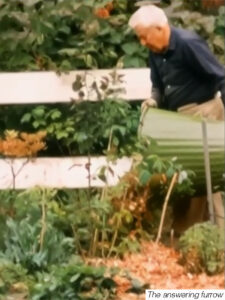
From presenta a Earl Stone, an octogenarian dedicated to floriculture whose business has been ruined by the push of new technologies. Threatened by an eviction order, Earl finds lifeline in new job. After a reception at his granddaughter's house for her wedding, one of the guests proposes that he serve as a transporter for some acquaintances. Pushed by necessity and after accepting the offer, Earl undertakes his new task with renewed enthusiasm. However, He will soon realize that the merchandise he carries in the back of his old truck can cause problems.. Moved by curiosity, Earl inspects the cargo to discover that, without knowing it, works as a courier for a drug cartel. But your problems don't end here.. More concerned about his flower business than his family relationships, Over the years Earl has turned out to be a frankly inattentive and incapable father and husband. (he forgets about his daughter's wedding, they explain to us at the beginning of the film). Now, repentant of his youthful adventures and at the doors of the other neighborhood, he intends to fix things with his ex-wife. But it won't be easy. Years of neglect are not fixed so quickly. While, The siege that the police is laying on the traffickers also hangs over the old farmer..
Nick Shenk, screenwriter of the aforementioned Gran Torino, is responsible for this new script in his second collaboration with Eastwood. Shenk had noticed the true story of a nonagenarian who served as a messenger (the mule that gives the film its title) for a group of coca traffickers. From there, began to speculate. The result is a piece that, as stated by the writer himself, serves as the reverse of that mythical Walt Kowalski who starred in his first work for the screen. Shenk has tailored a suit for Eastwood. A story where the conflict is sustained by the construction of characters who end up piercing our sensitivity step by step.. If Kowalski was a reclusive man who lived apart from the world, Earl Stone is a more sociable man who seems happy to help everyone who crosses his path.. The murky side of that apparent affability, is that only the reserve for strangers. At home things were always different. And it's not that Earl reneged on his responsibilities as the family's financial supporter., It is on the emotional level where it has failed..

There is no doubt that Shenk's text would have had a little less force without the presence behind and in front of the camera of old Eastwood. Again the director of The Madison Bridges shows his ability to take over any project. His facility for planning tells us of a director who, despite the age, has not lost pulse. Thanks to the constant and discreet use of the steady-cam, manages to efficiently and tensely bridge any sequence, no matter how complicated it may be., giving the final assembly that spontaneous fluidity that is so trademark of the house, finished, on this occasion, with beautiful aerial shots that work as a balm for our eyes (not in vain we are facing a road movie, although it doesn't seem like it). The rest of the work is done by a presence that plays with the complicity of a spectator who knows what he wants and gives it to him.. As a transmission vehicle, that sideways look of one who observes the world with discreet wisdom and a curiosity that encompasses everything. And with Eastwood, a casting of actors who this time are not given a great role to show off, but they do their part with pleasant efficiency. The endearing Dianne Wiest stands out in these tasks., in the role of Stone's ex-wife (How far away are those collaborations with Woody Allen!), and an almost unrecognizable Andy García who reappears on the big screen to assume the role of head of the drug cartel. Simply, endearing.
Con From, Clint Eastwood offers us an emotional statement about the values of family and personal relationships in a world where everything is measured by money. Earl Stone is a man plagued by a feeling of guilt. And it is precisely here where we find the first key to the framework that Eastwood and his screenwriter have devised in this work.. Earl, perhaps a transcript of many previous characters, He is a man who has spent his life enjoying every moment. Now, when everything seems to end, he feels like he wants to return to the fold, to its roots. At least, that's what he says to the DEA agent, Colin Bates, played by a solvent Bradley Cooper. Of the success of the operation that has been deployed against the drug trafficking gang, depends on young Bates' professional rise, task to which he is completely dedicated, forgetting, como Earl, your family commitments. Seeing in the policeman a copy of himself, Earl will give you some advice: don't waste time, tomorrow could be late. And if, Perhaps Earl's search for forgiveness also has something cynical and opportunistic about it., as the two women he has disappointed reproach him for. Is it possible to grant forgiveness? Maybe not, but although redemption is far from materializing, Maybe we'll settle for a friendly reconciliation.

But if Clint Eastwood's latest work stands out for something, it is as a sample of that landscape that, from the physical and cultural distance that separates us, We Europeans have come to recognize that part of the United States that represents that essence., those roots. Physical landscape, Of course, that of the great plains and agricultural extensions, but also human, sentimental. In his constant travels as a mule, Earl meets all kinds of people. We can understand that it has been like this throughout his life. That constant coming and going, has turned him into a keen sociologist of the reality of that world in crisis. Not in vain, many characters he will encounter highlight his resemblance to the actor James Stewart, a nice comparison and not at all gratuitous. Stewart was, throughout his career, the representative of that kind and white America that Earl himself represents and that was reflected in now eternal titles such as How beautiful it is to live! o knight without sword. An America always on the edge, but who finds his salvation in his values. Is it perhaps the betrayal of those values that has led to his ruin??
Earl's gaze is the gaze of the common man who finds the basis of his world in the community. A community that suffers the attacks of an economic system that beats it. Proof of this is not only the economic situation in which Earl himself finds himself., but that socially and physiognomically decadent landscape through which it circulates. Even the police themselves, responsible for safeguarding the established order, finds serious problems making ends meet with a salary that we understand is miserable. Earl represents the quintessence of that world and that culture. And although times have changed and there are things that are foreign to you, strange, Earl trata, in your way, to understand. And if, This latent racism in that society is also exposed in the film. Eastwood doesn't hide it. He doesn't judge him either., one might say (The sandwich sequence is one of the most memorable). But, so, what is your position?, We are wondering. In his brilliant book, Chronicles of deep America, The now deceased journalist Joe Bageant took a tour of that Republican America abandoned by politicians and a system that looks at them with suspicion and from afar, but it doesn't meet your needs. A world in decline, like Earl's. a broken dream, with its miseries and its greatness. Eastwood, as Baegant, does not justify, but understand. GERARDO LEON