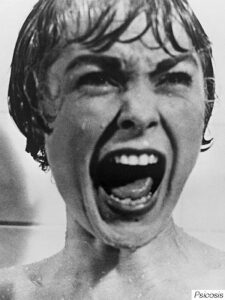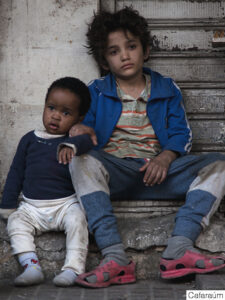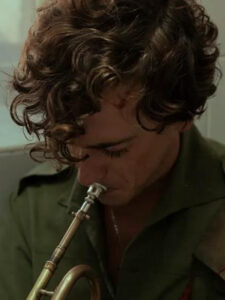


Original title: Cold war · Pawel Pawlikowski · Polonia · 2018 · Script: Pawel Pawlikowski, Janusz Glowacki · Intérpretes: Joanna Kulig, Tomasz Kot, Agata Kulesza…
Original title: Journey to a mother's room · Celia Rico · Spain · 2018 · Script: Celia Rico · Interpreters: Anna Castillo, Lola Duenas, Pedro Casablanc…
The unexpected success of Ida, his previous film, had opened the eyes of the public and critics to the next project by Polish director Pawel Pawlikowski. If we add to this the successful showing at the last Cannes festival (For many, a well-deserved Palme d'Or – that didn't win, had to settle for the award for best direction-), and the number of reviews that had praised its long-awaited commercial premiere, one approaches the room with a mixture of excitement and high expectations. The result, after the experience, leaves the chronicler with an ambivalent feeling.

Inspired by the real relationships of the director's parents, Cold war takes us to Poland, to the decade of the 50 from the last century. Here, not far away the end of the Second Great War that would devastate Europe, a young musician, Viktor, looking for singers to put on a theatrical show with traditional music and songs. Among the candidates to complete the cast is Zula, a young peasant girl who will captivate you, both for her gifts and for her personality and evident beauty. Poland is under the rule of the USSR and the confrontation between the two political blocs, communists on one side and capitalists on the other, is at its dawn. Thus begins a relationship that will last several decades.. Viktor wants to flee to democratic Europe, escaping the oppressive clutches of the bureaucracy of the regime imposed by Stalin. Ella, however, things are not so clear. time and distance, the different ambitions, They will be the obstacles of a love condemned to not be consummated.

If we pay attention to the production notes, Cold war It is fundamentally presented as a passionate love story. And that is what Pawel Pawlikowski has tried to convey to us here, that uncontrollable passion that seems to take the soul of Viktor and Zula, its protagonists. However, for those who subscribe these lines, This is perhaps the least interesting part of the movie.. Pawlikowski makes a risky bet that doesn't turn out well at all. Constructed from small scenes separated by a black plane that covers the screen, the director gives an account of the different stages of this impossible relationship. Between one scene and another, Pawlikowski trusts the continuity of his story to long ellipses that lead us through time.. Two drawbacks we see here. The first refers to the alleged inconveniences that serve as an obstacle to the consummation of the relationship between Zuma and Viktor.. We won't reveal anything, just say that, done the math, In reality the only thing that opposes that love is, curiously, your own individual ambitions. Pawlikowski presents his protagonists as a kind of modern Romeo and Juliet condemned by the political conditions of the historical moment in which they have lived.. In the end we will discover, however, that this does not correspond to what was narrated. All of this makes the story lose strength by not finding the solid basis necessary to sustain that main conflict..

The other problem is found in the relationship between the film and the viewer.. Pawlikowski provides the understanding of the background in which he surrounds his characters in the prior knowledge that his audience may have of that historical context to which we have referred.. Thus, the director uses a whole series of easily identifiable elements. After his escape from Poland, Viktor settles in Paris where he begins a new life as a jazz musician and film soundtrack arranger.. He lives in a modest attic and among his new relationships is the best of the city's decadent cultural world.. On the other side, Zula prospers as a singer in the theater group created by Viktor under the protection of the socialist regime. And that's where, without detracting from the possible documentation work that the director may have carried out, this production stumbles again. Of the bohemian artist who moves through dark alleys and cafes in the wee hours of the morning crying his heartaches, passing through the crazy young woman who lets herself be seduced by the bohemian and liberal life of post-war Paris, to the gray and cold official adept at the regime, Pawlikowski fills the film with characters and situations that are close to cliché or those that barely give us a psychological brushstroke., so light and superficial that we do not have time to become intimate with them, creating an emotional distance between the audience and the audience that is difficult to overcome. Not even the suggestive and enigmatic final shot saves us from shaking off this impression.. There is not in all of this a look that can be considered to contribute something that does not sound familiar. (The life of others, de Florian Henckel from Donnersmarck, For example, would be a first reference). There is no doubt about Pawel Pawlikowski's strength and confidence when creating images. Holding on, as in his previous tape, in a square format and a beautiful black and white, His camera offers us a series of compositions that will surely captivate those viewers who treat cinema as something more than a continent of stories.. However, It is still true that the loss of that emotional force that infuses the story makes it, this time, they seem less powerful to us, more aesthetic than evocative.

It seems more interesting to us, however, the confrontation that the director establishes between the two political blocks that the film tries to oppose (hence the title?). So much so that we could almost conclude that the love story on which his project revolves is a mere excuse to raise this debate.. With the fall of the Berlin Wall, the long confrontation between the two Europes that began in the period shown in the film would end.. After decades of separation, Finally, Europe, subjected under the communist government, made its way to the regime of freedoms that awaited it on the other side of that border of “shame.”, how the famous wall became known. Well then, Cold war comes to tell us that that dream was something like an empty chimera from the first moment. Viktor fulfills his ambition to escape to that Europe of freedoms. However, things are harder than I thought. That imagined France (now real) It cannot guarantee your material well-being and that dreamed freedom is not so much if you are far from your love.. Fugitive from his country, Viktor is a man without a country, which results in that feeling of loneliness that devastates him. On the other side, Zula lives moderately in accordance with the circumstances that life offers her. who is right? Pawel Pawlikowski does not seem to have a clear answer to this question and is in that state of permanent doubt, of uncertainty and perplexity in the face of the world in which they have lived, the most interesting part of this work. Here we leave it.

With a more modest production, but emotionally more effective, This week we came across the first work by the Sevillian director Celia Rico Clavellino, Trip to a mother's room. Here we meet Leonor, a young woman in her twenties who lives in an undetermined small town. Life in the town does not offer many opportunities for the young woman beyond a modest job and meetings with her usual friends.. One day, The visit of an old friend who is working in London opens her eyes to a way out of that boring world without apparent expectations.. The problem is that, To do this, must abandon his mother, with whom he lives, a seemingly fragile woman, wounded to the depths of her being after the recent death of her husband.

With very few elements, Celia Rico Clavellino manages to put together a piece that hits where it should without beating around the bush. The key to your success is, first of all, in a simple script, but well structured, solid both in the approach of the conflicts and in their development and outcome without ever failing to hide some small surprise for the viewer. Structured in two distinct parts, Rico cleverly plays with the protagonism of his two main actresses to develop a plot that is debated more in the field of feelings and emotions than in action. (although things happen). With these premises, The director relies on certain very recognizable elements to point to the memory and sentimental experience of an audience that cannot help but feel identified with what they see., both in the details (that mobile phone, the italian coffee maker, etc.) As in many of the situations that arise. Well measured, the strategy, not for simple (and based on the reactions it provokes in the audience), still very remarkable.

The other element, of course, we find it in the choice of a cast that is simply, at its right point. Without a doubt, Lola Dueñas has already become the national face of that lower-middle class woman who is the prototype of a certain traditional cinema.. His melancholic look, but full of expression, conveys the feelings of that mother who has to find her new place in the world. The young woman is not far behind (but with a considerable resume) Anna Castillo, much better directed than in The olive treede Iciar Bollain, that achieves a composition up to the challenge that has been proposed to it. Her patent spontaneity serves as a driving force to radiate that naivety that Leonor possesses in the face of life's contradictions, which are her true inner conflict..

A diferencia del polaco Pawel Pawlikowski, Celia Rico's grammar of cinema is, so to speak, aesthetically less overwhelming, a fact that, however, It does not subtract any value from your work.. Whether for production reasons, good because the project is consciously smaller, With his frames, Rico instils a modesty of resources that perfectly serves his purposes.. The camera anchored to the tripod, the director bravely renounces movements and individual close-ups. And this is a story of two. And when one of those two is missing, what remains is the gap., the emptiness of that absence that pushes everything towards that future that is being built before our eyes. That gap also counts and had to be portrayed. especially skilled, in this same sense, is the measure of the internal rhythm of the sequences to which Rico breathes a relaxed tempo, allowing the sensations at play here to be savored. It's not that nothing happens between those silences., is that silence is strongly charged with a meaning that is based on an unconscious gesture, a lost look and that must also be considered.

Como en Pawlikowski, Celia Riconos also offers an interesting reflection on the inside and outside of the universe of the two protagonists., of that off-screen that is never shown, but it is intuited and understood. Within, This Spain is immersed in a crisis from which it does not seem that it will ever raise its head.. Out of a world, the foreigner (London, Switzerland or Germany, is the least) where they tell us at all hours that it is so prosperous that the dogs are tied with sausages. But it's not like that. Time is, Rico tells us, that we look a little at what is valuable about what we have. GERARDO LEON