Original title: Ad Astra · James Gray · USA · 2018 · Script: James Gray, Ethan Gross · Interpreters: Brad Pitt, Tommy Lee Jones, Donald Sutherland.
There is a trend in part of the latest batch of productions that come to us from Hollywood, to approach science fiction as something more than the playground for the development of simple intergalactic adventures. Titles like Interestellar, Gravity, Blade Runner 2049, the arrival, They go beyond the canons of the genre and are presented as works that, relying on the tools that it offers them, make the leap to a conscientious reflection on what we could call “the nature of the human”. Works with the aim of transcending, to touch what is the essence of ourselves. This list is now joined by the latest work by American director James Gray.

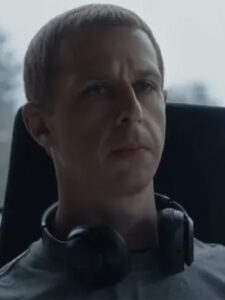
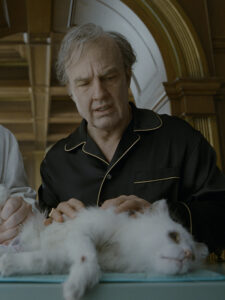
Gray tells us about the complicated adventures of Roy McBride, an astronaut in charge of building a powerful communications antenna that orbits the Earth. After an unexpected accident caused by a series of inexplicable explosions, Roy is called by his superiors in the army to propose a mission. According to his research, the accident suffered in his antenna (as well as in other places on the planet), It was caused by cosmic radiation resulting from uncontrolled explosions from the orbit of Neptune., and more specifically, of a space station sent there sixteen years ago and thought lost. Coincidentally, That expedition was captained by Roy's father, Clifford McBride, a respectable astronaut and hero of interstellar travel who was considered dead. Roy will have to go to Neptune and neutralize his father, who they think has gone completely crazy.

Among the best of Ad Astra There is a planning that puts us against the ropes from a visual point of view. This film starts with the aforementioned accident sequence. Dressed in his astronaut suit, Roy leaves the space station where he works to operate abroad. Roy opens the hatch that allows him to go out into space. At the bottom, we see the profile of planet Earth, which is just below him. As it descends, the camera follows your movements. So, we leave the safety of the station to take note of the abyss that opens beneath their feet, what are they, literally, ours. The feeling of emptiness that Roy can feel when observing that space that remains between him and the ground, thousands of miles away, is impressed on the viewer's retina, then, gives a start (If you have ever looked over a cliff, you'll know what I'm talking about). The vertigo is so noticeable that it almost seems real. Screenwriting manuals say that there is nothing better to hook the audience into a plot than trying to catch them in the first sequence.. And what if Mr.. Gray gets it.

But this effort by the director of The night is ours to “impress” the viewer is not due exclusively to a mere game of physical sensations, Well, this brings us closer to one of the themes that this production addresses.: the relationship between man and space. Separated from the planet that saw us born, The man is represented here in his true dimension. What is the human being in relation to the immensity of the universe? Physically, very little thing. However, and despite the difficulties involved in the race to conquer the stars, That same man possesses qualities against which that universe may be defenseless.: his intelligence and, above all, your determination. Conquered all corners of the Earth, the challenge is now out, and the man is more than willing to overcome it. It may fail many times, but sooner or later he will achieve his goal. It will be a slow conquest, tailored to the challenge assumed, but it will come. Like in 2001 A space odyssey, James Gray's film comes to tell us that, set our sights on the stars, That space represents much more than the mere count of planets and still unknown phenomena.. It is the very measure of who we are, that of a being who is conditioned by his ambition to conquer everything. It's not something you can give up., because it is a condition of its own nature. That's what we are. In the confrontation between spatial vastness and our ability to discover and ask ourselves questions is the very definition of our essence.. If it is within our reach, can we do something else? How can we refuse it??

That relationship between man and his anathema, between the human being and the element to be colonized, follows us throughout the movie. Whether in that initial sequence, as in many other subsequent situations, Gray wants us to feel in every moment the physical dimension of the challenge that Roy has before him.. Rarely in cinema has it been possible to quantify the relationship between the human figure and the dimension of space, especially, in front of that void that swallows everything that is left at its mercy. Gray makes us understand in an intimate sense, sensorial, that relationship. But more than anything, makes us share with his characters that dread that assails them in the face of the unknown. When approaching the base that the company he works for has on the planet Mars, An accident that destabilizes the ship in which he is traveling forces him to make a forced landing. The operation has its risks, we almost feel that it is impossible, and fear takes over the crew. It's not just the fear of death, It is the fear of dying far from home, abandoned, literally swallowed by space darkness.
To share your reflections with us, Gray, together with his scriptwriter and regular collaborator, Ethan Gross, they turn to the classic hero, a man in permanent conflict with himself and with the world around him. From the first moments of the story, we learn that we are facing an exceptional human being. His pulse always remains stable and at surprisingly low levels.. Nothing seems to bother him except, as we will see soon, the loss of his father and his reunion with a man who, as you consider, abandoned him to pursue a perhaps unrealizable dream. And there we have the next question.. What is more important, the goal or relationships we maintain with ourselves as a species? Kidnapped by his ambition, Roy's father sacrificed his own family. Was it worth it?, he wonders. What should Roy do??

These extraordinary qualities of Roy will be exposed in the moments of crisis that he will face throughout his journey to Neptune.. In the face of any danger, Roy remains unfazed. Your ability to concentrate will allow you to find the appropriate solution to each problem that arises.. Focus your attention, face conflict with cold rationality, that's the goal. While his colleagues literally lose their roles, Roy will remain unfazed, trying at all times to find the way out that will unravel the mess. It is the famous loneliness of the hero, which is none other than the loneliness of one who fights for a greater good, not always well understood by a mass that never fully understands the true dimension of what is at stake.
But the hero's conflict goes much further.. And here comes another question: Is it worth so much effort? What's the point of so much work?? It is here that Gray's piece takes another leap to address a question of political overtones.. Conquered the Moon and established its presence in it, man has turned it into an amusement park for multinational companies that, like on Earth, They are there to do their business.. It doesn't matter where we go, it is called gray. With us we also carry our ambition and our selfishness.. On that Moon that we contemplate today from Earth, a terrorist group creates, besides, chaos in a ruthless fight to control the natural resources offered. There does not seem to be peace for man in outer space.

This last theme provides perhaps the least notable moments of this film.. To elaborate your story, Gray and Gross try to create a coherent and as realistic world as possible. A tone that, incomprehensibly, ends up breaking at certain moments to jump towards the aesthetics of more commercial products, as is the case of Total challenge de Paul Verhoeven, With that lunar world conquered by the commercial brands it represents, it is not known whether as criticism or as covert advertising., or to the treatment of the encounter with the terrorist group that attacks Roy's mission, a sequence of the Mad Max by George Miller (The first, Mel Gibson's). Moments that have very little relationship with the rest of a film that would have required more carefully studied script solutions.. We will reserve our opinion on other impossible solutions for the viewer to discover.. But it is that Ad astra es, Despite everything, an adventure movie. It's just that the tone chosen by Gray for his work and his transcendent ambition clashes with certain elements of the genre..
But where I think it limps most stridently Ad astra as proposed is, precisely, in what I think James Gray's cinema almost always fails at (and we could also say about his co-writer, because they always go hand in hand): that of the portrait of human relationships. Like in Two Lovers, The film tries to delve into the problems of a man in conflict with his past.. From what results from your adventure, like every classic hero, that will come out that will determine your immediate future. At the end of the screening we cannot say that we have not understood what their problem is.. The thing is that, if this is so, It is not because we have deduced it from the multiple situations in which Roy finds himself., but simply because he has been telling it to us through the voice-over that covers and gives coherence to the entire film.. I think that, despite his limits in his records as an actor, Brad Pitt does an excellent job of portraying this man anguished by life and, at the same time, so sure of himself. But it is not enough to look towards the horizon and put on a sorry face to convey a great inner drama.. We must feel it and that is something that Gray's cinema almost never achieves.. His dramas are not built on a plot, but about a series of situations that are not always related to the intimate conflict that the characters say that afflict them.. To solve the problem, Gray usually resorts to excessively explanatory or, as in this case, to that voice-over that we have already mentioned. The viewer is left, in this way, informed of what is happening (and from there you will draw your conclusions), but it fails to penetrate the supposed emotions to which it is supposed to respond. In that aspect, Gray's films always seem a bit cold to me. GERARDO LEON