
Times change, they say, and with them the way we have of looking at the past and the future, also the cinema. If I'm honest, that is to say, if I remember, I don't remember having ever seen in full any of the films that make up the trilogy that portrays the figure of Sissi played by the actress Romy Schneider. And if I did at some point in my life, back in those years of my childhood when television was omnipresent, I barely keep any distant impression of it. Perhaps that is where the almost automatic association we make between the actress and the real character of Isabel of Bavaria comes from., empress of austria, through which Schneider embodied a romantic tale of palatial seams.
This is what the Austrian director Marie Kreutzer seems to have thought when the actress Vicky Krieps (The invisible veil, The island of Bergman) He proposed to approach the character again. According to Kreutzer herself,, The figure of the empress referred him to an incomplete memory of Schneider's films or as a simple object of tourist attraction in his country.. Then, the director's disinterest seems to have mutated into curiosity, to move on to a documentation period and, of all this, to the idea of proposing a new approach that would allow him to resurrect the figure from a more “contemporary” perspective..
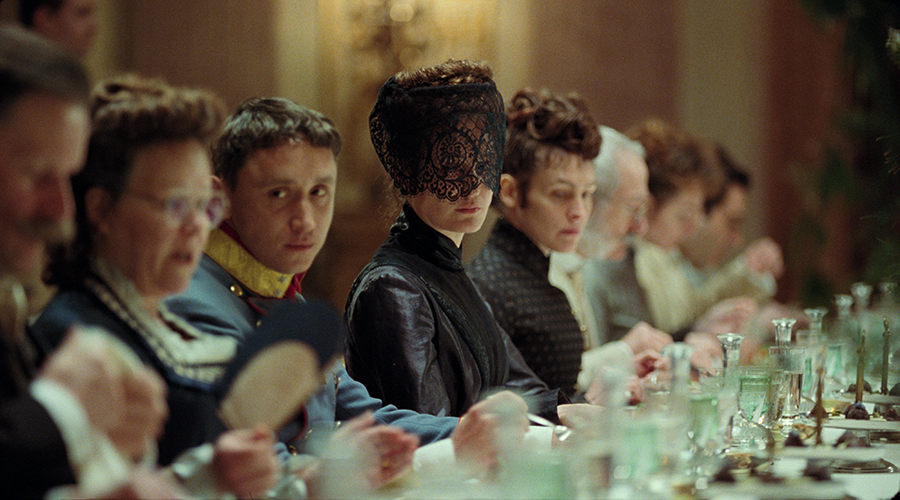
places us The rebel Empress, Kreutzer's fifth long work, in full maturity of Isabel. Turning forty, Her life is organized according to her obligations as a representative of royalty in all types of public events with her husband., Emperor Franz Joseph. But Isabel is not satisfied with fulfilling this merely figurative shadow image of her husband.. Liberal thinking, feels very aware of the political conflicts facing the monarchy, involved in a process of decline and structural change, in which you want to intervene with your opinions, his own condition as a “desiring” subject (of her husband's affection and consideration, of his lovers, of the need to satisfy one's own body), her role as a mother and part in the education of her children, or his interest in the culture and technological advances of his time. But Austria in the second half of the 19th century is not the time for a woman with her own ideas., which condemns it to a role of mere decoration, thing that afflicts a spirit that, we understand, feels locked in a shell of conventions.
When approaching the challenge of making a biopic about any historical figure, The greatest challenge that the filmmaker faces is to convince the viewer of the appropriateness of the task to which he has been entrusted.. In this sense, or it is about highlighting some specific merit of the chosen figure, or the character in question has a life full of sufficiently interesting events, or we will highlight a passage or period that is significant in his career. In all cases, The difficult thing will be to discover what what they tell us means to us as viewers.. What moral or teaching, What reflection does the narrative invite us to?? Answering this question when it comes to particular lives is not an easy task and often the experiment ends up failing.. Life is not a story. It's life and little else.
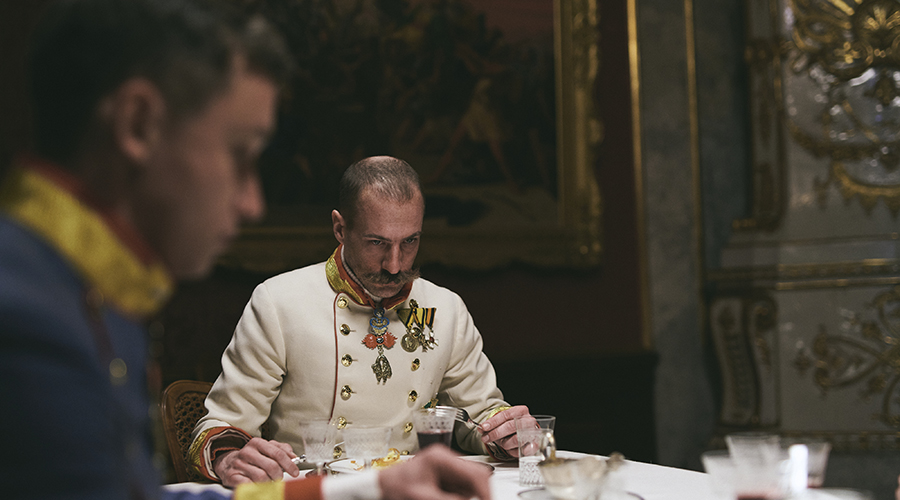
and it is here, precisely, where Marie Kreutzer's film finds its biggest problem, well, beyond the portrait of a historical period, of their ways and customs or their way of thinking, does not find other anchors with which to cover that viewer. That Isabel is a corseted woman (Corsage, body or corsé, in the original film title, more descriptive than the intended and obvious Spanish translation) by the rigid moral norms of his time is something that we understand from the first sequence. The question, having said this, is what we can expect until the end of this story, beyond projecting that idea or as a warning or suggestion about the current moment with feminisms on the rise today, that is to say, as an ideological message. In fact, The director is so aware of this problem that, In fact, He has not structured his proposal as a story in itself, but rather as a succession of situations that reflect his speech: the obstacles to the emancipation process of women. There is therefore no dramatic evolution of the character, apart from a crescendo from that initial approach, and everything ends, practically, how does it start. Kreutzer thus divides his artifact to attend to the different details or aspects on which he nourishes and bases that first idea., to give it all an appearance of continuity, yes ok, when everything ends, we can ask ourselves what we have offered ourselves to. The fact deserves special mention, recognized by the director herself, of the historical and biographical licenses to which he seems to have indulged in his portrait, which brings us back to the question, extra-cinematic, to what extent the manipulation of reality legitimizes or undermines certain debates, as already happened with the “controversy” Blonde de Andrew Dominik. The final sequence of the film is worth highlighting here., apocryphal moment that responds more to the poetic desire of the author than to reality.
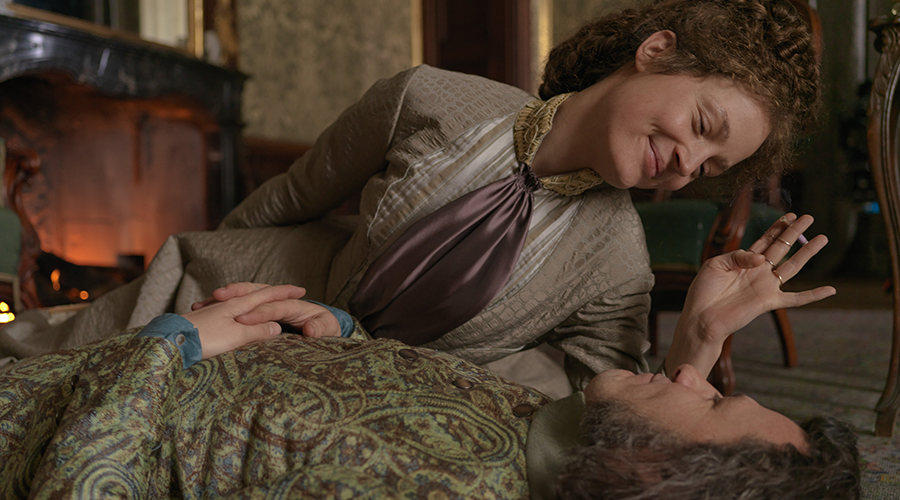
You have to give Marie Kreutzer credit., however, his ability to disguise the plot absences of his proposal with a narrative pulse that is supported by a skillful montage of the sequences., supported by the use of the soundtrack and a script that tries to surprise the viewer in each new adventure that is presented to us., achieving a musical fluidity that is undoubtedly the greatest strength of this film. No less relevant and notable is the work done by actress Vicky Krieps in her interpretation of Isabel.. Krieps knows how to give life to his character, finding in each scene a new point of support on which to project it., thus raising our attention, and making it appear that what is moving, in the background, has no movement.
Alcarras, The beasts, Water, Spanish cinema has focused on the rural environment as the object of its fictions. A point of view that tries to move away from any “idealization” to try to represent its contradictions., its hollows, fruit of the result of any human experience. This is also the case with the feature debut of Basque director Mikel Gurrea.. Con Suro, Gurrea explores this social landscape in his own way, yes ok, although there are coincidences, He does it from a visual point of view and, we could say, own politician.
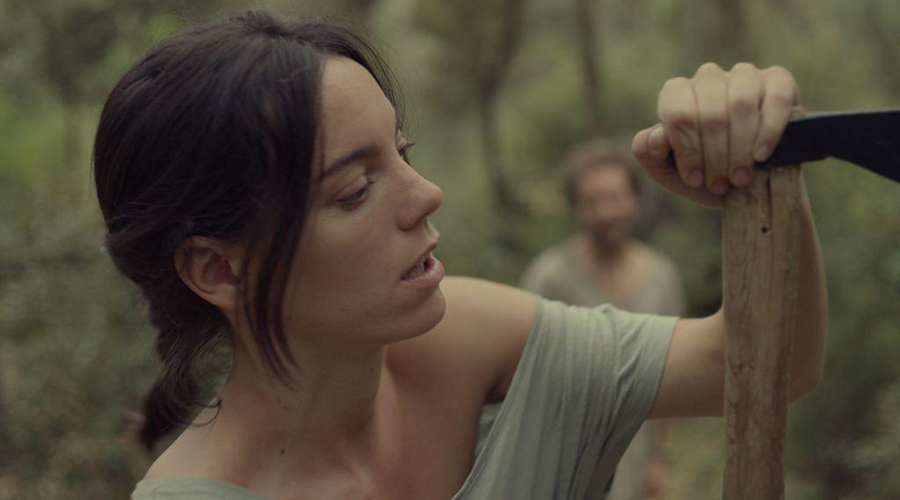
Account Suro the story of a young couple: Ivan and Helena. At the beginning of the narrative, The couple celebrates a farewell party with their friends in a pub in Barcelona. Iván and Helena have left their jobs and are embarking on a new adventure to take over the management of a farm, her family inheritance, in the interior of rural Catalonia. As one of her friends says, They have been able to take that leap that everyone aspires to, but to which no one or almost no one dares: leave everything for an “alternative” life closer to the land and far from the dominant economic and social order. But once installed on the farm, They are going to discover that things are not as idyllic as they thought.. Dedicated to the exploitation of the cork tree (suro, in catalan), Property management will bring the couple quite a few problems., the first of which involves finding a crew of workers to carry out the work. From here, things will only get complicated.
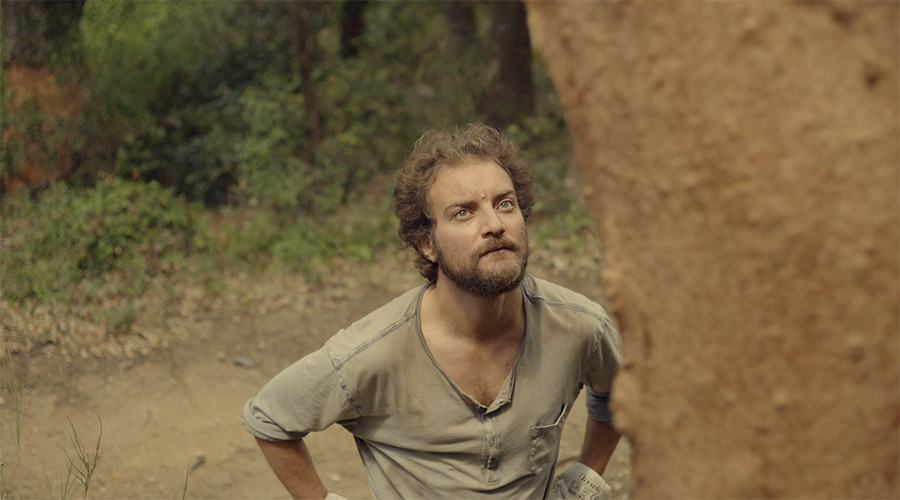
If we focus on the visual aspect, Mikel Gurrea's camera appears lighter, looser and freer than in the case of those other proposals already mentioned. While Rodrigo Sorogoyen appealed, in The beasts, to the classicism of genres and Carla Simón, in Alcarras, to a rather imposed naturalism, fruit of more elaborate compositions than it wants to admit, Gurrea lets the setting and the characters speak for themselves and dialogue more organically with the image and, thus, with the viewer. Gurrea's camera shows and proposes according to the tension that the events transmit to him., more conditioned by them than by the hand of its author. Son, besides, lighter compositions in their own conception, who frequently construct more “unbalanced” frames in terms of the position of the elements within the frame of the scene.. In this sense, Gurrea also plays naturally with an off-screen that allows him to highlight the tension between the events we are going to witness and how their protagonists perceive them.. That's the relationship you're interested in.. The self and the outside. us and others, with the context. In fact, this is how the movie begins. In the center of the image we see Iván and Helena while we listen to one of their friends in voiceover who gives an account of the new life they are going to start.. The contrast between that story and the expression on their faces brings into play the expectations that the story itself will open..
Also at the discursive level, Although we find many similarities, there are notable differences. TRUE, as it happened in The beasts, Ivan and Helena, despite his conciliatory and enthusiastic attitude, They will soon clash with the local idiosyncrasy of that new space in which they will try to integrate.. Once again the eternal confrontation between city and countryside. So, The theory will soon collide with an economic and social system that has nothing to do with the initial assumptions. Encouraged by the need to move the cork business forward, Iván and Helena reach an agreement with a local contractor who will take care of the task. The problem comes when Iván discovers that this, in turn, subcontracts migrant workers for its crew and does so, besides, in precarious working conditions. Iván's ideological scruples will quickly contrast with the culture and racism of the area and with an economic logic that he had not foreseen.. It's not just that Iván's attitude clashes with the reality perceived by his new neighbors and those he says he wants to protect., but the fact that the very system of mutual need and dependence of all the actors in the wheel of this microeconomy is much more complicated than I thought., a cycle of survival and interests in which he himself will be involved.
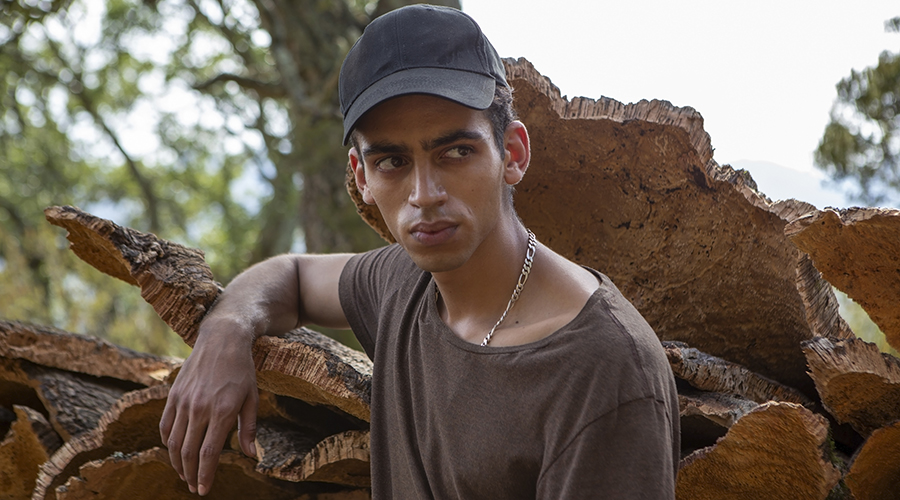
All these conflicts will be transferred to the couple's relationship.. While Iván tries to govern his new life according to his political and moral principles, Helena denies all this and becomes much more pragmatic.. Your dreams are more materialistic than those of your partner. All this will have a dent in coexistence, so far harmonic, that will be contaminated by these internal disagreements. For Gurea, love and camaraderie are definitively stained when money comes into play and a dream that takes shape takes definitive form., in the background, there is nothing ecological about it, but rather it is a reflection of petty bourgeois aspirations that are much more conventional and, in the background, petty of what it was about appearing to the outside. In that sense, Gurea has no personal affection for his characters and dares to shamelessly expose their shame., Contrary to what happened in the case of Alcarras by Carla Simon. There are no good or bad here, or better, somehow, everyone is equally stupid. cynicism, selfishness, the ego, intimate contempt for the other, The struggle to dominate the relationship will appear in both everyday details and big issues.. what remains, what ultimately binds is neither more nor less than property. The story gives, So, a Copernican tour, to realize that it is this process of “maturity” and transformation that is the backbone of the film. A maturity that, In the case of Gurrea (and saving some unnecessary exaggerations, as is the case of the party sequence with friends, already in his new house), It is a pure process of demolition. GERARDO LEON