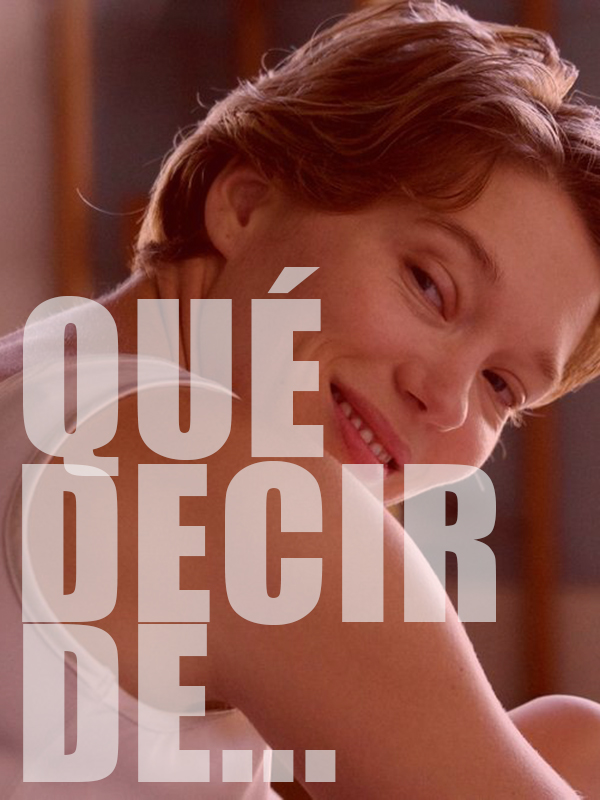
It is interesting the moment in which a film like Fantasies of a writer, by French director Arnaud Desplechin. When the productions that today are at the forefront or that dominate the program of international festivals strive to seek a certain naturalism, namely, remove from the cinematographic plane and, even, to the construction of stories every sign of apparent artifice, Desplechin presents us with a film that goes in the completely opposite direction, proposing an artifact that proudly displays its imposture, thing that, in a way, could be seen as a provocation.
Based on the novel by Philip Roth, Deception, The film narrates the clandestine meetings between Philip, a mature American writer temporarily based in London, and a woman several decades younger than him. Collected in the privacy of Philip's studio, where he works, they make love, they argue, They share intimate secrets and desires, y, above all, away from his wife's gaze, in his case, and her husband, in her case, they feel free to show themselves as they really are. Time after, after returning to his country for a while, The couple will meet again during another trip by Philip to London to present a book in which he collects his own adventure.. Their relationship is now part of both of their memories., from your past. What has remained of your love?

In Fantasies of a writer Desplechin tells us the phases of a love relationship, but it doesn't do it in an orderly way, but it jumps in time. The most interesting thing is that, although at first it can mislead us, With this spatio-temporal tightrope walk exercise, Desplechin manages to give power to the situations it poses., managing to place the viewer closer to the feelings that affect its characters. Thus, It happens that, For example, after the end of the relationship, We go back and resume other previous meetings, moments that take on a new dimension, maybe nostalgic, that adds to the current of sensations that the present that we are living throws at us. Does all of this that we are shown constitute Philip's memories?? We don't know and, however, that mystery, the doubt, gives volume to the story. In the middle of all this, we will know other details, What are Philip's relationships with his wife or with other women?, whether they are former lovers or those with whom they have a friendship.. These relationships project the story further into Philip's past., which indirectly pushes us to face other issues, What are the passage of time and the proximity of death like?. Philip is all that he has experienced, what is and what was, what has shaped your life, sentimentally and also politically, as a writer and as a human being.

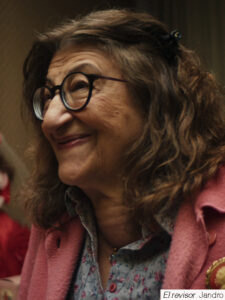
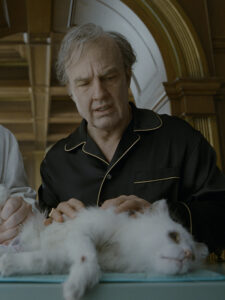
Arnaud Desplechin, co-author of the script on which this production is based, It is based on the literal dialogues of Philip Roth's novel, which results, a priori, a primarily talking film. Here, more to do, it is said. Dialogues that are full of cultural references, of political or moral reflections that give the characters an engrossed air, which for many will result in that tone of artifice that we pointed out in the first paragraph of this chronicle. However, this risk (which can sometimes fall), is compensated by the performances of a cast that gives itself completely to its vehicular role in the scaffolding of the plot.. It will then be, in that free space between each line of text, where those characters reveal their most intimate feelings. It's not so much what it says, but through the timbre of his voice, from the expression on her face and the body of the actress Léa Seydoux how we understand the fragility and hunger for knowledge that lies behind the apparent security of that young woman she plays. The same thing happens in the case of Philip, role assumed by veteran Denis Podalydès, a man about to cross the doors of senescence, but whose appetite for life has not yet abandoned him. like a vampire, Philip absorbs from her, with his gestures, his look, every drop of your being. It's not sex (or it's not just sex) what you are looking for from her, It is the life that emanates. Or Emmanuelle Devos in her interpretation of Rosalie, a woman facing a serious terminal illness and who, yet, exudes humor and energy.

What plays in favor of this production is the subtle and, at the same time, impactful photography by Yorick Le Saux, collaborator of directors such as Claire Denis (Highlife), Olivier Assayas (Trip to Sils Maria) or Luca Guadagnino (I am love), that gives each Desplechin painting a captivating atmosphere, along with an elegant decoration and costume work. Desplechin locks his characters indoors and almost in a single space, which limited the narrative possibilities with the danger of falling into a certain theatricality. However, although we do not have great formal displays here, It is no less true that the French director solves the challenge with great aesthetic elegance..
Despite what has been stated so far, I think it should be noted that the film is plagued by some anachronisms that come from the novel on which it is based and that may be foreign to contemporary audiences.. One of them is the constant appeals to the Jewish question, so relevant in Roth's world. This is due, above all, to the translation of the original text into the French language. No matter how hard Denis Podalydès tries, he cannot convince us of the North American origin of his character., which leaves the issue out of its sociological and historical context, losing political weight and becoming a somewhat forced note. The same thing happens with the circumstances surrounding both Philip's wife and the young woman with whom he has relations.. It is true that the film is set in the years 80, but that distance does not imply any great cultural change with respect to our present. So, We can understand the relationship of economic or sentimental dependence that both women have on their respective husbands., but although at another time these premises would have irremediably tied them, One wonders all the time what prevents them from getting divorced if that relationship makes them suffer so much.. Yet, what remains is that longing for freedom, that need to be oneself without ties that vibrates under the skin of the two characters. And who has not ever felt that same desire??

Filming a film about the pandemic or in a pandemic has been one of the challenges that many filmmakers around the world have faced during the last two years. The most difficult one still stars, till the date, directors Miguel Gomes and Maureen Fazendeiro in Otsaga Diary, his first collaborative work behind the camera. A film that brings together several formats within itself, from fiction to documentary, or maybe all of this together or mixed.
In Otsaga Diary, we find three young people: Crista, Carloto and João. Just as they are presented to us, we can't say much about them. We know that they live on some kind of farm in the country and they are having a party. Shortly after, Carloto leaves the house and finds Crista and João kissing, protected by the privacy offered by the darkness of what seems like a greenhouse. Something doesn't work in that scene and Carloto's face shows a clear expression of annoyance and surprise.. Immediately, a text on the screen warns us: day 21. after the poster, the action continues, but, little by little, we are realizing that what we see is not what follows, in strict chronological order, to what we have seen, but what seems to have happened the day before. So, We went from day twenty-one to twenty-one, then, at nineteen, according to the meaning of a calendar that, we will discover, walk back in time.

As happens in much of Miguel Gomes' work, Whatever this film seeks to tell us is not made explicit in its plot., but rather we have to sift it from what its images suggest to us.. Something that is not in the action itself, although also, sino, as happened in Éric Rohmer's cinema, in a relationship of sensations. Thus, The viewer becomes a co-author of what is narrated because their active participation is essential to interpret the message or impression contained in the film..
In a first approach, Otsaga Diary it's a portrait, a diary, as the title says, of the daily lives of these three young people. Bored, they spend their days entertaining themselves in anything; They bathe in the pool or decide to build a huge cage for butterflies that they end up setting up in the garden.. But if we pay attention, maybe this is not the most relevant thing. What is relevant are his gestures, the warmth of the landscape, the nonchalance with which they approach the tasks that have been entrusted to them, the blue color of the pool water, the green of the plants, the golden summer sun and the fact that everything in them is smiles, provocation, a game.

Little by little the film opens up to other elements. One day, Crista, Carloto and João are having breakfast in the kitchen of the house when new characters begin to appear around them.. They are the technical team of the film we are seeing on the screen.. That's when we discover something that, well looked at, we already knew, and these three young people are, In fact, actors. We even recognize the director of the film himself among the intruders.. Then, We are informed that we are in full confinement due to the COVID-19 pandemic. The conflicts posed by a film production made in these strange and almost surreal circumstances (one of the actors will put himself at risk of contagion by breaking the health safety rules imposed on filming, which brings us back to the kiss in the first sequence, Well it will have to be replaced, as we now understand), the doubts of the actors about their respective roles or the reflections of the directors about their purposes, they will occupy, So, the center of the story.
But, again, We could say that this is not the most relevant. Perhaps the most relevant thing is the feeling of natural spontaneity that is breathed in these sequences.. In one of them, the team is going to start recording a shot. someone says: action! The work continues, while Gomes, You should pay attention to what happens in front of the camera, He takes his assistant by the arm and takes her aside to tell her that he has seen a tractor that could well be useful for another moment in the story.. They still don't know what role he will occupy., Well, we understand that the script is being written on the fly., but he is thinking of taking advantage of it in some way (we have already seen it, Well this has already happened according to the course, the other way around, of the events). The scene breathes freedom on all four sides.

Otsaga Diary es, as indicated by a label shown on the screen, a work that takes place in a pandemic. Or a work about the pandemic itself. But this diary built, So, as small notes, has no ambition to be a historical or social testimony of the fact, sino, in any case, to serve as a remedy against its harmful effects. Facing anguish due to fear of illness and death, Miguel Gomes and Maureen Fazendeiro remind us that we are very alive, and that life is in the small, in a butterfly garden, in the action of washing your dog, in a kiss that is more than a kiss when we have been forbidden to kiss, in a film crew that is trying to carry out a project despite the inconveniences that this situation imposes, in organizing a party, dancing holding a beer in hand.
And as a backdrop, cinema as therapy, because by creating we defy death which is stillness. Cinema that traps time. aside, on a small wall, there is a quince. Abandoned to the elements, At the beginning of the film we perceive in the fruit the signs of its inevitable decomposition. But, as the tape moves forward, that is to say, as the days go by, the quince will gain all its smoothness, as if it were freshly picked from the tree. In his famous movie The quince sun, Víctor Erice confronted us with the impossibility of capturing reality through painting or cinema. How to capture in a still image or in a sequence of celluloid frames that which is in permanent transformation?, Erice wondered.. Gomes and Fazendeiro resolve the ballot with a beautiful metaphor. another mystery. GERARDO LEON