
After the opening party, first session of the Official Section in competition at the 40th edition of La Mostra with two films that move at the opposite of what they tell, their formal approaches, even his way of looking at life, in general.
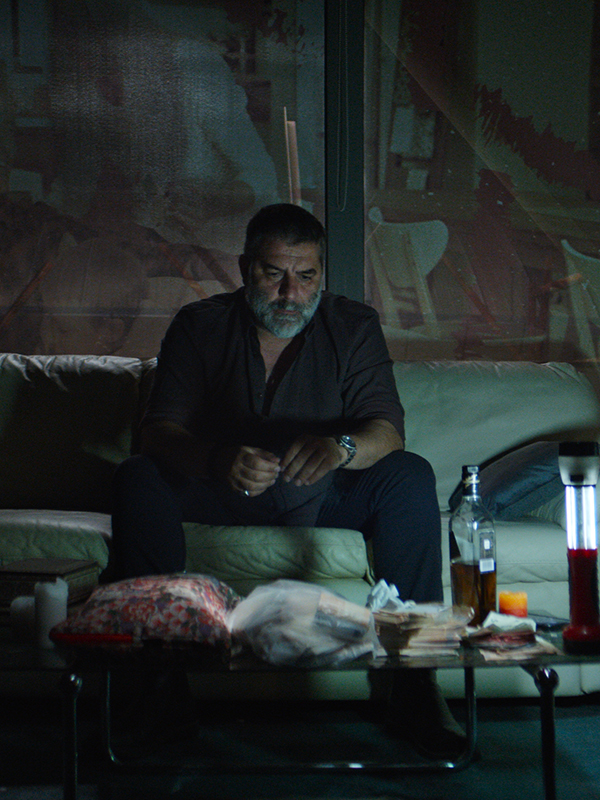
The session started with Broken vein, by Greek director Yannis Economides, on his second visit to the contest. More than telling, The Economides film presents us with a character, Thomas Alexopoulos, a middle-aged businessman burdened by debt. The moment the tape starts, The repayment period for a loan made to him by a loan shark is about to expire and Thomas must return the money under penalty of losing all his assets.. The problem is that Thomas does not have the amount that the lender requires and he will have to move heaven and earth to get it.. along the way, practically everything is at stake, including the possibility of losing a family that is already fed up with him to the point that they seem ready to turn their backs on him forever.
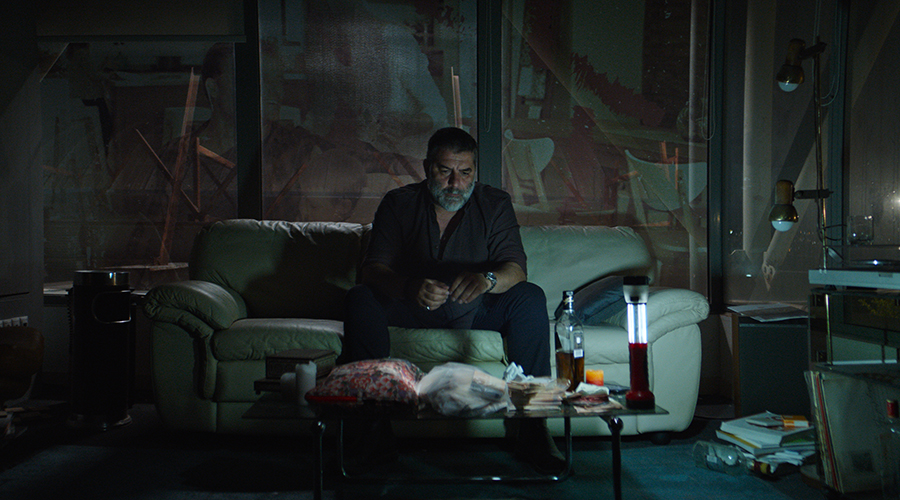
Among the virtues or audacity that can be granted to the work of Economides, you will find the choice of your main character. Thomas is not an antihero, as is usually understood, is that it is, speaking in worldly terms, the bad guy. As we progress through the film we will discover that the situation he is in is not due to chance or bad fortune., but to a way of life given over to all kinds of vices that have led him to the calamitous present that he now has to overcome. Thomas has everything against him: he is a bad father, worst husband and worst businessman (He runs a store that he inherited from his father and that he has ruined); as his own son will tell him at one point, he is a loser. However, this desperate situation will not make him mend his ways, but he will continue trying to fool everyone to save his neck, which includes lovers, wife and a poor daughter who adores him, love that he sibilently uses to deceive her and implicate her in his dirty goings-on.. Yet, Economides brilliantly handles the mechanisms of identification, making us suffer with the fatal destiny that life seems to have prepared for this individual..
For it, The Greek director skips the rules of the conventional script and outlines a structure that runs like an arrow from the first bars of the film. So, when starting the footage, We already know the problem Thomas is in., The challenge will be to follow him at each stop on this journey in search of his desperate salvation. (will he finally get the money?). Firmly supports the script's commitment, the construction of truly three-dimensional characters, whose humanity is not found in expecting us to like them more or less, but in responding exhaustively to its own nature, daughter of her circumstances.

Economides does not judge his characters, makes something much more interesting: describes them in their own framework, which makes the proposal much closer to reality. The strength of his film lies, So, in a psychological construction outlined with the hands of a surgeon. From there, It will be the viewer who makes his own judgment. It is not that Economides remains aloof from what we see, Don't judge your protagonist, is that this moral judgment will come from your confrontation with others, of the calculation of the decisions that he is going to make and that he has already made before the film begins, as well as the consequences they will have on your life and the lives of those around you., victims in turn of their miseries. And the same will happen in the case of the rest of the characters., whose reaction to the dilemmas that Thomas faces because of his bad head, they are going to define them. Yannis Economides traces, in this way, a complex human puzzle in which nothing is true or a lie, white or black, everything is contradictory in its very humanity. How can you love a man who deceives you with every word he utters?? How can you condemn your own family to save your skin? The good or the bad remains, as we say, at the expense of the viewer, who can perhaps judge, Although in the bedroom he has the impression that he himself can sometimes fall into this type of trap that life prepares for us.. No one is safe from falling into the clutches of a Thomas or from becoming Thomas himself..
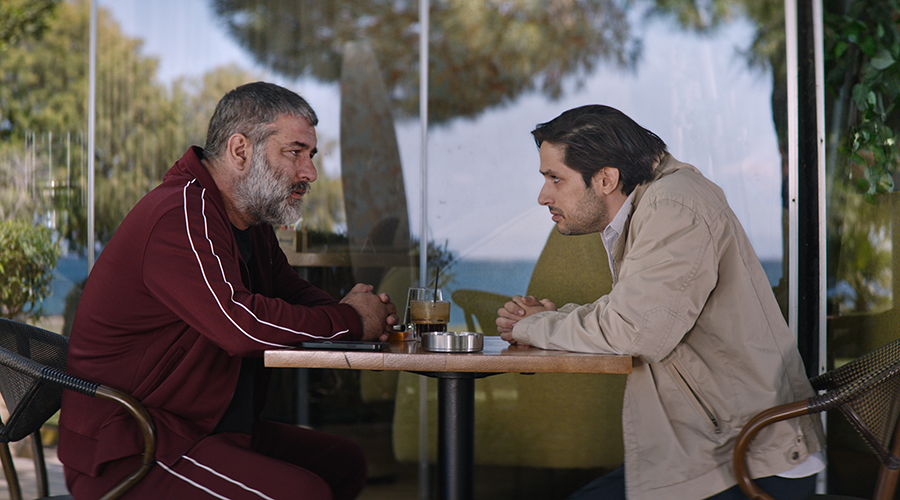
Background, Yannis Economides traces a truly bleak landscape of contemporary Greece. It's a hostess club scene, of dilapidated roads, of passing businesses where people live badly, of a middle class that lives attached to money and, above all, to which they will say that the condemnation to establish alliances with the lowest of society in order to maintain the status. Economides films these spaces with the gaze of the anthropologist, avoiding introducing elements into the narrative that distract the viewer's attention from this description of a petty society already in the process of decomposition.. Help this work of almost documentary reconstruction, a camera located at ground level that avoids underlining without losing an iota of discursive or narrative power. A camera supported by staging work, costumes and photography that try to capture reality as we see it in our daily lives. Economides sets the film in his native Greece, but the characters and landscapes are as close to us as if we had filmed them around the corner. Life in its purest form.
Everything that is earthly about the Economides film is lost in the second of the proposals of this first day. Directed by Frenchman Laurent Slama, A second life tells the story of Elisabeth, an American living in Paris who works for an apartment rental company for tourists. From the first moment, We understand that things are not going well in Elisabeth's life.. Her boss constantly pressures her to give him the expected results and it is obvious that she does not feel comfortable with a job that, however, needs, both to survive and to renew your green card. At a time of day, Elisabeth meets Elijah, a young American who has rented one of these apartments. But, unlike most customers, Elijah doesn't seem very interested in the accommodation; what he wants is to meet Elisabeth herself, know about her, thinking, how does it feel, you want to vibrate with a city that seems to amaze you. But Elisabeth has a lot of work and can't waste her time with a boy she can't get rid of..

Slama's proposal differs from that of Ecominides in the construction of the narrative itself.. Both films share a structure of road movie in which the characters, in a short period of time (a few days in Thomas' case, a day in the case of Elisabeth), They will have to resolve a series of situations that lead them to an exit from their initial position.. But where in the Greek film each event is subject to a strict dramatic logic, In Slama's film everything seems too whimsical, counter intuitive, which makes your proposal run more stiff, more anchored to the intentions of the director's speech than to the needs of his characters. Yes in Broken vein It was the world that spoke through the director, in A second life It is the director who speaks through the characters. What was objective there is subjective here.
So, It seems unlikely that someone in Elisabeth's situation would, with his character, lends itself so easily to the ravings into which someone who is a complete stranger to her pushes her.. And the same thing happens with the rest of the characters., that appear in fiction in an equally capricious way, more by the will of the scriptwriter and director than by the conditions imposed by the plot or the conflicts that are going to be exposed.
This difficulty in tracing the dramatic line through which the characters pass is somehow revealed by the brevity of the film's duration., just 77 minutes, surely mowed down by a starting situation that gave little play and that is curtailed by the risk of falling into a repetition in which it falls in every way. After a first meeting between them, Elisabeth faces a conflict with other clients who have abandoned one of the rented apartments. While trying to solve this problem, Elijah imposes his presence and although he lends his help, the scene is hardly believable. These situations are going to repeat themselves over and over again..

But, What's wrong with Elisabeth?? Why do you behave this way? Why does Elijah do what he does?? In this sense, If in the Ecominides tape the discourse worked through a deductive process, tying up the dots, here everything must be expressed out loud. There are two strong reasons for this.. The first, a literary sense certainly affected. Straw, less experienced than Ecominides in management, wants to showcase himself as a writer. The other reason responds to a need to make the viewer understand what is happening inside the heads of his characters.. In another way, would not be understood, They would only be subjects who go from here to there. To set the tone, apparently lyrical proposal, Slama starts his film by placing Elisbeth in the middle of a street. In off we hear his thoughts, which already places us in an initial position. After, along the route, other conversations will come, put there so that we understand. What's the matter? Who are you? what is your problem? Conversations in which feelings are exposed that the film fails to permeate on its own. A second life It seems more like a therapy exercise than a narrative.
And as also happened in the Ecominides film, the stage is going to have an essential discursive role here. Slama places his story at a very precise moment: the celebration of the Paris Olympic Games. This situation poses a confrontation with its protagonist. We then discover that Elisabeth is a deaf woman who wears hearing aids.. This peculiarity confronts it with the noise environment of a city assaulted by tourists.. Background noise against the search for that inner silence that the protagonist seems to seek. background that, unlike in the Greek film, remains out of focus at all times, which establishes a very different relationship. Where Ecominides' vision is clear, Slama's is mediated by his own condition as an occasional visitor.. Slama is like Elisabeth, like Elijah, another tourist, a foreign body.
Contrast between background and foreground that wants to be a metaphor for the conflict that Elisabeth suffers and which is none other than that internal dissociation from the world around her.. We do not know what caused this dissociation, (It is a generic disagreement) but we know it exists and that your experience with Elijah will help you solve, by forcing her to relate to another person. And here comes the lesson: we cannot stay anchored in ourselves. Which is fine, if it weren't because, beyond its approach, development was not so superficial.

The two proposals also differ in their formal approaches.. Thus, if the Ecominides chamber opened to the harsh reality, Slama's lends itself to a somewhat Manichean stylization. The first shot of the film already formally defines what the axes of the film will be.. Elisabeth is standing in the middle of the street, the background as always out of focus, the sun attacks it from behind causing glare on the camera lens, and a voice-over. The proposal brings us closer at times to the video clip or television spot, a characteristic that is supported by the use of saturated colors and contrasting textures. Where in Ecominides it was transparency, here is concealment, costume, layer. And it will continue like this throughout the movie.. In one of the most relevant scenes, Elijah has managed to convince Elisabeth to undergo a hypnosis session (sic). Elisabeth finally takes a break from her busy life and relaxes until she falls asleep.. around you, The park in which they are located changes and becomes a lake of water lilies and brightly colored flowers.. We accept the metaphor, but the game is a bit thick, visually cloying.
This somewhat Manichean look is exposed in the conception of art, also manichean, that the French director has. Daily, Elisabeth goes to the Louvre museum to see Monet's work. In its famous water lilies, she finds that landscape of peace that she seems to long for. And it's not that the comparison is objectionable., but there is something imposed in the reference that is transferred to Slama's own way of shooting, something insincere, something unreal, like when someone leaves a couple of books on the living room table knowing that this afternoon, will have visitors. It's too obvious. Cinema still to mature, too self conscious. GERARDO LEON