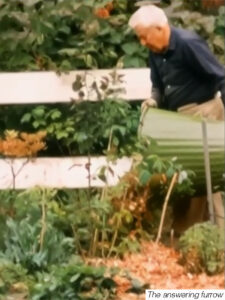
Getting a little closer to Western Europe, The fourth session of the 38th edition of the Mostra de Valencia took us to Albania, narration space Three sparks, a curious project directed by the American based in Mexico, Naomi Uman. Already its own title (“three sparks”, in Spanish) It refers us to the structure of this film that crosses the border between documentary and film-art work.. These three sparks correspond to the three parts into which Uman divides his proposal, and that tells us the trip and stay of the director herself in Rabdisht, a modest town located in the mountains of Albania.
In the first part, Uman tells us about his arrival in the country. Arrival that is unexpectedly cut short by the accidental death of his dog (sic). An unfortunate event for her that, however, it unites her even more to the place, as he understands after discovering a legend that tells of the custom of these lands of making a sacrifice before undertaking any undertaking., like the documentary that is being projected at that moment and of which we are spectators.

The second part of the film opens with an eloquent title, Free until dawn, and takes us to the town of Rabdisht following the trail of the traveler and writer Edith Durham who visited this same territory at the beginning of the 20th century, establishing a strong political relationship with the Albanians thanks to her position in favor of their rights against the European interests of creating the great Yugoslavia.. In this part, Uman portrays the daily life of its inhabitants, especially when it comes to women. The North American director opens for us, So, the doors to a rural world that appears isolated from the rest and anchored in traditions that almost seem to take us back to the Middle Ages., among rocky landscapes, where men migrate to earn a living and support their families, and the women and children remain to care for the lands and the home.
Life is hard in Rabdisht. The land is still tilled with traditional means and the cold is fought with firewood.. As the director tells us, Here the social order is governed according to the concept of kiss, what, in the local language, means honor. An idea that, just as it forces the inhabitants to show hospitality to the stranger, at the same time, subjects the woman to the restricted space of that home that she must preserve. Special attention required, for Uman's camera, the figure of a type of women who, under certain circumstances, occupy the masculine role (generally, when there are no sons). Children and their childhood world also occupy a prominent place.
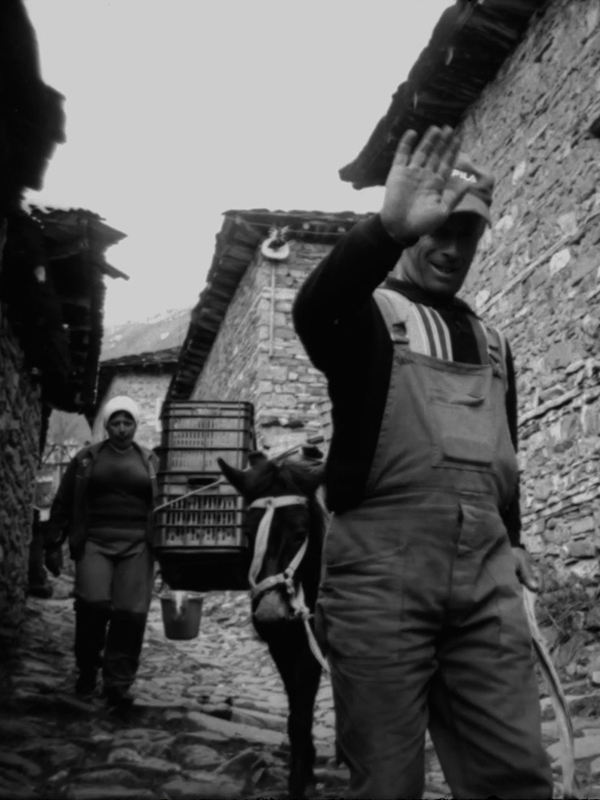
A sign that says XIXA, announces the third part of the story that, somehow, places us in front of a kind of making off of the filming of the previous part and in which we continue with that daily task. In the patio of the house, a woman collects the eggs that a hen has laid, while in the kitchen an old woman prepares the bread and the children play catching tadpoles in an area flooded with mud. Three parts connected by the same subject, the inhabitants of Rabdisht, but that Uman illustrates and distinguishes thanks to the use of different techniques that range from digital video, for the first part, the 16mm film in a highly contrasted black and white for the second, or the exclusive use of Gro-Pro cameras in the third section.

Uman mixes textures to approach this part of the world in a different way. Textures that create shapes to provoke sensations in the viewer, surpassing or trying to evade the usual documentary resources to encourage him to move his comfortable position and participate in another way in his relationship with the image, throwing it towards other meanings. Here, again, the use of sound takes us through other spaces. In the second part of the tape, For example, Uman removes live noises from scenes and dubs only those that interest him. Besides, It does not include subtitles so that we understand the conversations that the characters have. All this creates a feeling of strangeness that reinforces the cultural distance that exists between what we see on the screen and that same spectator who watches from the movie theater..
However, as if he didn't quite trust the material he has at his disposal, Uman completes the proposal with a series of intertitles that refer us to silent cinema to insert texts between scenes that tell us what had been removed from the image.. This underpins that impression of estrangement, even incommunicado, with the narrative proposal itself. In these texts, Uman tells us about his experiences and conclusions regarding what he experienced with these people with whom he is living.. and it is there, in that text noted in the margin, where the viewer must trust the entire meaning of the story.

The problem may lie in the gap between that written story and the moving images.. And it is that, if we remove the written text, removing from the image that formal patina that textures impose on us, what really counts Three sparks? what remains, appearances surpassed, It is the raw film experience that is nothing more than a description of the daily life of these people.. Images that, however, They do not delve into the universe of relationships of this community, which is portrayed only in its external appearance., as if that were enough to sustain a speech. This absence or need for an ultimate meaning not made explicit by the images forces us to ask ourselves where the director really writes and shoots from..
In one of the sequences of the film, a woman holds a chicken that won't stop crowing. In another, a girl looks at the camera while eating an apple. In another scene, a group of girls dressed in rigorous black, while, In another shot, another girl dances in front of Uman's camera.. But, what does it all really mean? How do we connect both planes, image and written text, except for the word given by the director herself? How do we interpret the fact that there are girls who have to occupy the role of men in this society?? What does it respond to?, apart from a purely economic necessity? In the absence of other information that arises from the filmed experience itself, Why should we trust Uman's account of these people??

In the end, faced with the impossibility of overcoming a certain exoticism, Uman appears as a mere curious spectator, an idea that is reinforced by his constant presence on screen. More than an integrated member of the community, Uman can't shake off that occasional tourist patina that accompanies him, a mere intruder who fails to influence, with your camera, in the environment. I put Rabdisht in the Google search engine and the first thing that appears are references about accommodation and routes for hikers. I could be wrong, but it is the same Rabdisht that appears in the documentary. The result makes me wonder to what extent these people are really so isolated, and if Naomi Uman's journey is as disruptive as she wants us to understand.
Even further west of the Mediterranean, The second proposal of the day came from Morocco. the animal, by director Sofia Alaoui, nos presents to Itto, a young pregnant woman who lives with her husband, Amine, in the big mansion of his in-laws, a wealthy family, as shown, in the first images, the sumptuousness of the housing and the businesses they seem to run. But, despite all the comforts that surround it, Itto doesn't feel happy. Her mother-in-law does not seem to accept her with pleasure and, given his humble origins, you feel out of your environment. But Amine tries to encourage her and invites her to make an effort to adapt.. After all, It's about your family, which is now also yours.

But Itto feels like he needs some space, So he decides to stay home when everyone goes to the city to see the local governor.. finally alone, Itto you can enjoy a few hours of tranquility, more relaxed. However, A strange storm unleashes a state of emergency throughout the country. In front of his house, army troops pass by and when she tries to ask them what is happening, The soldiers invite her to take refuge in the mansion. At last, Itto manages to contact Amine who tells him that he is stuck because of the controls in the city.. Itto is scared, So Amine contacts a neighbor who will pick her up to meet him..
From that moment, Itto embarks on a journey through the country in which he will face many difficulties. Background, Television news announces the arrival of alien presences of unknown origin. on the street, a graffiti warns of the possible end of humanity. Animals behave suspiciously without anyone seeming to notice. In the animal the effort of the director Sofia Alaoui to carry out a work that is sustained as a mixture of genres is perceived, from social realism to science fiction story. However, both proposals are not linked.

Itto ends up abandoned by her guide in a small town, being even more isolated (Now you don't even have coverage to communicate with Amine). This situation, forces him to strip away everything he owns, returning to your economic status before your marriage. the animal takes shape precisely in this portrait of the different social strata that make up contemporary Moroccan society. (and given the conclusions of the story, We could extend that conclusion to everyone). In one of the most effective scenes in the film, we see a table full of delicious delicacies. In a crisis situation, some continue to enjoy their privileges. Itto returns to his past and, scared, will have to fend for herself, resort for the first time to their own abilities to survive. Suddenly, everything becomes relative. Happiness does not have much to do with material goods.
It will be when the fantastic part of the film intervenes in this message that the film enters more swampy terrain..
Alaoui takes elements of the genre and inserts them into the main story, playing with the spectator's precedents. Traveling shots, the use of music, the embedding of a mystery that takes us back to films like the arrival (Denis Villeneuve, 2016), o 2001, a space odyssey (Stanley Kubrick,1968), in that set of scenes that take us to a metaphysical journey that we saw at the end of the film. Even at times, we can find references to the Spielberg film, Encounters in the third phase in that effort to create in the viewer an unknown that moves that mystery that we were talking about and that guides the journey of its protagonist.

However, The final speech to which Itto's adventures lead us is not sufficiently integrated into the story in such a way that, in the end, It will have to be the director and screenwriter of the film who clarifies its meaning in a voice-over.. And there the resolution of the tape is presented to us as a deus ex machina not entirely well justified, despite the message. And the same thing happens with the presence of the animals that give the film its title.. They create that atmosphere of mystery (again, Hitchcock) but his presence is not resolved as a justification for the plot.
the animal comes to tell us that our destiny does not depend on any merciful God who guarantees peace and prosperity on Earth, but about ourselves and the connection we establish with the whole. The problem is that it is not the story that encourages us to this reflection., but this is given to us by the director herself. GERARDO LEON