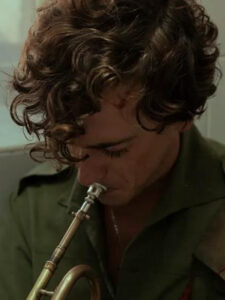
Last day of presentations of the official section of La Mostra de València. The pigeon tells the story of Yusuf, a young man who takes care of a pigeon loft on the roof of a modest building in the no less modest city of Adana. Yusuf lives almost exclusively for his pigeons, apart from the rest of society, along with a sister who acts like a servant and a brother who wants him to look for a job and become the profitable man expected of him. Pressured by his brother, Yusuf accepts a job at a junkyard with which the former has strange business dealings..
The pigeon arises from the director's own experience, born in the neighborhood where the events of this small contemporary story take place. A story in which the social background is as relevant as the events told. According to its director, the Tunisian Banu Sivaci, The pigeon focuses on that moment in life when we leave behind our youthful illusions. “The main point is the transition to adulthood because society pushes this protagonist to be the appropriate man.”. The main story is about a character who clings to his individuality, because being a different person is very difficult in this place”. His relationship with the pigeons becomes, So, in metaphor of the tribulations of its protagonist. “The main pigeon that appears in the film also suffers the same fate because it doesn't want to fly either., does not accompany the other pigeons. This dove represents the freedom to be yourself.”, commented Sivaci. Yusuf's journey is the same journey that his director has suffered to develop her career. “In our country, yes you want to make art, paint, music, etc. It doesn't look like a proper job.. “If you tell your family that you want to be a director, it is a very difficult situation.”.

One of the qualities of this story is found in a script that barely uses dialogue as support to unravel the keys to its message.. “I find it more interesting when Yusuf doesn't speak, how do you feel, how you listen, because dialogues do not imply that we tell the truth, They do not reflect true feelings. For me Yusuf's silences are more interesting. In fact, the brother is more talkative, but it doesn't say anything particular. Too much dialogue doesn't give us more interesting moments or more interesting stories.. “Sometimes they just say nonsense.”.
Apart from such a refined script, If something stands out in this production, it is the performance of its main actor., Kemal Burak Alper, that carries all the weight of the story. Banu Sivaci found his protagonist in a play and immediately knew that it was the Yusuf of his script. Production conditions, however, they delayed the happy professional meeting. “Kemal had to wait five years for the project to be developed. He is a professional actor, "But he had nothing to do with birds before and had to learn to work with them for this film.", commented Sivaci. If working with animals is usually a difficult task for any filming, In this case it was especially complicated. “It was hard work.”, especially putting the pigeons in the frame because they got scared when they saw the cameras and the technical team. To prevent, First we put a small camera and our protagonist kept this pigeon in his own house since it was little for three or four months and fed it with his mouth., as seen in the movie. They understood each other very well and that made it easier when we started filming.”.
Same principles, A similar message is found in the first full-length work of the young French director Nathan Ambrosioni.. Paper flags begins with the release of a young man from prison, Vincent, after twelve years in prison. As soon as I regained freedom, Vincent goes to visit his sister Charlie, only anchor you have to the real world. Thus begins a process of mutual knowledge between them.. Charlie takes in his brother, but his efforts to help him reintegrate into society collide with Vincent's violent and uncontrollable character.. The problems derived from this violence will condition their future relationship..

“The story comes from an article I saw in the newspaper that talked about a man who was being released from prison and which affected me quite a bit.”, comments Ambrosioni. “I wanted to talk about freedom. I wrote this story when I was seventeen years old and I was wondering how to take ownership of that freedom and what to do with it.. “I also have a little sister with whom I have a good relationship and I was inspired by her”. Shot on a very low budget, The production conditions were not an impediment to carrying out the project. “The film came together very quickly.. As soon as we had the minimum financing we decided to go ahead and do it. It was what we wanted to do from the beginning.. The budget was small, but for me it was huge, although within the cinematographic world it does not represent much. Despite everything, A big part of the happiness of this shoot has been adapting to the circumstances. At no time did we think that the lack of budget would be an obstacle to moving forward., “The team was very consolidated when it came to working”.
The origin of the title, Paper flags, It refers us both to formal aspects of the film and to that fractional construction of its characters.. “The title of the film refers to the only character that does not appear in the film, which is the mother and is reflected in the Tibetan flags that Charlie has in his room.. I also wanted to capture the relationship between the two brothers, which is in pieces., like that letter that unites them. They are fragmented pieces of life, with ups and downs, and the title also reflected that”. To build your main character, Vincent, Ambrosioni relied on videos of statements from other ex-prisoners from which he would rescue particular situations and the tone of the dialogues.. There he would find the motivations that move his fictional Vincent. “There was no intention to report because I do not feel legitimate to report things like that.”, but I did want to talk about that feeling of being lost that can happen to all of us., with or without jail”, commented at a press conference, The director. “What I want to show is that each person handles this type of situation in a different way., some repress it, others hide it, others let them out. I wanted to show how such a long period of confinement can change people and how alone they feel when they go out.. He did not want to show the reasons that had led him to prison, but the person he has become in recent years. Even if there is no intention to file a complaint, I did want the viewer to be aware that the problem exists. Once transmitted, "It will be the viewer who does what they want with that feeling.".
Mounted in a very fractional way and with a prominent use of the foreground, the influences of the young director are obvious on the screen. “I really like Xavier Dolan., inspires me a lot, His way of telling and shooting his films is a very important reference., Terrence Malick has also been a source of inspiration. I watched his movies before and during filming. “They have been very inspiring to me”. With a strong presence of saturated colors, Ambrosioni tries to compensate for the harshness of a plot that relies on very confrontational and visceral emotions.. “It was very important that it be a colorful film. It wasn't exactly reflective of the characters' moods., but to brighten a little a topic that is not even happy in itself, nor is it easy to treat. What I wanted was for the entire photographic and scenographic theme to enhance the characters., they gave them light. They are different characters and I wanted people to see them in all their beauty.. Each scene has its color, and the idea was to give relief and light to Charlie, who is a character who is suffering in his own life., and Vincent who has to build a new one”.
Despite the harsh fate that seems to devastate its characters, Ambrosioni did not imagine any other ending for his characters than the one he conceived from the first moment.. "Actually, I have always wanted the movie to end well. An ending that conveys hope and the possibility of a future. During filming, it was asked many times whether it was the most appropriate ending or whether it was not., but the idea was to convey that hope of two brothers who begin to love each other when they understand that nothing forces them to love each other.. We shot three different endings and the actors didn't know which one was going to be chosen., But all three gave that hope and that possibility for the future.”. G.LEON