

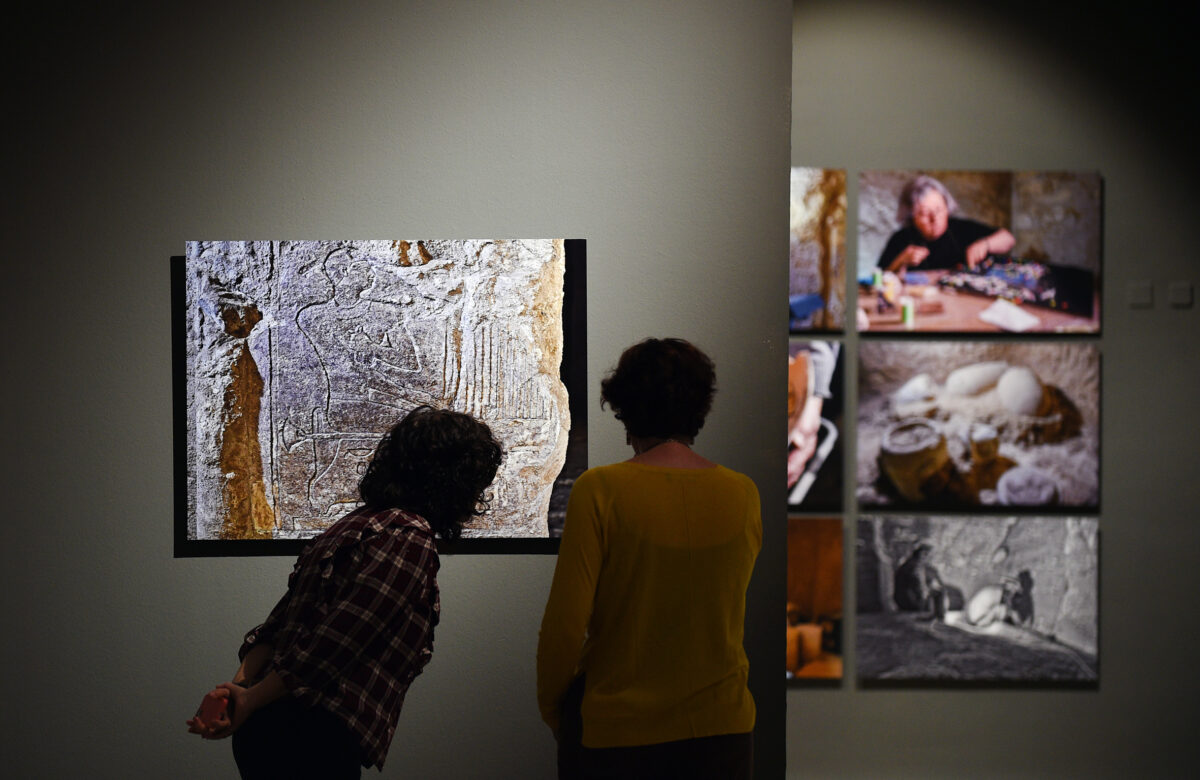
He Museum of prehistory from Valencia offers a nueva sample dedicated to the work of an archaeological mission, that of pproject ‘Dyou zero nine‘ in the tomb tebana 209, and Luxor, Egypt. It's about the exhibition Archaeology canary a Egypt from the photographer Jose Miguel Barrios, that reflects the meticulousness and perseverance of archaeological work made in he wadi Hatasun de a teamo multidisciplinaryo from the Canary Islands. The exhibition Archaeology canary a Egypt, curated by Miguel Ángel Molinero y Alfonso Martin, sample the day to day of archaeological work carried out over these years by the research team from the perspective of the mission photographer. Its images allow you to observe not only the progress of the excavation, but also the daily life of the camp, as teamwork, physical effort y intercultural coexistence.
El archaeological project was born in 2012 in order to excavate, documentary, study and preserve the Theban tomb 209, known as T.T. 209. The tomb is located in the northern slope of wadi Hatasun, a dry rambla located on the west bank of the Nile, just before the current city of Luxor (antigua Waset-Thebes). It belongs to the Late Period and was built during the XXV Dynasty, in the 8th century BC, time of the so-called “black pharaohs” (Dynasty nubia), a little-known period in Egyptian history that, precisely for that, is of great interest.
TT209 served as the burial place for the family of Nisemro, a high dignitary of origin nubia who held the position of Supervisor of the Seal in Thebes and who is represented in a small relieve with his dog Go ahead. His funeral complex, with surprising architecture and rich in symbolism, is the reflection of a moment when NuBia and Egypt were deeply intertwined.
José Miguel Barrios reveals, with sensitivity and precision, the magnitude of the project through lIdentification of streets and access routes to the tombs, lRecovery of the large patio and terraces of the funerary complex. It also shows through your lens el study of the underground rooms, some still intact, with materials that have allowed rituals to be reconstructed, as well as the uses and phases of reuse of the tomb over the centuries. It also runs lthe exceptional finds, like himaPhoenician amphoraeas, los uShebti or mummification deposits, that speak of ritual practices and surprising cultural connections.
The incredible discovery of Paleolithic material in the middle of the tomb, washed away from the top of the mountain by the rains, the andThe imposing landscape of this wadi desert in the middle of the Theban mountain, where all this laborious work of recovering Egyptian heritage is carried out, They are also part of the Barrios photographic archive.