
Without any doubt, and despite his youth, Wichita It is one of the most important theater companies in these parts. In a few years he has assembled some of the most interesting proposals on the local scene and these days of forced confinement you can see them see open, courtesy of the house, to make boredom more bearable. We give you a brief summary of each one, Don't miss the opportunity because they are well worth it..
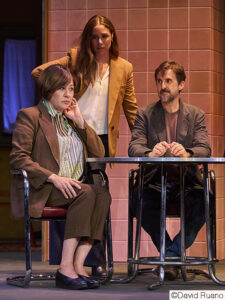
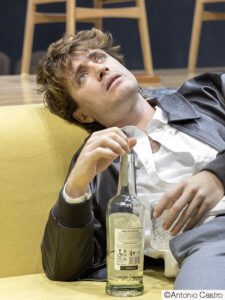
We will not kill ourselves with guns It was the work with which everything took off, with which Wichita burst onto the Valencian scene by banging the table to warn that she had a lot of talent to offer. After a long time without seeing each other, A group of friends meet again at the town house of one of them on a very symbolic day., It has been five years since a tragic event marked their lives and they have not met again since then.. Greetings and initial conversations reveal a certain discomfort and strangeness, but the climate will change over time, there will be time for melancholy, extreme tension, the exaltation of friendship, the alcohol debauchery and the hangover the day after. Everyone starts out wanting to pretend that life is going well for them., but Miguel, a tormented writer in low hours, finally pulls out the carpet to reveal the miseries of each of them. “You are always putting on perfume!”, he shouts at them unleashed. Blanca, Marina, Elena, Michael and Siegfried, the “it is what it is” generation, They are rediscovered on a day of Holy Week to toast the tragedies, remember the past with nostalgia, come clean, escape and cling to a friendship that was fraying by the minute.

Not even the mother who gave birth to her will know Spain. starts on election night 1982, with the overwhelming victory of that exciting PSOE of Felipe González. This specific fact is useful to Víctor Sánchez, author and director of the work, to make a generational portrait of that Spain and highlight the contradictions of the left. to talk to us, sitting around a Cinzano ashtray, of the decline of Carrillo's communist old guard, of the devastating effect that drugs had on the youth of the time, of the carefree attitude of young people who just wanted to go out and have a good time, of those traditional and right-thinking couples obsessed with “prospering”. The work will then jump in time, a 2018, to describe a new generation of young people, working class grandchildren, who dream of being middle class. With higher education, but without a job future, pushed into exile because of the crisis, riding the wave of moderneo retro-cool or converted into tormented artists, precursors of a conceptual art that is extremely boring.. Could it be that capitalism has deceived us by injecting a sense of prosperity that has made us lower our guard??

On a bare stage (three walls, two doors and a horizontal crack that runs through the entire room) we witness the breakup of a couple. With your problems in your suitcase, have traveled to 13.000 km from home to meet again and they have realized that the distance has become even greater, insurmountable. He feels free, excited to know the secrets and legends of the Andean city of Cuzco; ella, trapped, without faith, skeptical, food out of boredom, and without desire for anything, not even to fight for a relationship that is rapidly collapsing. “To love you have to have some faith”, it is said at one point in the play, and she doesn't have a single crack left, is empty. Distancing is, both physical, as emotional, The two characters do not touch each other at any time., only at the end, when the symbolic crack that runs through the wall becomes an abyss. Cuzco is a piece built on magnificent dialogues that narrates the emotional collapse of an already shaky couple who travels to Peru to see the inevitable..

If Wichita's first two works had a clear generational component, What is love? Baby don’t hurt me, this free version of Ivanov by Chekhov, he has it melancholic. Although here, the owner Ivánov sings on the electric guitar and “I am from a disenchanted generation” by Mylène Farmer. Ivanov is a depressed being tormented by the guilt of having stopped loving his wife., Well, when she falls ill. He knows he's being selfish., but he can't handle the boredom he feels being with her, a woman who left everything for him. He is an intelligent and sensitive being who has turned very gray and, despite his defeatist attitude, your doubts, his tiredness and his suicidal instincts he remarries, this time with Alex. We will attend your wedding with the rest of the guests and, between music, drugs and talk, there will be time to try romanticism, the idea of love, social networks or fake news, among many other topics. What is love?It is the most groundbreaking work in Wichita on a conceptual and aesthetic level., with hooded characters, live music, baile, extravagantly decorated (trampoline, neon lights…), and a flowery wardrobe that is not casual, because it reinforces the symbolic aspect of the work. The flowers have a very powerful symbolic charge that will be shaken at the end with a wonderful Marlene Dietrich singing the anti-war song “Where have all the flowers gone?”