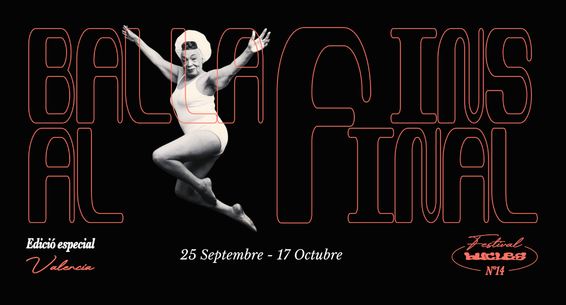

Original title: Happy end· Michael Haneke · France · 2017 · Script: Michael Haneke · Interpreters: Isabelle Huppert, Jean-Louis Trintignant, Mathieu Kassovitz, Fantine Harduin…
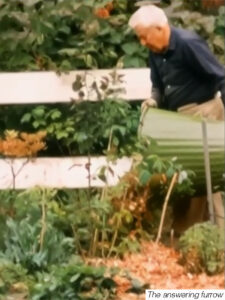
Original title: Braguino· Clément Cogitore · France/Finland · 2017 · Script: Clément Cogitore · Interpreters: Documentary film.
If there exists in this cinema a name with which, more clearly, the author's idea can still be associated, This is the one from the Austrian Michael Haneke. The cinema of the person responsible for films like Benny's video o Amor It has thematic and formal characteristics that are easily identifiable by the critic and the documented viewer.. Leaving aside the extent to which authorship is something as recognizable as it tends to be exposed, What brings us here now is to reflect to what extent these identity marks can be a burden or advantage when interpreting the achievements of the author in question and, more particularly, in the case of Heneke.

His last long work, Happy End, introduces us to Eve, a teenager who has her mother hospitalized because of what appears to be a suicide attempt. Eve is going to live with her father, whom he hasn't seen for years, to the house he shares with his new wife (with whom he has another child), his grandmother, his uncle, and a great-grandfather who is condemned to live in a wheelchair. From that moment, Eve becomes the guiding thread and guide through the particular universe of this unstructured upper-class family entangled in endless conflicts to resolve..
Since its premiere at the Cannes festival, Happy End suffered the attack of a critic who saw in it a mere compendium of the obsessions and themes that its author had already explored in his previous films.. One of these themes refers to the portrait that his cinema makes of the manners of the high bourgeoisie.. And although this accusation is not without some basis, Perhaps it would be interesting to make some reservations because, Although it is true that a good part of Haneke's films feature members of this same upper-middle class as protagonists, Most of the time this is no more than a mere excuse., the background or context in which to support its complicated plots. And here may be the difference. If movies like The white ribbon explore the moral origins, cultural and philosophical that support it, It is in Happy End where it seems that Haneke wants to more consciously investigate the connections that hold together the complex set of interests that sustain their relationships. Haneke points to two horizons: one exterior and one interior or intimate. The external element points to its economic motivations. At the beginning of the movie, An accident threatens the survival of the construction company run by Anne., Eve's grandmother. This situation will force her to launch into all kinds of pairings and, specifically, with that new emerging class that, as is obvious, comes to supplant them: we refer to financial power based on speculation. Therein lies its decay. Lost (or sustained with many problems) the privileges, The old merchant class sees its power subjugated in the hands of the now new beneficiaries of the economy. Get over or die. That decadence, fostered by external dependence, will have its reflection on the interior plane. So, Soon the old mannerisms of a community corroded by cynicism and indifference toward anything other than its own material interests will come to light.. A social class without morals, without ethics, no romantic connections, even, among members of his own tribe (even less, we will discover, with another world that is not your own).

Another element that Haneke has brought to the fore in this work is the influence of new digital media in our postmodern society.. If in the mentioned Benny's videoor in Hidden were domestic recording and playback technologies (the old video) those who violently broke into the lives of their characters, Haneke did not want to pass up the opportunity to take a look at the so-called information technologies. At the beginning of the tape, Eve records her mother with her cell phone while she makes comments that she shares on one of those social networks. At the same time, His father maintains erotic relations with a new lover through another virtual platform that reminds us of Facebook. As in the two mentioned tapes, new ways of communicating or reproducing reality become sinister weapons, almost with a life of its own, what, far from being neutral, as many of its defenders announce, They give us a distorted vision (or not?), unconsciously perverse, of ourselves.

But what catches our attention is that sense of humor that, against what is usually usual in his cinema, has imposed on this new job. Haneke not only seeks to judge his protagonists and that small microcosm that seems to configure his world, but it seems to mock them. Except Anne, supreme clan matriarch, the rest of the family members seem to live in a crazy world, out of reality. The grandfather's suicide attempts appear ridiculous in the eyes of the viewer. Not to mention the supposedly erotic conversations that his son and Eve's father, Thomas, keeps with his lover. And the same thing happens with Pierre, Anne's eldest son. Trapped in that golden prison that his mother has woven for him, young Pierre responds to the boss of the rebellious son who riots against the hypocrisy and falsehood of his family. But their reactions, They seem sooner like those of a disturbed person than those of a real agitator.. Even, when he tries to confront his family about the tragic reality that is unfolding on the other side of this world of business meetings, lavish parties and empty luxuries, His attitude seems like that of a spoiled child who, in the background, not only does he not want to break the rules, but he uses them. It is easy for us to understand that their small revolution will not go very far.

It is true that that ironic tone, as a mockery, that the film seems to treasure (and here comes what we mentioned at the beginning of this text) makes us lower our assessment of the final result a few integers. Leaving aside the topic that may be discussed, The strong point of Haneke's cinema is found in the management of shot time and his enviable ability to manage the viewer's expectations.. From that domain, always well calculated, precise and, however, invisible, comes the power of the tortuous (aesthetically and emotionally pleasing) experience of watching each of his films. There are so many examples in his cinema that we will not bother to gloss them.. We better invite the reader to review his filmography and choose the ones that interest him the most.. However, That punch of his cinema seems to see its power of provocation diminished here.. It's not that Haneke has lost his ability to create those moments of bewilderment., house. There it is (we will not describe it), the accident sequence with which the film opens. What happens is that, unlike in other productions, Haneke here seems to have lost that touch to entangle us in that nightmare logic. We want to blame part of this problem on the writing of the script.. Haneke doesn't look like real Haneke. Our usual Haneke. It's as if a bad imitator of himself has taken his place.. Presented the context in which we operate, The conflicts narrated on the screen seem less tragic to us and the search for that moment of anguish seems, even, forced. Although well looked at, It could also happen that, with that ironic premise we talked about, What Haneke was presenting to us is a kind of parody of himself. and there, although the construction of the frame remains less effective (the effectist) that on other occasions, we could understand your intentions. So, is the spectator, the critic the one who is exposed. We'll leave it here.
It is very rare for commercial theaters to dedicate part of their programming to films that do not respond to a conventional commercial duration.. For some reason that is not quite clear (lack of interest from distributors or potential public?) short and medium-length films, being jobs that, on many occasions, surpass their older brothers, the feature films, They are outside the usual circuit of the rooms. This is an old demand from the authors of these shorter works, resigned to the exhibition of their works being limited to specific festivals. That is why the work that, recently, They are making Babel cinemas by bringing us some of these pieces.

Braguino, documentary signed by the French director Clément Cogitore, takes us to the inhospitable lands of the Siberian taiga. A hostile terrain in which a man, the Braguino that gives the film its title, resides with his extended family. Braguino lives outside orbit (of the technological space and standards) of what we understand by civilization. But neither he nor his family are alone.. Dependent on the resources that this harsh landscape offers them, The Braguines must dispute the territory with another family, the Kilines. For some reason, both clans are radically opposed. And in the middle, the children, who play and interact, oblivious to the conflicts of the elders.

Just one hour long, Clément Cogitore's film pays a heartfelt and very generous tribute to nature. Using his main character as an excuse, His camera travels across a land that is home to one of the richest virgin spaces in the world.. On both sides of the Yensei River, a fauna and flora unfold that overwhelms us on the screen and invites us to take a trip to a pre-civilized world where law does not exist and survival depends exclusively on the skills of men..

But it is in this absence of norms that conflicts arise.. Cogitore accompanies his protagonist family in their daily tasks. The hunt, fishing, housework is part of their routines. and there, next to it, invisible eyes do not stop observing them for a moment. or so they say. Good for production reasons (maybe they wouldn't be up for it), good for a voluntary decision, Cogitore leaves the rival Braguine family out of the picture, thereby achieving strong dramatic tension. The opponent becomes, in this subtle way, in a faceless being, echo of all the ghosts that nest and torture the imagination of human beings. Even in this godforsaken place, we find ourselves unable to understand each other. One would like to think that in the middle of this hostile nothingness, the presence of a being similar to us would give wings to collaboration. Nothing of the sort. In its place appears the threat of land appropriation and the difference between the other. With these wickers, The French director does first-rate anthropological work. Stripped of our civilizational disguise, what do we have left?, seems to propose. As a Werner Herzog would do in films likeGrizzly man, Clément Cogitore comes to dismantle all idealization about man's relationships with the virgin environment. With the fur of progress cleared away, what remains is the unbreakable union of the clan, of the family, Yeah, but also violence. Violence that will appear equally marked when that civilized world makes an appearance to break this world.

Braguino It is a work of unquestionable poetic intensity. In the truth revealed by its characters and their confrontation with the natural space, its dramatic force lies (essential, in this sense, the bear hunt sequence). However, these starting elements fixed, Perhaps what fails us is that the work does not lead us towards a more concrete and precise final port.. Exposed the premises of your thesis, we want to know where the director wanted to take us. We know about the conflict between Braguino's family and their neighbors, the Kilines, we know of their difficulties to survive, But we don't know where all this is taking us.. Even so, BraguinoIt is a piece that well deserves to be, along with the latest from Haneke, Sang-soo or Nobuhiro Suwa,among the most notable premieres of this interesting and unexpectedly intense season finale. GERARDO LEON