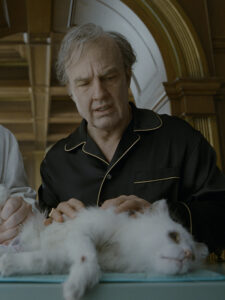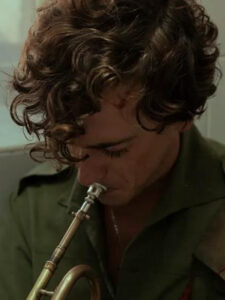
Original title: Genesis · Philippe Lesage · Canada · 2018 · Script: Philippe Lesage · Interpreters: Théodore Pellerin, Noah Abita, Brett Dier…
Original title: The outlying island 22. July · Erik Poppe · Norway · 2018 · Script: Anna Bache-Wiig, Siva Rajendram · Interpreters: Andrea Berntzen, Alexander Holmen, Brede Fristad…
Since François Truffaut surprised the entire world with his masterpiece, Los 400 blows, There have been many directors who have followed in his footsteps. With his first feature film, Truffaut broke with several corsets that, understood his generation, they had handcuffed cinema as a form of artistic expression. One of those corsets, It has been commented countless times, restricted cinematographic work to the somewhat imposed environment of artificial sets, from the study. To the extent that technical means permitted, the cinema was now taking to the streets, to natural environments and spaces to find the settings for their new stories. Much of modern cinema owes a lot to that generation of filmmakers who, with that, opened up endless possibilities. Another of the shackles that were broken appealed to a stage of life little studied in adult cinema., that of childhood or early youth as a sentimental world to explore. Y, finally, We find what was perhaps the main contribution and which refers to narratives that were no longer linked to the development of a story subject to the resolution of a plot., but rather the director's attempt to try to capture a feeling, an emotion. In this case, The events that constituted the development of the argument did not respond only to a causal motivation, but to a series of situations that led us to investigate those emotions, basis and end of the work. The structure remained, So, subordinated to the search for a sensation, no to conflict resolution. All these elements are part of the latest work by Canadian director Philippe Lesage.

Genesis puts us on Guillaume's trail, a sixteen year old young man who is in a difficult period of life. Boarding at a private school, Guillaume spends his days between games with his teammates, his studies and the mess that his hormones subject him to. Child of separated parents, Guillaume shares family life with his stepsister, Charlotte. With her he participates in that time of doubts, of scores, of trial and error, of exploration of a world that opens for the first time outside the influence of its elders, solos, a stage that will lay the foundations of those individuals who will later be, in a future that is hidden around the corner and in which they are beginning to take the first steps. And here the problems begin.

Like Truffaut, Philippe Lesage does not focus his story on a series of conflicts (although there are conflicts, Of course). Perhaps the most important thing about this film lies in how the Canadian director takes us through the sentimental journeys of his characters.. It is not so much the development of those specific conflicts, like the emotions that are exposed. And that is where Lasage foregrounds a spectator who, bridging the differences and particularities of each generation, must inevitably feel identified. The conflicts that Guillaume and Charlotte suffer are the problems of any adolescent who is at that moment in their life development.. What happens when one refuses to be another among so many equals?? What happens when one doubts what is or resists being the same, to follow the same rules and regulations? How to live with a body you want, that feels in each of its pores the need to love and be loved? Guillaume and Charlotte feel lost, but they cannot do anything to stop the process that leads them to jump into the pools into which they will end up falling because, simply, life is like that.

Philippe Lesage puts his camera at the service of these emotions, which, with intelligence, He maintains a certain distance from his characters, opening the plane for us to see his creatures wrapped in that physical and social environment with which they relate.. So, we see Guillaume and Charlotte in class, in his dorm room, in a nightclub, at a party at a friends house or, simply, walking down a lonely city street. It's them together (and front) to the others, those around them, his so-called friends and family, their lovers or those occasional acquaintances who form the panorama that makes up their sentimental ecosystem. And when the plane closes it does so to expose that need for understanding that they need and that, finally, they find in each other. Two lost souls on an island surrounded by people.

It is true that we have already seen some of the events we are going to attend described in other works.. The story of the difficulties of that boy who suffers to reveal that identity that is hidden from appearances is no longer new for the modern viewer.. Or the problems of a girl who can't deal with her sexuality in a world that sees her as an object., their innocence when it comes to choosing a partner who fits, if that is possible, to your needs and your desire to know. In the development of what this film has as its plot, the viewer feels that he has already traveled these paths before. But if Genesis We are interested in it because of the intimate nature of some characters that we cannot help but welcome and try to protect., and here the interpretation of two actors who are frankly excellent in the search for those nuances that go beyond the thick lines of two simple characters to become living human beings. The true power of this work is sustained in them..

It may seem more disconcerting, at least initially, the unexpected turn that makes Genesis in the last quarter of his feature film. At a given moment, whether or not the problems affecting Guillaume and Charlotte are resolved, the film introduces us to Félix and Béatrice, two preteens spending the summer at a mountain camp. Between songs and group games, the first love arises between them. and here, once again Philippe Lesage immerses us in the emotions that invade the two boys. What is the relationship between the couple that Félix and Béatrice form with Guillaume and Charlotte?? Maybe little. The whole. It's another time, before what will come after. The same thing, but different, another phase, cleaner, even purer and more innocent. Loves and heartbreaks, inevitable reunions and distancing, the joy of being accepted by another and the pain of separation. There are the clues.

If at the beginning of this chronicle we referred to Truffaut to refer to Philippe Lesage's film, Now it would be advisable to draw attention, bridging the logical distances, about another of the greats in the History of Cinema, Alfred Hitchcock, with whose movie, The rope,tried, back in the forties of the last century, do something that technology did not allow a priori. Based on the story of a crime, Hitchcock intended to construct a piece shot in a single plane in continuity, uncut, attempt frustrated by the fact that the film chassis of that time forced him to cut filming from time to time. This is not the problem that the Norwegian director suffers Erik Poppe a The outlying island, 22 of July, in which he makes a reconstruction of the dramatic events that shook the life and conscience of his country in the summer of the year 2011. On that day 22 of July which gives the film its title, a far-right terrorist attacked a youth camp affiliated with the Labor Party on the island of Utøya, killing dozens of them and injuring many others. The survivors of that dramatic event would tell Poppe about their experience, basis of the feature film that now comes to our screens.

Contrary to what happened to the master of suspense, The new digital cameras do allow the Norwegian director to shoot his film in a single sequence shot without interruptions. Camera in hand, Poppe follows An echo, fictitious representation of one of the many young people who could have been involved in that dramatic situation. Camp life begins any morning, between meetings and apparently trivial conversations, when several detonations break the harmony. Someone seems to be shooting at the boys. From that moment, We will follow Kaja in her desperate attempt to escape the massacre.

As in the tape Hitchcock, the most relevant in Utøya 22 of July is found, above all, in a staging built to the millimeter. It is true that Erik Poppe's proposal is developed in an almost television style that, in my opinion, takes some weight off, but his audacity cannot be missed. Kaja runs with his friends to protect themselves from the attacks. His situation is desperate and he doesn't know where to go.. Besides, He wants to know what happened to his little sister, from which it has been accidentally separated. Poppe puts the camera next to the girl, who will not leave at any time, framing it in a very short shot. Although with very different formal premises, same as in the case of Philippe Lesage, The relationship that the Norwegian establishes with space is crucial. Like in Genesis, The evolution of events is subject to a suddenly hostile environment. Where can Kaja take refuge? Stunned by the speed at which events happen for which we cannot find an explanation, disoriented in a space whose dimensions we do not know, Poppe gives us the same feeling of confusion and disorientation that his characters suffer.. The use of two key elements of this proposal is interesting.: the off-field, that is to say, what happens outside the limits of the image, and the dramatic use of sound. Noises that we don't know where they come from, but they lurk, the same lack of definition of an environment whose limits and geography are poorly drawn, contributing to diving into that same state of anarchy that Kaja suffers.

Erik Poppe proposes a reflection on the consequences of the rise of certain fanaticisms on the European continent. But it does not do so by relying on great speeches against those who make them.. In fact, If you leave something out of your work, it is, precisely, to a murderer to whom he gives no face or name. It's the least. What matters are the facts and, above all, its consequences. And maybe it's better that way because, How to combat that which has no justification? How to reason with someone who has given himself over to unreasonable? We can only show what happened and that citizens, those who have not yet been poisoned by that same fanaticism, look at these images and say, what an outrage! How can these things happen?? That day and in just over an hour, The criminals killed more than seventy of those young people whose only mistake was being in the wrong place. His last day. The last hour of their lives. Let's see how that is explained. GERARDO LEON