Writing about this year's Berlin Festival 2020 shortly after its celebration it produces a certainly strange sensation. After several days moving freely from room to room to attend the different screenings, The news of the closure of the International Automobile Fair as a preventive measure against the expansion of the pandemic caused by Civid-19 coincided with the closing of the festival, what made one reflect on these things of fate and luck. And it is that, knowing, as logic dictates, that this disease does not spread from one day to the next, You can't help but wonder how much you were exposed to the virus during the long days of watching, sharing with hundreds of peers from other countries around the world so many hours of chance contacts in so many spaces that perhaps today would be completely closed. If the situation already seemed so complicated as to force the closure of the motor show, To what extent were those of us who visited the Berlinale exposed?? What was said, random things.

But, let's go to the pit. In this year's selection of films in the Official Section there was, definitely, of everything. From ambitious works in their production, but small, for the result, in his artistic aspirations, like the other way around. Among the first was, definitely, which in the halls of the festival was pointed out as the great bet of German cinema of this edition. We are referring to a new adaptation of the novel by Alfred Döblin, Berlin Alexanderplatz by filmmaker Burhan Qurbani. Openly separating from the series directed by Rainer Werner Fassbinder, Qurbani intends to adapt the plot of the novel to the contemporary social situation. For it, changes the origin of its protagonist who is now no longer a citizen of Berlin at the beginning of the 20th century, but an African immigrant who, like so many others, arrives in modern-day Europe in search of a future. And the idea is not bad. However, Qurbani's work is burdened by a series of conditions that hinder it and turn it into an artifact that is difficult for the public to digest.. The first of these elements is its three-hour duration. This would not be a problem if the film offered that something that great works touch and that justified so much footage.. This new Berlin Alexanderplatz stays halfway. Qurbani's portrayal of the situation his protagonist is experiencing is too stereotyped, How stereotyped are all the characters he must face and the situations he will experience. Sometimes, even, This stereotype goes so far that it becomes an extravagant parody until the viewer is completely detached from what is happening on the screen.. Qurbani proposes a reflection on the loss or value of innocence in Germany (or Europe) actual. The innocent, The cigar is that immigrant who arrives in a crooked society, sinister in its way of establishing survival relationships. Its protagonist will not only fight to survive economically, but to maintain his cleanliness of spirit in the face of the moral corruption that surrounds him. But Qurbani's speech is so crude and predictable in its formal and argumentative approaches that one watches his film from that position of heaviness of the gifted student who already knows what a teacher is going to tell him who not only has nothing to reveal to him., but the one you have already overcome and whose supposed lesson you feel needs some twist to bring it up to date..

In the same sense, we could place All the dead, by the Brazilian director couple Marco Dutra and Caetano Gotardo, whose piece, as in the previous case, aims to be a kind of absolute fresco, of total work on the question of colonial relations in Brazil since the end of the 19th century. with another tone, with another record, The work of Dutra and Gottardo is also very far from what it could have been.. The two directors make a strong bet, managing narrative times in a way that aspires to overcome a certain linearity, but the experiment seems to be getting out of hand. As happened with the Qurbani tape, All the dead It's a film that tried to cover everything., from class differences, the slavery conflict, the influence of religion, all this mixed with a period melodrama. But, Also as in the previous case, Dutra and Gotardo's proposal remains anchored in cliché, in a bland description of a moment in history where the good and the bad, despite appearances, They have no dramatic or intellectual depth and, as before, Their experiences do not pose any challenge to the viewer who attends the screening with a mixture of hope and doubt.. Hope that is not fulfilled, doubt that results in frank disappointment and a certain exhaustion.

Although with more modest production coordinates, that same discursive ambition, of revelation, was perceived to be attending, for different reasons, to other proposals that made up a good part of the programming of this year's Official Section. It is the case of The roads not taken, long-awaited new work of the always-awaited work by British director Sally Potter. The author of The party arrived at the Berlinale with an offer embellished by its cast, but what, again, it didn't satisfy either. The roads not taken introduces us to Molly, a young woman arriving in New York City to visit her father, a mature writer who suffers from dementia and has lost self-awareness. The film takes place in two planes. A, the one of the present, in which we address the daughter's struggle to maintain her father's dignity. The other travels through the memories and memory of that man's life, of their successes and failures, definitely, of what makes up the life of any person. But, again, everything remains a mere declaration of intentions. Potter's portrait of the biography of this invented writer uses all the clichés one could project. Leo is a man tormented by a world in decay or that he does not understand or in which he does not fit., and that going at its own pace, looking for what others are not looking for, It is the source of all your existential conflicts and, above all, with the women with whom he has shared his life at different times. The problem is that in Potter's film what purports to be emotions are nothing more than a mere exercise in enunciation.. Potter resorts to a fragmented narrative favored by that flashback structure. However, There are so many events that it tries to review and they are so superficially drawn that we cannot go beyond their first layer., moving away from the subjects and dramas that the film exposes us to. This superficiality in the treatment of the story affects, besides, to the interpretation of actors who use clichés to build the characters with a very uneven result. GOOD, in the case of Elle Fanning. Disappointing, as usual, in the case of Javier Bardem, that can't be found anywhere, except when you know what they ask of you and that, basically, refers to that portrait of this man affected by Alzheimer's. Bardem is an actor who only composes caricatures, as shown, again, in this job.

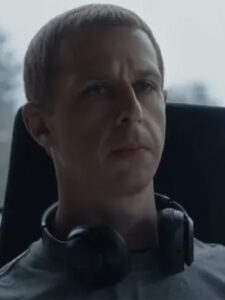
Excessive, for erratically ambitious, They were also the bets of the American Abel Ferrara and the German Christian Petzold. In the case of Ferrara this was a possibility. Always in search of excess, lo radical, Ferrara's work is capable of both achieving the excellent, how to touch the grotesque, for excessive. And here we are in the second case. If someone asked me what the argument is Siberia, I would say I don't know. We have a man who arrives in Siberian lands (is assumed) fleeing from everything petty that contemporary civilization represents. Apparently, This guy will be in charge of running a kind of bar installed in the coldest and most inhospitable place on the globe. And so far all we can tell. From that moment, What we are going to witness is a twisted journey through the subconscious of this subject, going from what seems to have happened to what could have happened in many other possibilities in which his life would have unfolded, all this at the same time, so that we never know in what moment or option we find ourselves. And this exercise would be interesting if it were well articulated, but it's not like that. Ferrara jumps from one side to the other without any order, putting its protagonist in situations that the viewer does not know what to hold on to so that, finally, feels lost. If we add to that some moments that overcome the barrier of plausibility, when not ridiculous (as the laughter in the room certified), what we have is an erratic work, decomposed, a mere sketch of a drawing that we have not just seen. A, in his affection that he has for this director, you want to put all your attention into discovering your intentions, but not even the admirable effort that William Dafoe makes to support the entire apparatus, find something to hold you to the ground. Ferrara confuses the subversive with the extravagant, it's serious, the poetic with the hyperbolic in a piece of baroque gratuitousness that is difficult to digest.

Without reaching these limits of extravagance, the latest production by the German Christian Petzold suffers, also, the consequences of a deliberate mannerism. In Undine, Petzold wants to update the Norse myth of Ondine. Here, Our protagonist is a woman who works as a guide for a museum in the city of Berlin.. Ondina has just broken up with her partner, who has abandoned her for another. Alone and torn, she meets another man with whom she is going to fall in love. Ondine finds in her new partner everything she wants, but an accident will bring fate back into his life. Petzold wanted to build a modern fantasy story, a story where the poetic, the symbolic, prime over the purely narrative. The result, however, without completely dismounting, is closer to setting intentions than to achieving its objectives. The desire not to be excessively explicit leaves too many plot gaps in the story so that the viewer knows at times what they are being told., What essential thing justifies this adaptation?, and he remains somewhat disoriented under the waters of that lake that focuses his attention and in which so many relevant things happen..

More successful in their ambition we find proposals such as Fairy tales, by the brothers Damiano and Fabio D'Innocenzo. The story that this artistic couple proposes places us in an unknown place., an urbanization of semi-detached houses on the outskirts of any city. for us, like spanish, the scene is familiar to us. It is the dream of prosperity of the working class of any Mediterranean city: the plot, the family well ahead, the private pool and, background, the torrid summer sun. With these elements, The D'Innocenzo brothers present us with a proposal that wants to be a social and psychological portrait of all the pettiness that flows in the unconscious and sustains this small community that becomes, in this way, mirror of Italian society. Above, on the surface, The rules of appearances simulate a happy coexistence between neighbors, but, when they turn their backs, hidden intentions quickly emerge, that is to say, envy, suspicion towards the other and, above all, Hypocrisy. Damiano and Fabio D’Innocenzo offer us a work that reminds us of films like Reality de Mattero Garrone, where the ugly, the grotesque, The most shabby of what we call the “consumer society” rises here as an object of observation and, finally, in excuse for the work of art. Fairy tales offers us a very raw vision of Italian society and, although sometimes his bet suffers from certain excesses, In many other ways there is something in the aroma of that which shows us that we know is coming., in a stark way, to reality.

But without a doubt the two most interesting proposals that this latest edition of the Berlin competition offered us came from the East. The pieces by the Taiwanese Tsai Ming-liang and the Korean Hong Sang-soo have some elements in common and other differences. In common, a narrative approach that, giving up a way of approaching conventional staging, highlights, from the distance that both impose themselves in front of their characters, for its sensitivity. We are faced with two films that, more than a typical story, They show us a series of situations. In the case of Days, the beautiful work of Ming-liang, we bump into Kang, a businessman passing through an unmentioned city. Kang hires the services of a young man with whom, little by little, will forge a relationship based on the mutual need for company and understanding. Both are very different and come from social strata that are very far apart.. However, They both suffer from the same problem: The loneliness. But, in Days, that conflict is not addressed directly, but in the contrast between what these characters do and that city that engulfs them. A space of sordid alleys where individuals and their conflicts are devoured by the mere need to survive and which forces them to put their feelings aside.. That need for affection, They will find it in the privacy of a hotel room where some of the most beautiful moments that have been filmed in recent cinema take place..

Sang-soo does something similar in The woman who run, another of the very pleasant surprises of this contest. like the taiwanese, The Korean director approaches the conflicts of his characters from understanding and love for the simple and everyday. Here, Gamhee is a woman who visits some friends during her husband's absence., who is on a work trip. On these visits and during long conversations, those issues that concern you will arise, your desires and ambitions. But if (and here are the differences), Ming-liang worked from gravity, Sango-soo does it with a certain joy and with a sense of humor that is very refreshing. (especially brilliant is the cat scene). Yes in DaysThe night reigns and between contrast of lights and shadows, The woman who run It is the empire of natural light in broad daylight.. Two masterpieces where, here yes, the poetic, the symbolic or the metaphorical shake hands with the everyday with frank naturalness. A naturalness that comes, not only of that staging that we discussed, but of the honesty that inspires two works that, although they served as a hook in the programming, They showed how weak the rest of the program was.. G.LEON