Different scenario, different conflict, but the same or similar problems at the start of the third screening session of the Official Section of this 38th edition of the Mostra de Valencia.
From Syria came Became (o The wedding parade, in its English title). And again the same complications occurred, this time embodied in the difficulties that the director Sevinaz Evdike, responsible for this proposal, has had to obtain a visa to attend the festival. Like in that Woody Allen movie, Once again, fiction surpassed the limits of the screen and took shape in everyday reality.
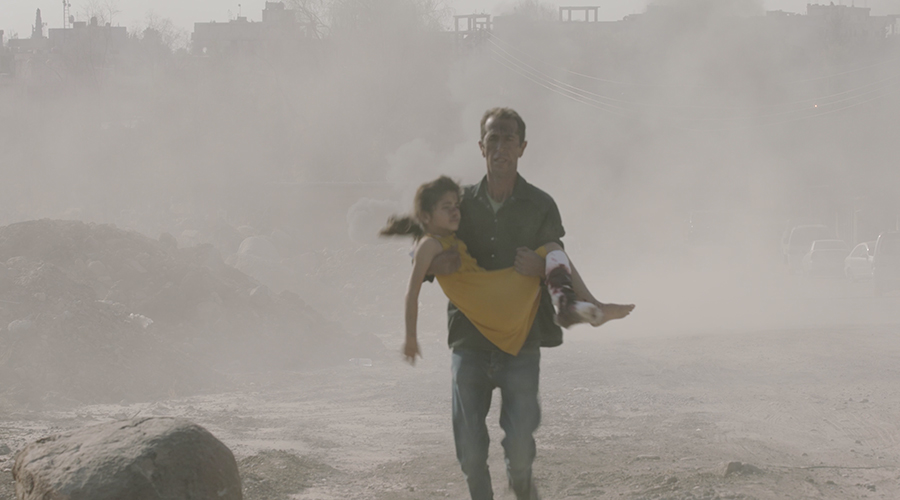
This conflictive reality is what the three protagonists of this story must face.. We meet in Serekaniye, Kurdish city located in northern Syria. A window welcomes us and shows us the exterior patio of a modest home. Sitting on the patio floor, the young Gulê and her mother meet. Gulê is preparing his next wedding, but the imminent invasion of the city by the Turkish army seems to ruin their plans. The sudden bombings ordered by the Erdogan government on the area, they force the population to leave their homes, something that Gulê's father resists and will face, So, to his father-in-law who, given the circumstances, wants to cancel the ceremony. As Gulê's plans fall apart, another young woman, Leave, He also sees how his wedding is interrupted by attacks. Groomed in her wedding dress, She is forced to get into a car to flee the town towards unknown territory. At the same time, in a school converted into an asylum for the displaced, The young Naze refuses to obey her mother who tries to organize her life by arranging her marriage with the son of another of the refugees..
Again, as it happened in A house in Jerusalem, personal experience, almost biographical, serves as support for the fictional story. And here again the loss of home is placed at the center of the characters' drama.. If yesterday Muayad Alayan's film placed us in that later future in the development of the conflict, about its consequences, In Evdike's piece we are living the same moment in which things start. Like Alayan, Evdike knows the process first-hand and tells us about it. With a circular structure, The Syrian director traces the line that follows the journey of the successive emotions that invade her characters. At first, disbelief and, even, denial, represented in the father of Gulê. Then, Barin's bewilderment, a woman whose life is interrupted due to events for which she is not responsible. Y, finally, the acceptance of a drama whose repercussions, little by little, it is becoming clear that they will be difficult to reverse.

Sevinaz Evdike bases his proposal on off-field play, well as a production strategy, to avoid costs, good as a dramatic bet. Again, as it happened in Riverbed, sound plays an essential role, but this time they are specific sounds and there is no doubt about their interpretation. They are the noise of planes flying over an unprotected population., the explosion of bombs on the ground. And although at some point, the game becomes evident (It takes little time for the spectator to perceive the trick), is compensated by a modest staging, but effective. In The wedding parade, Evdike's camera plays all the time in the relationship between his characters and their environment, broadening the viewer's gaze, from that initial window that frames the world of everyday life, to those almost documentary shots of the march of the refugees in their escape from their lands. The camera sets, So, a relationship between the three protagonists and that physical landscape, but also political and social, and becomes a chronicler of that journey. Particularly notable, in this case, They are those circular planes that surround these women from time to time, setting the pace of the narrative, almost as points and aside, but they are a reflection of their relationship with that new reality they are facing., to your inner self.
The political falls, like bombs, about everyday, that is being exposed. Evdike paints a very affectionate portrait of Kurdish society. In this sense, the position of women and the logical confrontation between generations once again take center stage. The elders, guardians of custom and tradition, They impose their values and recipes on the young people who, although not always, they question their decisions. But if, in the case of Riverbed, This relationship between modernity and tradition was resolved violently, in The wedding parade, the process is very different.

Evdike analyzes this relationship, but, without completely bending to it, does so from a position of greater respect and understanding. war appears, So, as an element that, just as it destroys, build, by forcing us, due to a crisis situation, to rethink our positions. Now everything is different, the community must rely on its members to survive and marriage is perceived as a symbol of hope. A sign of continuity of that community that is in danger of disappearing between shrapnel and forced exile. This is what his elderly mother tries to make Naze understand.. Nothing is lost if we leave something of ourselves to happen to us. That desire for continuity gives the tranquility of, at least, have fulfilled the duty.
The wedding dress, manifests itself, So, not like prison, armor, but as an emblem of purity in the midst of barbarism. An element that functions as a witness that these three women pass to each other as a metaphor for an entire town.. The wedding as a sign of a normality rescued from death and oppression. Somehow, yet, there is a future.

The second of the films of the day also wants to talk to us about family conflicts, Afloat, by the Turkish director Aslihan Ünaldi who, on this occasion, Yes, he was able to attend the premiere of his work at the festival, accompanied by producer Kamen Velkovsky and Serhat Ünaldi, one of the leading actors of the film and father of the director.
Afloat tells of the return to Türkiye of Zeynep and her husband Stephen, from New York, to spend a vacation with her family on a small yacht owned by her father. Before the journey even begins, We discover that the relationships between the members of this family are not quite right.. His little sister, Jasmine, is in a situation of frank confrontation with Yusuf, the father of both. The relationship between Yusuf and Alev, his wife and mother of Zeynep, is in a tug of war over infidelity. And the truth is that things are not going particularly well in the case of Zeynep and Stephen either.. Even so, everyone embarks on the journey. During the journey, locked in the narrow space of the boat, They will be forced to live together. The deal will make the reproaches and memories of the past come to light. While, Yusuf, professional journalist, He awaits the resolution of a sentence that could put him in jail because of a book he has written.

Aslihan Ünaldi's film is weighed down by some narrative decisions and character construction and, but still, of the internal structure of the story, that we will try to unravel. In the narrative field, Without a doubt, an assembly time that is excessively long for the material being handled is strongly felt.. The Turkish director recreates each scene by expanding the duration of each shot, extending, in this way, the cadence of a story that could have benefited from editing work to lighten its pace, especially when it comes to the replicas and reactions between characters. These assembly decisions, They thicken the development of the film that stretches unnecessarily to almost two hours in length. It is not the number of sequences that should have been reduced, It is that internal rhythm of them, remaining in the viewer, more than an impression of dramatic depth, of exhaustion, reducing the fluidity of the proposal.
But it will be in the aspect of the construction of characters and situations where we find the greatest weakness of this production.. At a press conference, the director herself told the intrastory of this story. Money Unaldi, Yusuf's conflict, whose situation spins the entire plot of the story and the lives of the rest of the characters, is found in the drama of a wealthy liberal middle class that, since the arrival of the conservative government in the country, has seen its freedoms censored, which, as he related, has pushed them to abandon it. The problem is that, trying to focus the drama of the film on the portrait of this kind of family, Ünaldi is so brief in the description of this political and social background that we do not fully understand., intimately, What is the conflict that the character suffers?. We know that he is in a desperate situation and that he is in danger of ending up in prison., but by avoiding the relationships that make us understand their situation, the reasons for the censorship to which he is subjected, they escape us.

So, without that context, that family portrait remains that Ünaldi wants to dissect. But this one turns, at times, excessively frivolous. As viewers we are able to understand the drifts of a decaying family whose members seem unable to find their place in the world.. But this does not make them unique as subjects., nor do they serve as a general portrait of a generation or a social context, political or historical, necessary. Subtracted from the cultural and socio-political particularities of the situation presented, We do not know in what space to place them beyond their own class context., this one is described profusely in history. In the end, when the plot is resolved, and without revealing the result, We have many doubts about the motivations of Yusuf himself and, consequently, about the extent to which the change in his daughters' position with respect to him, whether or not it is acceptable to viewers.
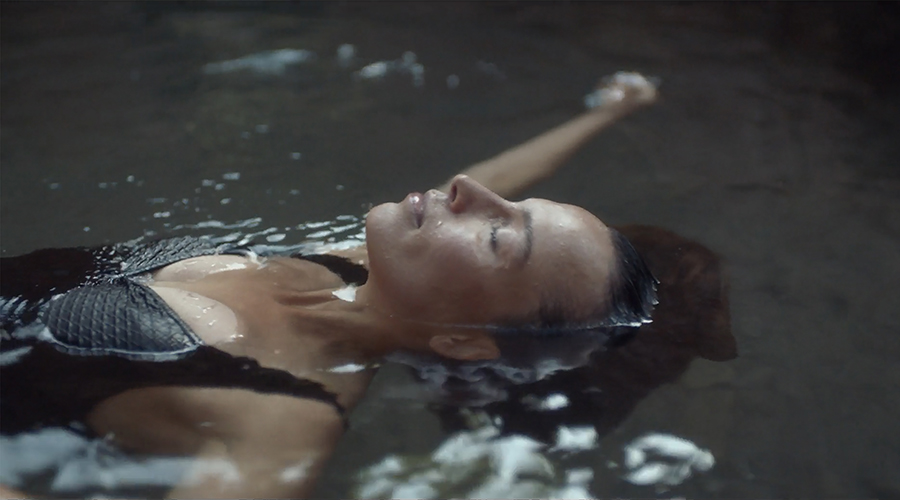
This circumstance is especially perceived in the relationship that the family has with Ali, a lower class boy who serves as a waiter at the dock where Ysuf has his yacht docked. One way or another, all the characters use it, especially Zeynep. Vitally and professionally disoriented, Zeynep represents the archetype of that wealthy middle class that solves its problems with tranquilizers.. Zeynep plans to make a documentary about the conflict of Syrian refugees in the country. for that, and after several incidents, interviews several inhabitants of a small town in the area. In the interviews, and according to the director herself, Zeynep ends up bringing out the prejudices of an uneducated social base that does not quite understand that it is subject to government propaganda. But the problem is that, by removing from the story that social and political background that would help us understand this situation, What remains is the position of a privileged subject in the face of the ignorance of the populace. Like Zeynep, Ünaldi uses these characters. Unlike the proposal of the Syrian Sevinaz Evdike, The Turkish director never tries to understand them and observes them from a distance as mere objects, those who say they want to rescue those that their government has subjected them to from the injustice and silence, but what, standing above them, He looks at them with the same condescension as his characters.. and one wonders, at the end of the screening, why you should empathize with these people.
In this sense, The wedding parade y Afloat They work, So, like the two sides of the same conflict. Front and back, not just a political situation, but as two ways of understanding reality.GERARDO LEON